
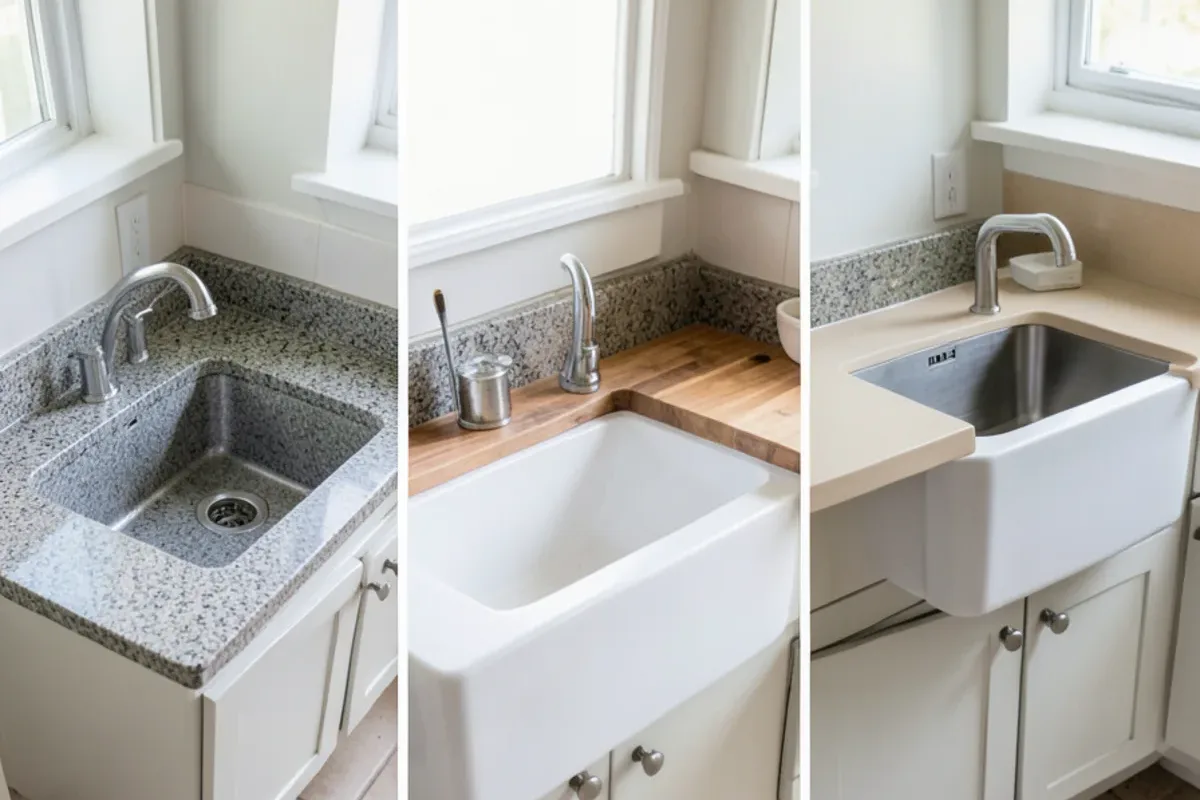
Undermount, farmhouse or drop-in: what is the difference?
| Style | How it mounts | Works with | Pros | Watch for |
|---|---|---|---|---|
| Undermount | Clips or brackets under the countertop; polished stone edge shows | Granite, quartz, marble and other solid tops | Wipe crumbs straight into the bowl; clean modern look | Needs a fabricated, polished cutout; not ideal with standard laminate |
| Farmhouse (apron-front) | Sits on a support frame in the sink base; front panel exposed | Stone, quartz, wood and tile tops | Deep bowl; strong period or cottage look | Requires an apron-front sink base cabinet and careful support |
| Drop-in (top-mount) | Rim rests on top of the counter | Any countertop, including laminate and prefab | Easiest to install and replace; often lower cost | Rim edge collects grime; can’t sweep crumbs straight in |
Undermount sinks dominate stone kitchens because the counter flows straight into the bowl. Drop-in sinks remain sensible for laminate tops, rentals and budget remodels, and replacing one later doesn’t disturb the countertop. Farmhouse sinks need the most planning, because both the cabinet and the counter are built around them.
Want to see the options in person?
The Sherman Way showroom has cabinets, counters, tile and flooring on display side by side. Call before you come and say what you're working on.
- Showroom at 13259 Sherman Way, North Hollywood
- 20 Google reviews
- BBB rating A+
- Cabinets, counters, tile & floors in one place
Which sink material suits the way you cook?
- Stainless steel is the workhorse: light, heat-proof and forgiving with dropped glassware. Lower gauge numbers mean thicker steel, so a 16-gauge sink feels sturdier and quieter than an 18-gauge one. Look for sound-deadening pads on the underside and a brushed finish that hides scratches.
- Fireclay and enameled cast iron give the classic white farmhouse look and are very hard-wearing, but a heavy pot can chip the enamel and they weigh a lot.
- Composite sinks made from stone particles and resin come in solid colors and resist scratches, though very hot pans can mark some of them.
- Glass bowl sinks are mainly a bathroom choice. As vessel sinks on a vanity they add color and sparkle, but they are rarely practical in a working kitchen.
Our showroom carries stainless steel and glass bowl sinks, so you can see the kitchen and bath options next to the countertops they will sit in.
Single bowl, double bowl or workstation?
A large single bowl fits sheet pans, stockpots and roasting racks, and it suits people who rely on a dishwasher. A double bowl lets you soak in one side and rinse in the other, which helps in households that hand-wash a lot. A 60/40 split gives one larger side for pans. Workstation sinks add a ledge for sliding cutting boards, colanders and drying racks, turning the sink into a prep area, which is useful in small kitchens with short runs of counter.
Depth matters too. A 9- to 10-inch bowl hides dishes and reduces splashing, but a very deep bowl can strain your back if you are tall or the counter is low. Lean over a display sink before you decide.
How big a sink fits your sink base cabinet?
Every sink has a minimum cabinet size printed in its specifications, and it is usually larger than the sink’s outside width because the cabinet sides take up room. Common sink bases are 30, 33 and 36 inches wide, with larger sizes for big farmhouse and workstation sinks. Check these points before ordering:
- The sink’s minimum cabinet width matches or is smaller than your sink base.
- A farmhouse sink is paired with a true apron-front base, not a standard base cut down.
- The bowl depth leaves room for the drain, garbage disposal and any filtration system below.
- Faucet hole count matches the faucet, soap dispenser and air switch you plan to use.
- The dishwasher sits next to the sink base so its drain line runs a short distance.
Small sink details that decide daily use
Two undermount sinks with the same size and gauge can feel completely different after a month of dishes. The difference is in details few buyers ask about at the display.
Choose the reveal before templating
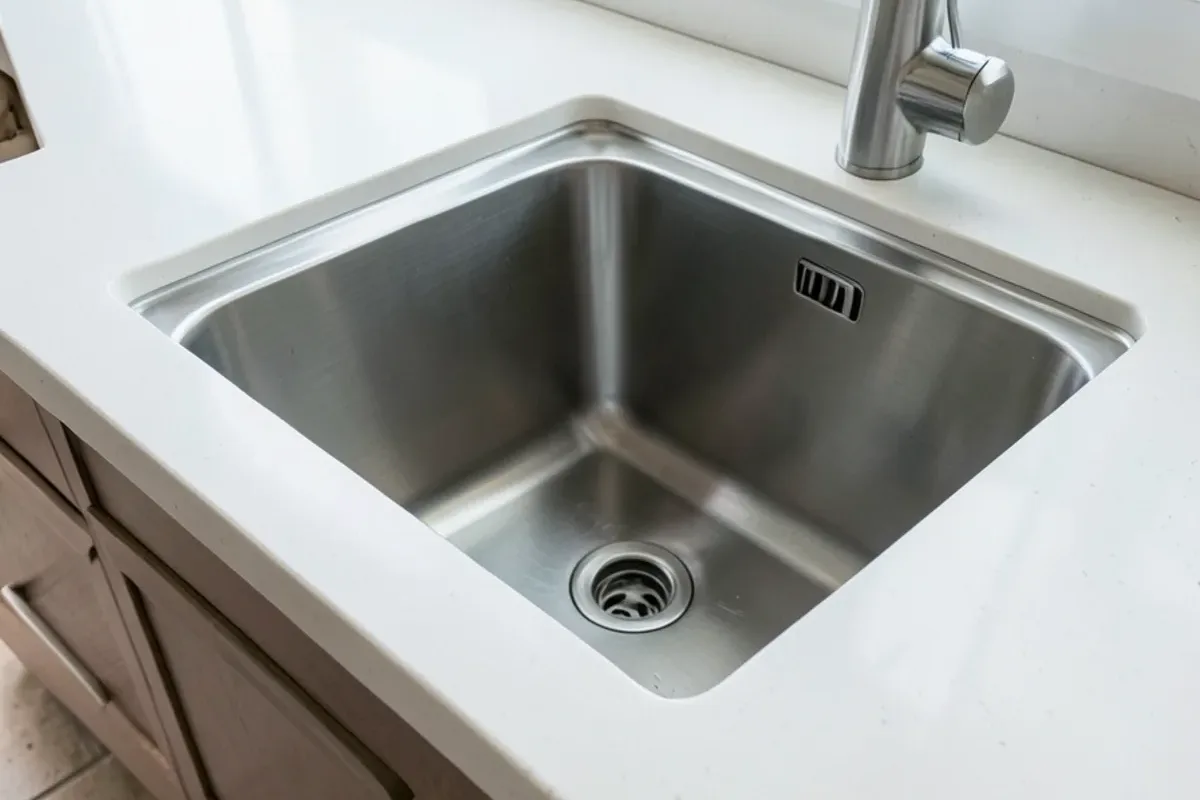
The reveal is how the stone edge lines up with the bowl. Tell the fabricator which one you want, because it changes the cutout.
| Reveal | What it looks like | Trade-off |
|---|---|---|
| Positive | A thin band of the sink rim shows around the opening | Forgiving to fabricate; the exposed rim collects a little grime |
| Zero (flush) | Stone edge aligns exactly with the bowl wall | Cleanest look; needs a precise cut and a sink with a straight rim |
| Negative | Stone overhangs the bowl slightly | Hides the rim; the underside of the stone edge is hard to see and clean |
Drain position and corner radius
A rear-offset drain moves the plumbing toward the wall, which frees cabinet space for a trash pull-out or filter and keeps the drain open when dishes are stacked. Tight, near-square bowl corners look crisp, while a slightly rounded corner is far easier to wipe clean.
The order that avoids a re-cut
Most sink trouble starts with sequence. A countertop cut for one sink rarely fits another, and a farmhouse sink chosen after cabinets arrive may not fit the base that was ordered. A practical order, worked out at our countertop and cabinet counters, looks like this:
Pick the mounting style
Decide undermount, farmhouse or drop-in alongside the countertop material.
Choose the exact sink model
Note its minimum cabinet size and cutout template.
Order the matching sink base
Confirm width and, for farmhouse sinks, the apron-front style.
Choose the faucet
Decide single-hole or widespread and any extras so the fabricator knows how many holes to drill.
Have the sink on site for templating
The fabricator uses it, or its exact template, to cut and polish the opening.
Reconnect plumbing
A licensed plumber connects the drain, supply lines and disposal after the top is set.
Plumbing realities the showroom flags early
The sink you love has to work with the pipes already in the wall. Three issues come up often enough in Los Angeles kitchens that they are worth checking before you order.
- Deep bowl plus disposal versus a high drain stub. A 10-inch bowl with a disposal under it can put the outlet lower than the drain pipe coming out of an older wall. Then the drain has to be lowered by a plumber, which is wall work that may need a permit.
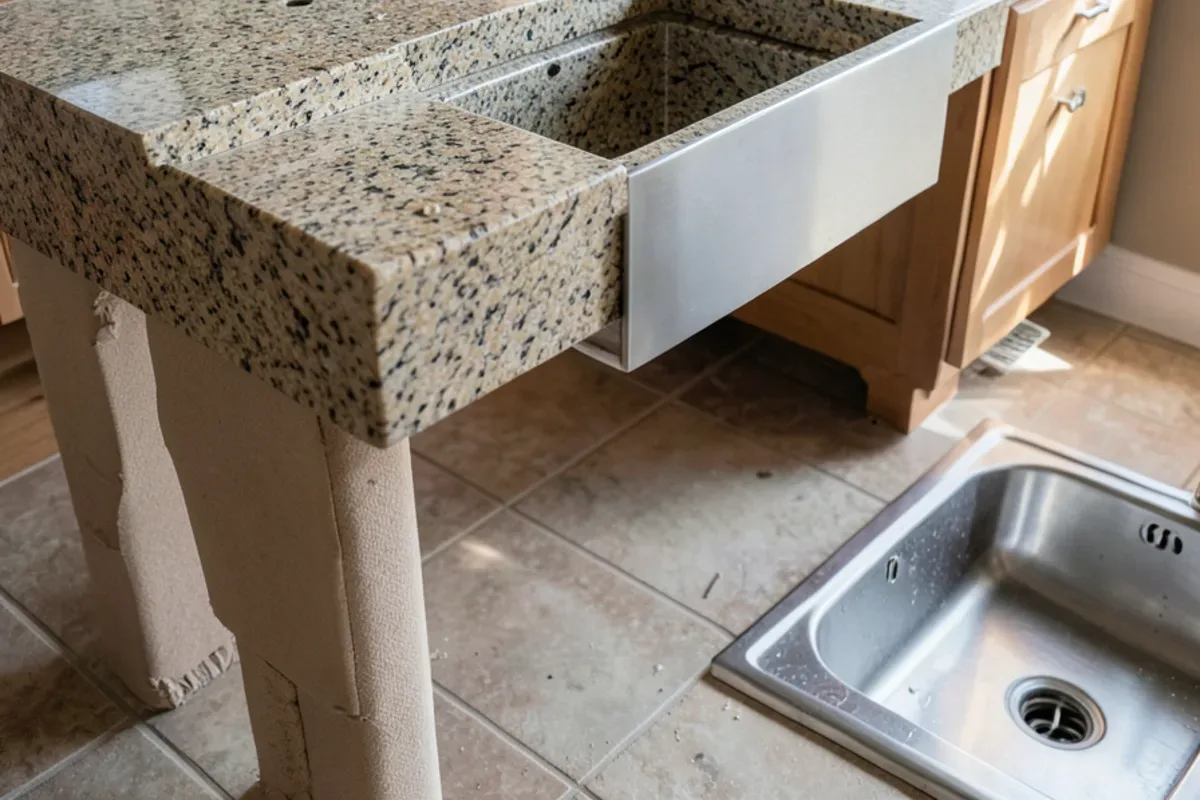
- Weight on undermount clips. A large bowl full of water and pots is heavy. Ask how the sink is held: mechanical clips anchored into the stone, or a support rail across the cabinet, rather than adhesive alone, which matters in an earthquake region.
- Faucet flow limits. California’s appliance efficiency rules, administered by the California Energy Commission, cap kitchen faucet flow at 1.8 gallons per minute, with a temporary boost to 2.2 allowed. A deep bowl fills more slowly than many people expect, so a pull-down sprayer earns its place.
None of these is a reason to give up on a sink you want. They are reasons to have the plumber look under the existing sink before the countertop is templated rather than after.
Choosing a kitchen sink for older and newer LA homes
In Pasadena, Craftsman and period kitchens often call for an apron-front sink or a deep single bowl that echoes the original look, and the City of Pasadena’s own building division handles any permit if plumbing moves. Across Los Angeles, condos and smaller kitchens tend to favor a stainless workstation sink that adds prep space. Moving a sink to a new wall is plumbing work that needs a licensed plumber and, in most cases, a permit.
Pairing the sink with your countertop
Browse styles on the kitchen sinks page, then see how the cutout, templating and setting fit together on the countertop installation page. If you are still choosing the surface itself, the countertops overview compares slab and prefab options.
Quick answers
Can an undermount sink go under a laminate countertop?
Generally it isn’t recommended. A standard laminate top has a particleboard core that swells if water reaches the exposed cut edge around an undermount opening. Special edge treatments and sink kits exist, but most installers pair laminate with a drop-in sink and reserve undermount sinks for granite, quartz, marble and other solid surfaces.
What gauge of stainless steel sink should I buy?
For most kitchens, 16- or 18-gauge stainless steel is a good range, with 16-gauge being thicker and more resistant to dents and noise. Thinner 20- or 22-gauge sinks cost less but flex and ring more. Pair the gauge with sound-deadening pads and a brushed finish, and compare sinks side by side by pressing on the bottom of the bowl.
Does a farmhouse sink need a special cabinet?
Yes. A farmhouse or apron-front sink needs a sink base made for it, with a lowered front and internal supports that carry the sink’s weight, which can be considerable for fireclay or cast iron. Choose the sink first, then order the base to its specifications so the apron sits flush with the cabinet doors on either side.
Do I need to pick the faucet before the countertop is cut?
Yes, at least the faucet type and number of holes. A single-hole faucet, a widespread three-hole faucet, a soap dispenser and an air switch for a disposal each need an opening. The fabricator drills those holes when cutting the sink opening, and adding one later in stone is possible but harder and riskier.
What is the reveal on an undermount kitchen sink?
The reveal is how the stone edge meets the bowl: a positive reveal leaves a thin strip of sink rim visible, a zero reveal lines the stone up with the bowl wall, and a negative reveal lets the stone overhang slightly. Choose it with the fabricator before templating, because each needs a different cutout and the choice affects how easily the rim stays clean.
Sources
- National Kitchen & Bath Association — Kitchen planning guidelines for sink placement and clearances
- EPA WaterSense — Water-efficient faucet labeling
- Contractors State License Board — Verify a plumber’s license before work begins
- California Energy Commission: Appliance Efficiency Regulations (Title 20) — Flow limits for kitchen faucets sold in California
About this guide
Written by the team at Adcom Kitchen & Flooring, a kitchen cabinet, countertop, tile and flooring showroom at 13259 Sherman Way in North Hollywood. Rules and figures from outside sources are attributed; confirm current requirements with your building department or the agency named.
Related services
Service areas
More on this topic: Countertops
Talk to the showroom before you buy
Call with your measurements and photos, or stop by Sherman Way to compare cabinets, counters, tile and flooring side by side.
Adcom Kitchen & Flooring · 13259 Sherman Way, North Hollywood, CA 91605 · Get directions · Showroom hours
- Showroom at 13259 Sherman Way, North Hollywood
- 20 Google reviews
- BBB rating A+
- Cabinets, counters, tile & floors in one place