
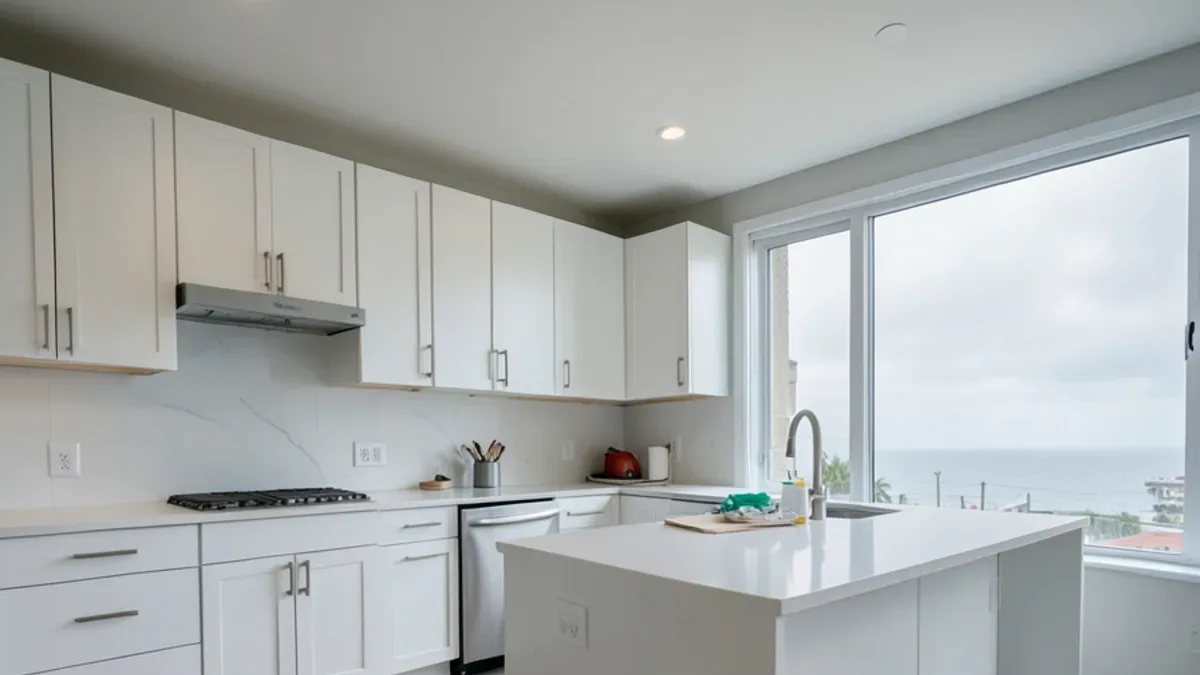
What do salt air and the marine layer do to a house?
Along the coast, cool, moist ocean air often settles in overnight and lingers into the morning, especially in late spring and early summer. Homes a few blocks from the sand in Santa Monica, Manhattan Beach or along the Malibu coast see:
- Higher average humidity than the San Fernando Valley, so wood floors and solid-wood doors run slightly swollen for much of the year.
- Airborne salt that settles on metal and speeds up corrosion of hinges, pulls, faucets and appliance trim, especially near open windows.
- Sand tracked indoors on feet, paws, towels and boards, acting as an abrasive on every floor finish.
- Bigger swings in rentals and second homes that sit closed up between visits, where humidity builds with no air movement.
Want to see the options in person?
The Sherman Way showroom has cabinets, counters, tile and flooring on display side by side. Call before you come and say what you're working on.
- Showroom at 13259 Sherman Way, North Hollywood
- 20 Google reviews
- BBB rating A+
- Cabinets, counters, tile & floors in one place
Coastal home flooring: which floors cope with sand and damp?
| Floor | Sand and grit | Damp air and wet feet | Notes for beach houses |
|---|---|---|---|
| Porcelain tile | Excellent; textured finishes hide sand | Excellent | Cool underfoot; choose a slip-resistant finish near outdoor showers and pool doors |
| Waterproof vinyl plank | Good; thicker wear layers last longer | Excellent | Comfortable and quiet; use a sound underlayment in condos |
| Engineered hardwood | Fair; matte and wire-brushed finishes hide wear | Good; moves less than solid wood | Warm look; keep mats at every door and sweep often |
| Laminate | Very good scratch resistance | Fair; edges dislike standing water | Best kept to dry upstairs rooms |
| Solid hardwood | Fair | Fair; prone to seasonal swelling | Narrow boards and good ventilation help |
| Carpet | Holds sand; vacuum often | Can hold damp and odor | Bedrooms only, away from the beach entry |
For most beach-area kitchens and living rooms, waterproof vinyl flooring or porcelain is the low-worry option. Where the warmth of wood matters, engineered hardwood in a light, matte, textured finish is the material that handles humidity and hides the scuffs sand leaves behind.
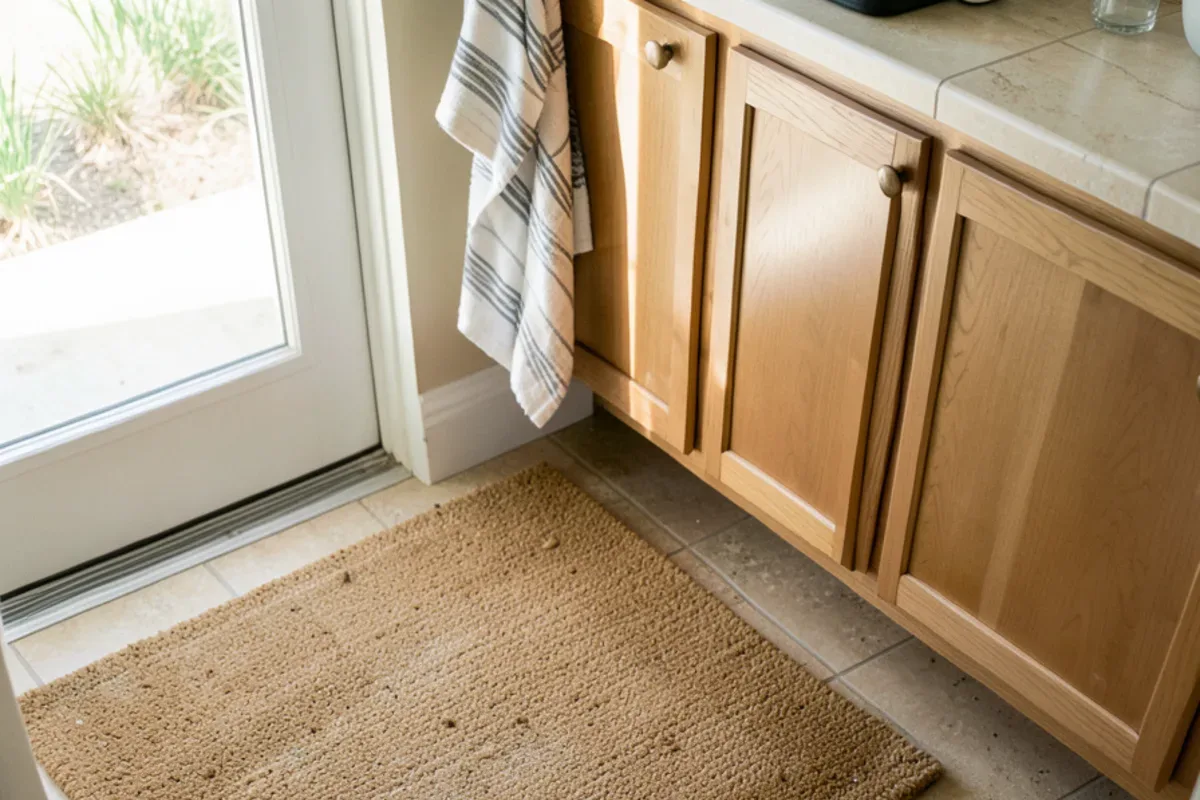
Which cabinet boxes and finishes last near the ocean?
Cabinets in coastal homes fail at the edges and the sink first. A few choices make a real difference:
- Plywood boxes, particularly for sink and dishwasher bases, resist swelling better than particleboard in humid air and when a leak happens.
- Sealed edges and backs. Exposed raw edges absorb moisture; well-sealed panels stay flat longer.
- Painted or thermofoil doors suit the bright coastal look; ask how each finish handles heat near the range and oven.
- Frameless or framed? Either works. What matters more is box material and finish quality.
The kitchen cabinets page covers door styles and box options shown in the showroom.
Hardware, sinks and faucets that resist pitting
Salt is hard on metal. Plated pulls and lower-grade fasteners can pit or show rust spots within a few seasons near the water.
- Choose solid stainless, solid brass or quality finishes rated for humid conditions over thin plated zinc.
- Stainless steel sinks hold up well; wipe them dry and rinse off cleaners that contain chlorine.
- Hinges and drawer glides with corrosion-resistant coatings last longer in a kitchen with windows that stay open.
- Grade 316 stainless is the usual marine-grade choice for outdoor kitchens and exposed hardware facing the ocean breeze.
Countertops for beach kitchens
Quartz is non-porous and does not need sealing, which suits a busy beach rental. Granite handles humidity and heat well once sealed. Marble looks right in a classic coastal kitchen but etches from lemon, wine and vinegar and needs more care. For outdoor kitchens and covered patios, check the maker’s guidance carefully: many quartz products are not intended for direct sun, while granite is a common outdoor choice.
How should a floor be installed in a beach house?
Near the ocean, preparation matters more than the plank. Most coastal floor failures trace back to moisture that was already in the slab or subfloor on installation day, not to a weak product. A careful install follows roughly this order:
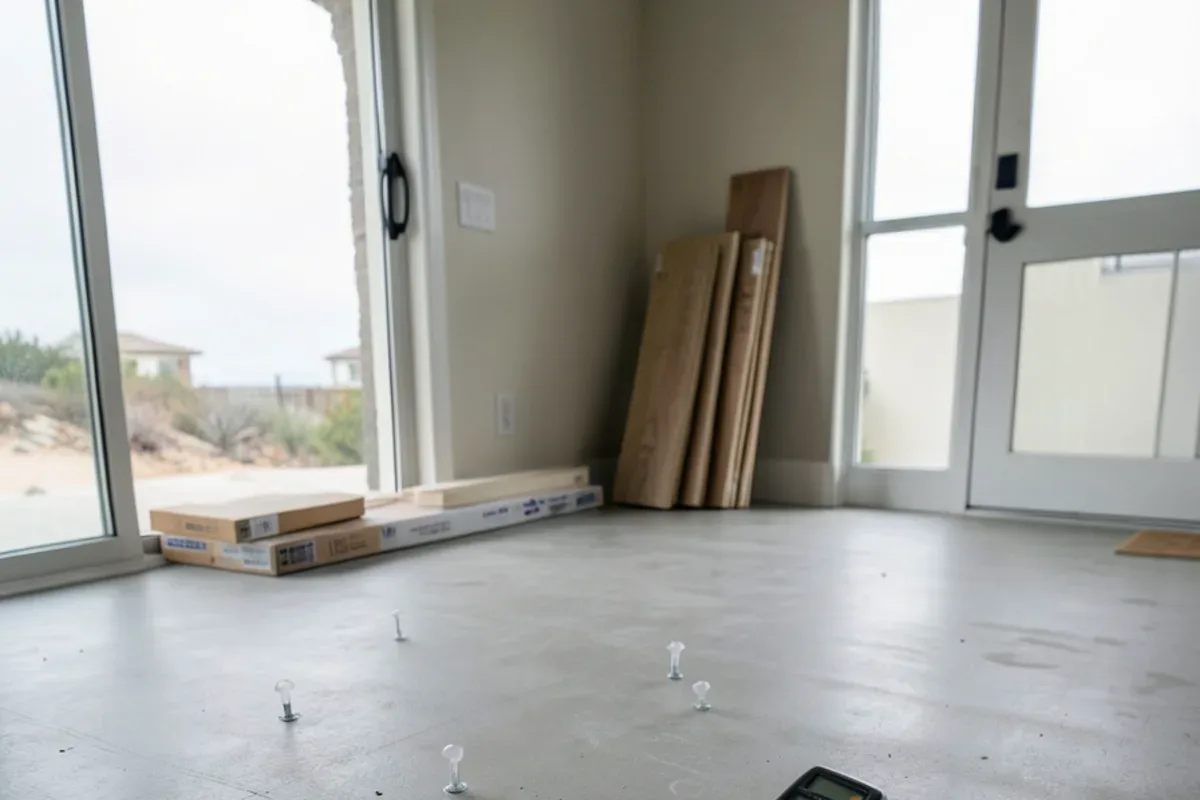
Test the slab or subfloor
Concrete holds moisture for a long time. Installers commonly measure it with in-slab relative humidity probes (the ASTM F2170 method) or a calcium chloride kit (ASTM F1869), and the flooring maker’s guide sets the limit the reading must meet. Wood subfloors over a crawlspace are checked with a moisture meter.
Acclimate wood the way the maker specifies
Engineered boards should sit in the house with windows, fans and air conditioning running as they will be lived in, for the time and conditions in the installation guide. Acclimating boxes in a shut-up beach house with stale, damp air gives a false reading.
Lay the right barrier underneath
Over concrete that usually means a vapor retarder or an underlayment with one built in. In a condo it also means a sound-rated underlayment the flooring maker approves for that exact product.
Leave the expansion gap
Floating floors need a gap at walls, cabinet bases and door jambs, hidden under baseboard or quarter-round. Coastal houses swing between damp gray mornings and dry offshore-wind days, so that gap does real work.
Plan transitions before either floor goes down
Where textured tile at the beach entry meets vinyl or wood, decide the transition strip and finished heights first so nobody trips on a lip at the door.
Older houses on raised foundations near the beach, and shoreline houses built on piles, have an open space under the floor that feeds damp air up into the boards. A ground vapor barrier in the crawlspace and clear foundation vents help a wood floor more than any surface finish. If you want the floor laid for you, flooring installation can be added to the order for the product you choose.
Putting together a beach-house palette
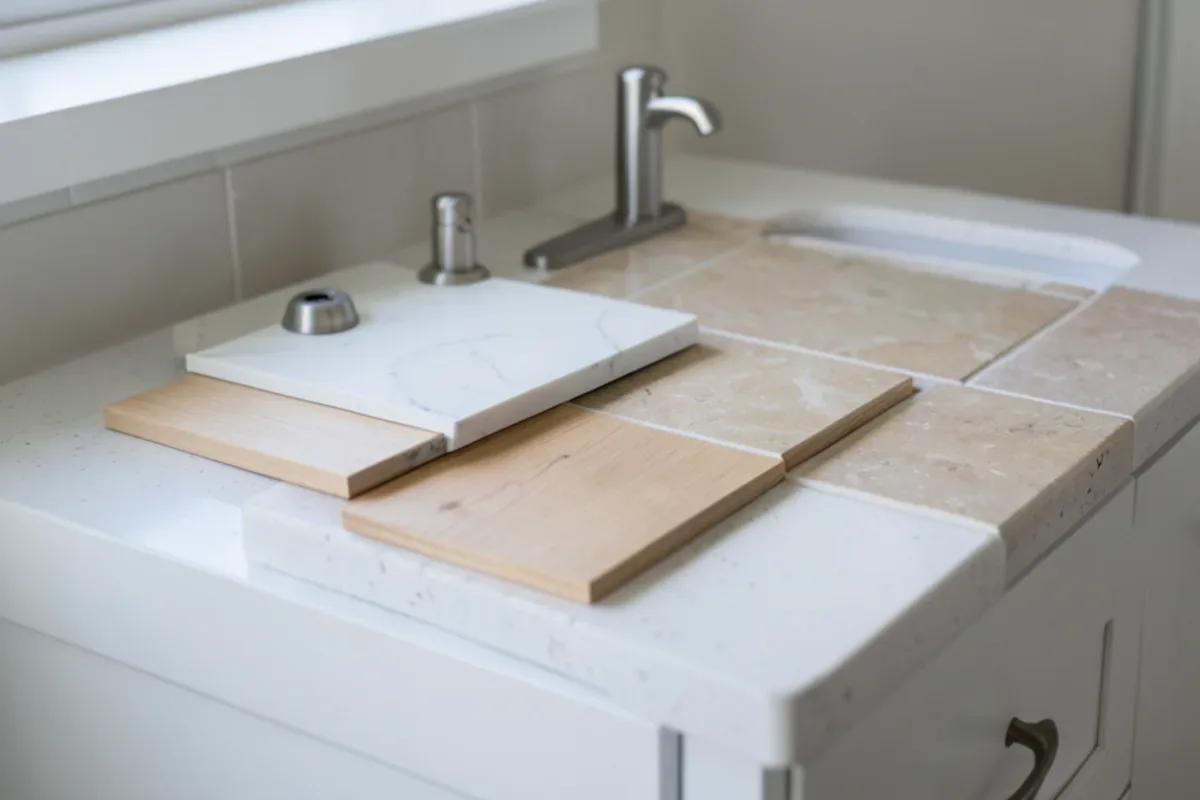
Coastal light is softer and bluer on gray mornings and very bright by afternoon, so colors shift more through the day than inland. Comparing pieces together in one room helps:
- Set the floor sample, a cabinet door and a counter sample next to each other, then look at them near a window and again under ceiling light.
- Pick a floor finish with texture or a slight color variation so sand and footprints disappear between sweeps.
- Test pulls and knobs in hand; solid hardware feels heavier and is less likely to pit.
- Choose grout in a sandy mid-tone rather than bright white for tile at the beach entry.
- Plan a durable landing zone at the door with tile or vinyl, then switch to wood further inside.
What beach-house owners tend to regret: notes from the sample tables
Coastal homeowners often bring photos of a floor or kitchen that did not age well. The problems are rarely dramatic, and almost all of them could have been avoided at the ordering stage:
- Dark, glossy floors. They look striking under showroom lights, then show every grain of sand and every salty footprint at home. Mid-tone, matte and textured surfaces forgive far more, at the cost of a slightly less formal look.
- Vinyl beside big ocean-facing glass. Vinyl plank shrugs off water, but strong direct sun through sliding doors heats it, and many vinyl makers caution against or restrict installs in rooms with long hours of direct sun. Read that part of the installation guide and plan shades, or a tile zone, for a room that turns into a sun trap.
- Porcelain in every room. It is the toughest floor there is, but a whole house of tile feels hard and cool underfoot and sounds louder. Many owners end up happier with tile at entries, baths and laundry, and vinyl or engineered wood in living spaces.
- Bright white grout and cabinets at the back door. Sand, sunscreen and wet towels discolor them quickly; a warmer white door and a sandy mid-tone grout hide it.
- Second homes left sealed for weeks. Floors and cabinet doors in houses that sit closed between visits often move more than in homes lived in daily. Air conditioning or a dehumidifier set on a schedule costs far less than a replacement floor.
Planning a coastal kitchen and floor
Cabinets, countertops, tile and flooring are all on display at the North Hollywood showroom, so a coastal homeowner can build the whole kitchen and floor palette in one trip. Start with waterproof vinyl and engineered hardwood for the floors; if you want the new floor laid for you, ask about having it installed when you order. In condos, bring the HOA’s flooring rules so the underlayment is chosen correctly from the start.
Quick answers
Is engineered hardwood a good idea a few blocks from the beach?
Usually, yes, with the right product and habits. Engineered boards move less with humidity than solid planks, and a matte, wire-brushed finish hides the scratches sand leaves. Keep mats at every entry, sweep often, and keep air moving in rooms that stay closed. If floors take wet feet daily from the beach or an outdoor shower, put tile or vinyl at that entry.
Why do cabinet pulls rust in beach houses?
Airborne salt settles on metal and holds moisture against it, which speeds corrosion, especially on plated hardware where the thin finish wears through. Solid stainless or brass pulls last longer. Wipe hardware occasionally with a damp cloth to remove salt film and dry it, particularly in kitchens near windows or doors that stay open to the ocean breeze.
What floor works best at a beach entry or mudroom?
Porcelain tile with a textured, slip-resistant finish is the toughest choice, since it ignores sand, wet towels and salt water. Waterproof vinyl is a softer, quieter alternative. Use a coarse mat outside and a washable runner inside, and choose a grout color that hides sand. Switching to wood a few steps further inside protects it from the worst grit.
Does a coastal condo need special flooring underlayment?
Often, yes. Many condo associations along the Westside and South Bay require hard floors to meet a sound rating, which depends on the flooring, the underlayment and the slab. Get the association’s written rule before choosing a product, and pick an underlayment the flooring manufacturer approves so you do not trade sound compliance for a voided product warranty.
Sources
- National Weather Service, Los Angeles/Oxnard office — Marine layer and coastal weather information for the Los Angeles area
- National Wood Flooring Association (NWFA) — Humidity and wood floor movement guidance
- Natural Stone Institute — Care of granite, marble and other natural stone surfaces
- ASTM International — F2170 and F1869 concrete slab moisture test methods
About this guide
Written by the team at Adcom Kitchen & Flooring, a kitchen cabinet, countertop, tile and flooring showroom at 13259 Sherman Way in North Hollywood. Rules and figures from outside sources are attributed; confirm current requirements with your building department or the agency named.
Related services
Service areas
More on this topic: Flooring
Talk to the showroom before you buy
Call with your measurements and photos, or stop by Sherman Way to compare cabinets, counters, tile and flooring side by side.
Adcom Kitchen & Flooring · 13259 Sherman Way, North Hollywood, CA 91605 · Get directions · Showroom hours
- Showroom at 13259 Sherman Way, North Hollywood
- 20 Google reviews
- BBB rating A+
- Cabinets, counters, tile & floors in one place