
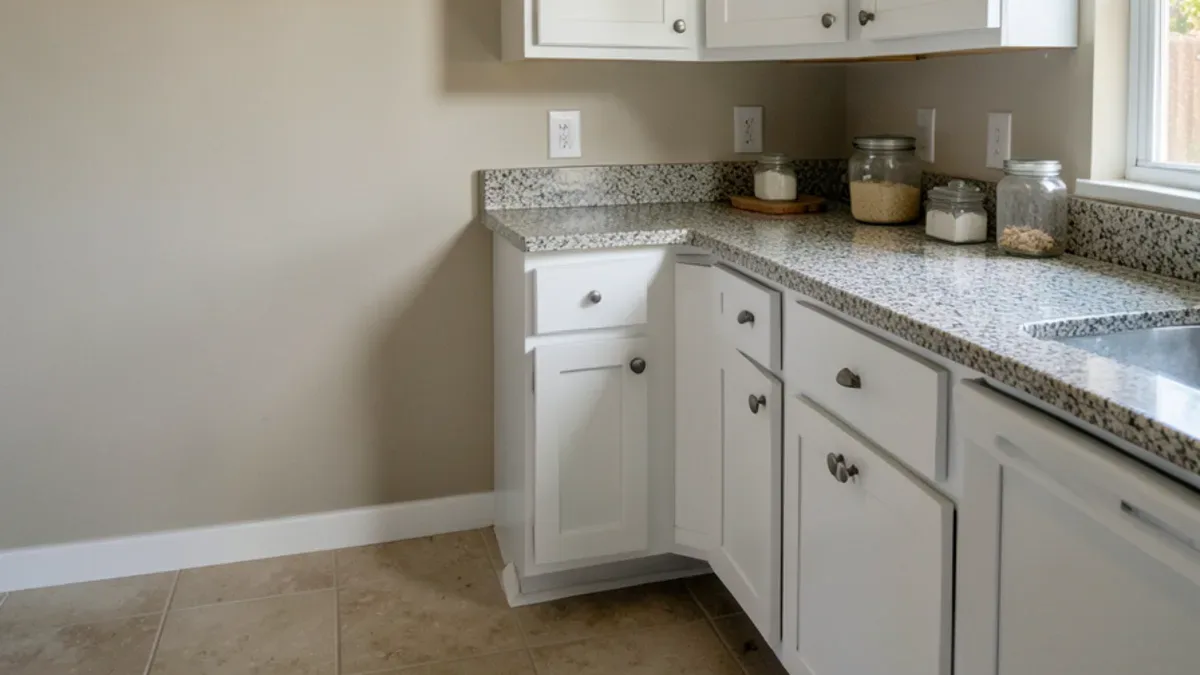
What goes wrong in a kitchen during a strong quake?
The U.S. Geological Survey records the Northridge earthquake as a magnitude 6.7 event beneath the Valley, and the shaking reached well beyond it, including the collapse of the Interstate 5 and State Route 14 interchange near Santa Clarita. Inside homes, kitchens were among the messiest rooms. The common problems are predictable:
- Upper cabinet doors swing open and dishes and glassware fall onto the counter and floor.
- Wall cabinets hung on drywall anchors or a few short screws pull away from the wall.
- Refrigerators walk forward and ranges tip when an oven door is open.
- Open shelves and tall pantry units shed their contents or lean.
- Gas and water connections behind appliances are stressed when the appliance moves.
Want to see the options in person?
The Sherman Way showroom has cabinets, counters, tile and flooring on display side by side. Call before you come and say what you're working on.
- Showroom at 13259 Sherman Way, North Hollywood
- 20 Google reviews
- BBB rating A+
- Cabinets, counters, tile & floors in one place
How should wall cabinets be anchored?
Anchoring is the single most important step, and it happens during installation. Wall cabinets should be fastened through their hanging rail into wall studs with screws long enough to reach well into the framing, not into drywall alone. Adjacent boxes are screwed to each other so the run behaves as one unit. Tall pantry and oven cabinets get fastened to the wall near the top so they cannot tip forward.
Older Los Angeles houses complicate this. Plaster-and-lath walls, uneven stud spacing and soffits built over open space all need checking before the first box goes up. If studs fall in awkward places, an installer may add blocking or a mounting strip. If the wall itself needs opening or reframing, that is work for a licensed contractor, and in the City of Los Angeles it may need a permit from LADBS.
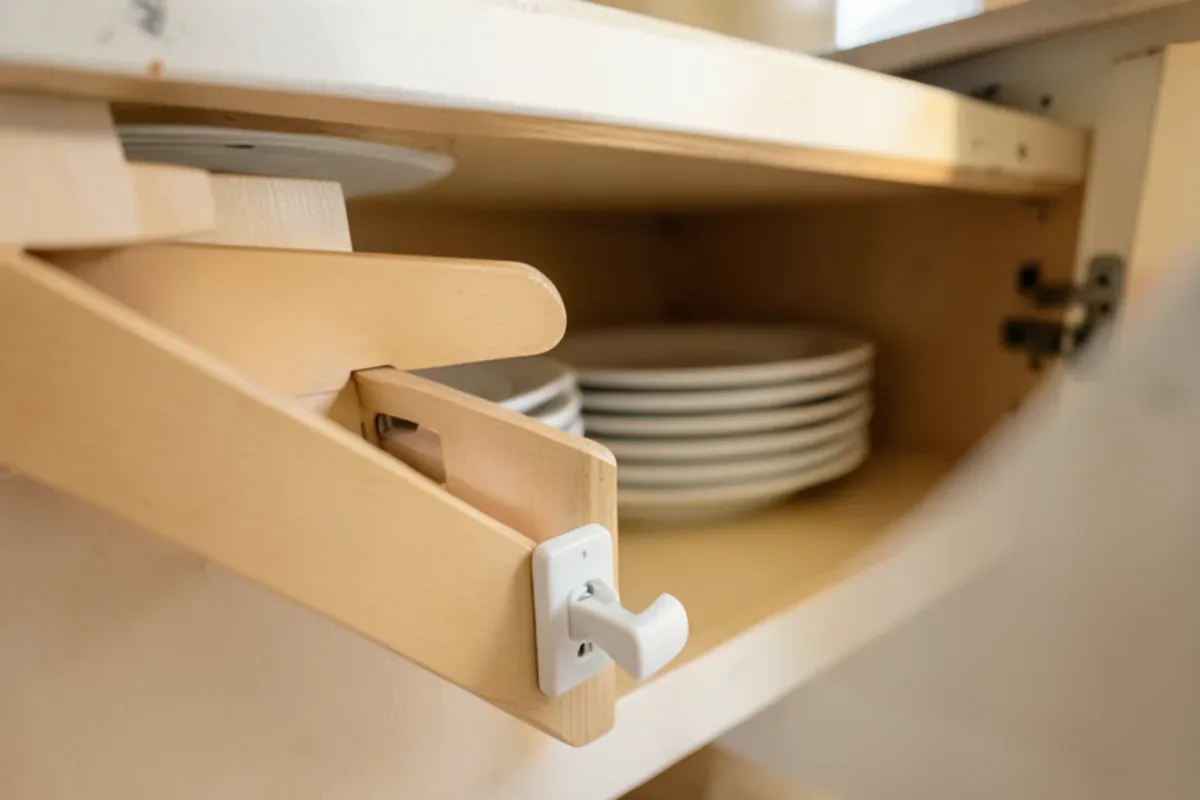
Which cabinet latches suit an earthquake proof kitchen?
| Latch type | How it works | Trade-off |
|---|---|---|
| Hidden spring or hook latch | A hook inside the door catches a strike; you press a release as you open | Needs a small extra motion every time |
| Seismic or motion-activated latch | Stays open in normal use, engages when the cabinet shakes | Costs more; must be mounted carefully to work |
| Magnetic lock | Opened with a magnet key held to the outside of the door | Very secure; awkward for daily-use cabinets |
| Positive-catch hinge or roller catch | Adds resistance so the door does not swing on its own | Helps in light shaking; not a true lock |
| Drawer stops and soft-close glides | Keep drawers from sliding fully out | Most modern glides include a stop |
Prioritize the upper cabinets that hold glassware and dishes and any cabinet that opens over a walkway. The Earthquake Country Alliance lists securing cabinet doors among its first steps toward safety at home.
Supporting heavy stone countertops
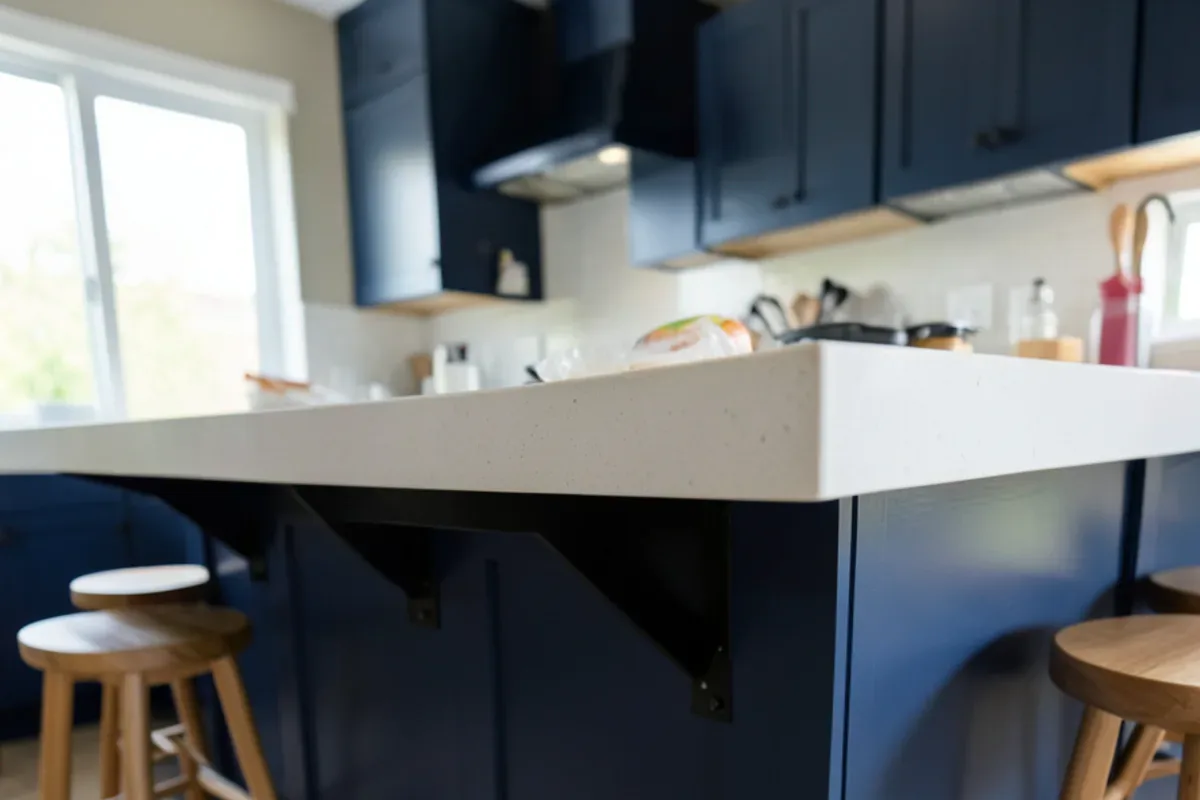
Granite, marble and quartz slabs are heavy, and they stay put in an earthquake largely because the cabinets under them are level, shimmed solid and fastened together. Problems start when a top bridges over a gap, rests on a high spot, or has an unsupported overhang. An island top with a deep seating overhang needs brackets, corbels or a steel support per the fabricator’s guidance, and the island itself should be fastened to the floor.
- Cabinets leveled and shimmed before the countertop is templated.
- Every base box fastened to its neighbor and to the wall or floor.
- Overhang supports chosen with the stone thickness and depth in mind.
- Seams placed over solid cabinet support, not over an open dishwasher bay.
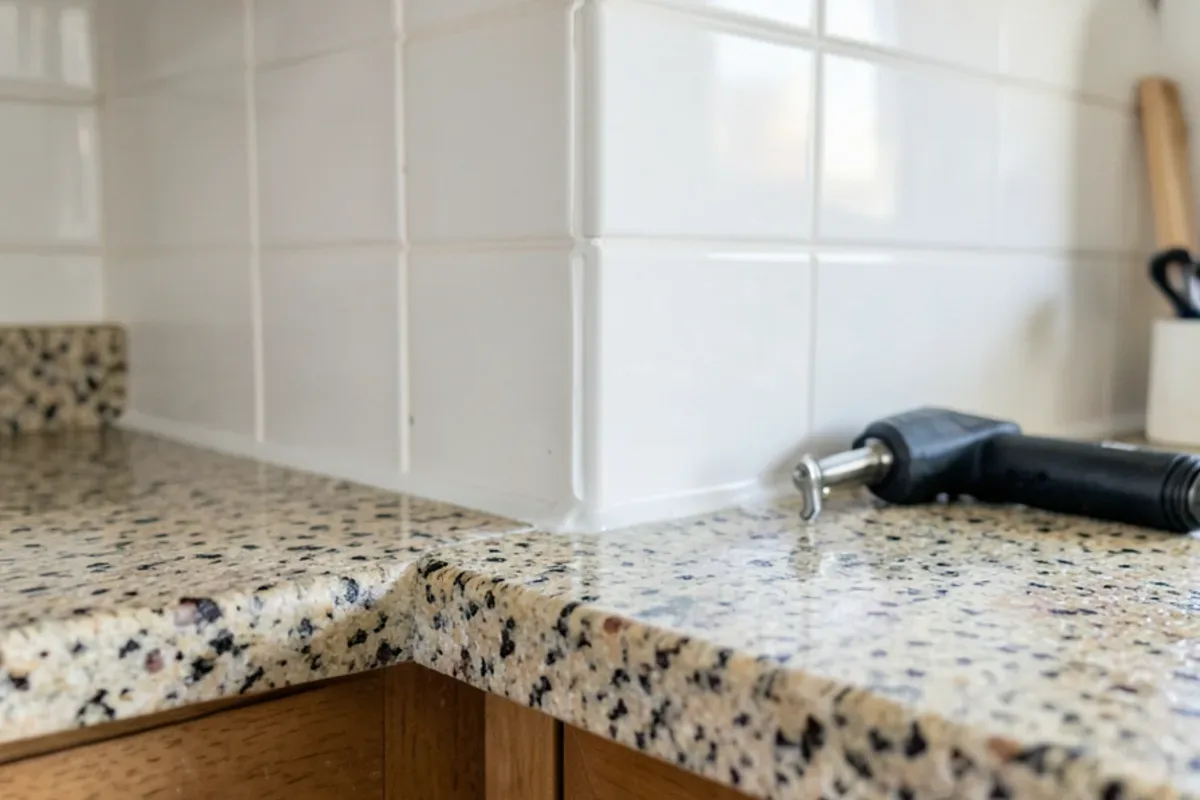
Which tile and flooring details tolerate shaking?
Cabinets and counters get most of the attention, but floors and backsplash take the movement too. Concrete slabs across the Valley often carry hairline shrinkage cracks, and an earthquake can widen them. Hard, brittle finishes laid directly over that crack will usually crack along with it. A few installation details make the difference:
- Crack isolation membrane under floor tile. A membrane rated to the ANSI A118.12 standard, set between the slab and the tile, lets small slab movement happen without telegraphing through the tile.
- Movement joints in large tile floors. Tile Council of North America guidance calls for soft, flexible joints at the room perimeter and at intervals across large fields, instead of grout everywhere.
- A flexible joint where backsplash meets counter. The change of plane between a stone top and the wall tile should be sealed with a flexible sealant, not hard grout, so the two can move a little independently.
- Floating floors on a slab. Click-together vinyl and laminate planks are not bonded to the concrete, so they tolerate slab movement better than glued-down hard surfaces, provided the expansion gap is kept clear.
None of these makes a floor indestructible, but they turn a likely repair into an unlikely one. They also cost little when planned before installation, which is the theme of this whole guide.
Questions to bring to the cabinet and counter desk
Seismic details are easier to build in than to retrofit, so raise them while the kitchen is still on paper. When you visit our showroom to choose cabinets and countertops, these are the questions that turn into practical decisions:
- Does the cabinet line’s hanging rail suit your wall type, and what fasteners will be used?
- Which upper doors should get latches, and can the hardware be ordered with the cabinets?
- Will the island be fastened to the floor, and how does that work over a slab or a raised wood subfloor?
- How will the countertop overhang be supported, and will brackets show?
- Would a lip, rail or glass front on open shelves keep dishes in place while still looking right?
What an earthquake-ready kitchen gives up
Being honest about trade-offs helps people decide which measures they will actually live with:
- Latches add a step. A hook latch on every upper door gets tiresome; most households latch the glassware and dish cabinets and leave the rest.
- Glass-front uppers look lighter but carry risk. Laminated or tempered glass panels are worth asking about where glass doors sit over a counter or walkway.
- Heavy pendants over an island need ceiling boxes and supports rated for the fixture, installed by a licensed electrician, not a swag hook.
- Tall open shelving is the hardest feature to make safe; a lip and putty help, but closed storage is safer for anything breakable.
Appliances, gas lines and the rest of the room
Freestanding ranges come with an anti-tip bracket that should be installed and engaged. Refrigerators can be strapped to the wall with appliance straps. Flexible gas and water connectors give appliances some room to move without breaking a joint. Some jurisdictions, including the City of Los Angeles, have rules on seismic gas shutoff valves for certain permitted work; those questions belong with LADBS or your local building department and a licensed plumber. Verify any contractor’s license on the CSLB website before work starts. California law also requires water heaters to be braced or strapped against earthquake motion, and a kitchen remodel that touches the water heater is a good moment to confirm the straps are in place.
Inside the cabinets, keep heavy pots, mixers and stacks of plates in base cabinets and drawers, and put light items up high. Ready.gov’s earthquake guidance makes the same point: heavy objects belong on low shelves.
Building the safety into the install
Most of an earthquake-ready kitchen is simply careful cabinet installation: studs located, boxes tied together, tops supported. Choose latch-friendly doors and solid boxes from our kitchen cabinets range, and see the kitchen remodeling in Los Angeles overview if the whole room is changing. Homeowners across Los Angeles can compare everything in one visit.
Quick answers
Do cabinet safety latches really work in an earthquake?
Yes, a properly installed latch keeps a cabinet door closed during shaking, which is what keeps dishes from spilling out. Hook-style and motion-activated latches are the most reliable for kitchens; simple roller catches help only in light shaking. The weak point is installation, so the strike must line up with the hook and the screws must bite into solid material.
Can a granite countertop crack or slide in an earthquake?
A granite top on level, fastened cabinets rarely slides, because its weight and the adhesive hold it in place. Cracks are more likely where the stone was already stressed: over an unsupported span, at a narrow section beside a sink cutout, or on an overhang without brackets. Good support at installation is the best protection.
Should a kitchen island be fastened to the floor?
Yes, an island should be fastened to the floor, typically with cleats or blocking screwed to the subfloor or anchored to a concrete slab, and the boxes screwed together. A heavy stone top on a loose island can shift in strong shaking. If the island has plumbing or electrical, those connections also benefit from a fixed base.
Are open shelves a bad idea in earthquake country?
Open shelves are not a bad idea, but they need a plan. Keep everyday items light and unbreakable, add a low rail or lip at the front edge, and use museum putty under decorative pieces. Put glassware and good dishes behind latched doors instead. Shelves should be anchored into studs with brackets rated for the load.
Sources
- U.S. Geological Survey Earthquake Hazards Program — Records of the 1994 Northridge earthquake and Southern California seismic hazard
- Earthquake Country Alliance — Seven Steps to Earthquake Safety, including securing cabinets
- Ready.gov: Earthquakes — Federal home preparedness guidance
- Contractors State License Board — License lookup for contractors and trades
- Tile Council of North America (TCNA) — Tile installation guidance, including movement joints (EJ171)
About this guide
Written by the team at Adcom Kitchen & Flooring, a kitchen cabinet, countertop, tile and flooring showroom at 13259 Sherman Way in North Hollywood. Rules and figures from outside sources are attributed; confirm current requirements with your building department or the agency named.
Related services
Service areas
More on this topic: Kitchen Cabinets
Talk to the showroom before you buy
Call with your measurements and photos, or stop by Sherman Way to compare cabinets, counters, tile and flooring side by side.
Adcom Kitchen & Flooring · 13259 Sherman Way, North Hollywood, CA 91605 · Get directions · Showroom hours
- Showroom at 13259 Sherman Way, North Hollywood
- 20 Google reviews
- BBB rating A+
- Cabinets, counters, tile & floors in one place