
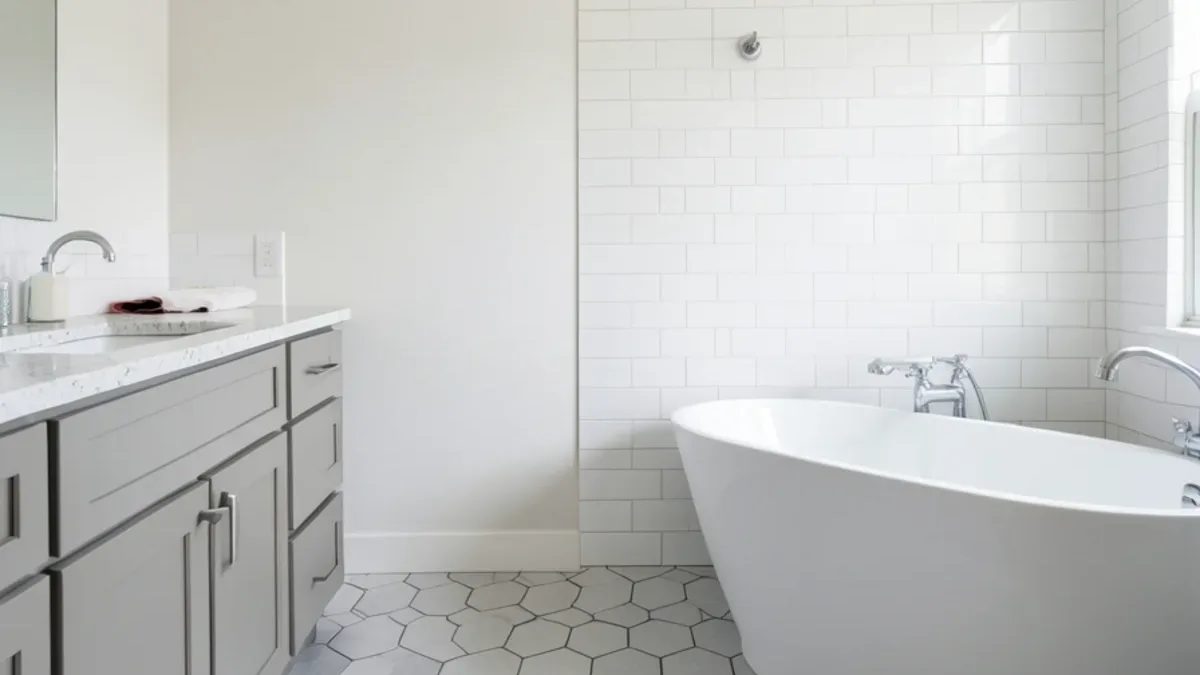
How does grout color change the way tile looks?
Grout is a large share of what you see on a tile surface, especially with small tiles and mosaics. The color you choose decides whether the eye reads one continuous surface or a grid of individual tiles.
| Grout choice | Visual effect | Hides dirt | Good for |
|---|---|---|---|
| Matched to tile | Calm, nearly continuous surface | Well, if the tile is mid-tone | Large-format floors, small rooms, stone-look porcelain |
| Slightly darker than tile | Soft outline, still quiet | Very well | Kitchen floors, entries, shower floors |
| Strong contrast | Graphic pattern; shapes stand out | Dark grout hides dirt; light grout shows it | Subway, hexagon and arabesque feature walls |
| Bright white | Crisp and classic | Poorly on floors | Walls and backsplashes with easy access for cleaning |
Want to see the options in person?
The Sherman Way showroom has cabinets, counters, tile and flooring on display side by side. Call before you come and say what you're working on.
- Showroom at 13259 Sherman Way, North Hollywood
- 20 Google reviews
- BBB rating A+
- Cabinets, counters, tile & floors in one place
Sanded, unsanded, epoxy or high-performance grout?
Grout types are defined in the ANSI A118 standards that the Tile Council of North America helps publish, and the right one depends on joint width and how much water and staining the surface will see.
- Unsanded cement grout is for narrow joints, typically 1/8 inch or less, and for polished stone or glass that sand could scratch.
- Sanded cement grout is for wider joints, where sand gives strength and resists shrinking and cracking. It needs sealing.
- High-performance cement grout is a modified formula with better color consistency and stain resistance; some versions need no sealer.
- Epoxy grout is non-porous, highly stain-resistant and never needs sealing. It costs more, sets faster and takes skill to install, but it is excellent on shower floors and behind ranges.
- Pre-mixed urethane or acrylic grouts come ready to use and resist stains well; follow the maker’s cure time before getting them wet.
Does grout really need sealing, and when?
Standard cement grout is porous. Without a sealer, coffee, cooking oil, soap scum and hard-water minerals soak in and darken the joints, and in a shower it stays damp longer. A penetrating sealer fills the pores so liquids bead up long enough to wipe off. It does not make grout waterproof; the waterproofing layer behind shower tile does that job.
Let the grout cure
Wait the full time the grout maker lists, often 48 to 72 hours, before sealing.
Clean and dry the joints
Remove haze and residue so the sealer goes into clean grout.
Apply to the joints
Use a fine brush or applicator bottle; wipe sealer off glazed tile before it dries.
Test with water
Drops should bead. If they darken the grout, apply a second coat.
Retest periodically
Shower floors and kitchen floors wear sealer fastest; recheck them a few times a year and reseal as needed.
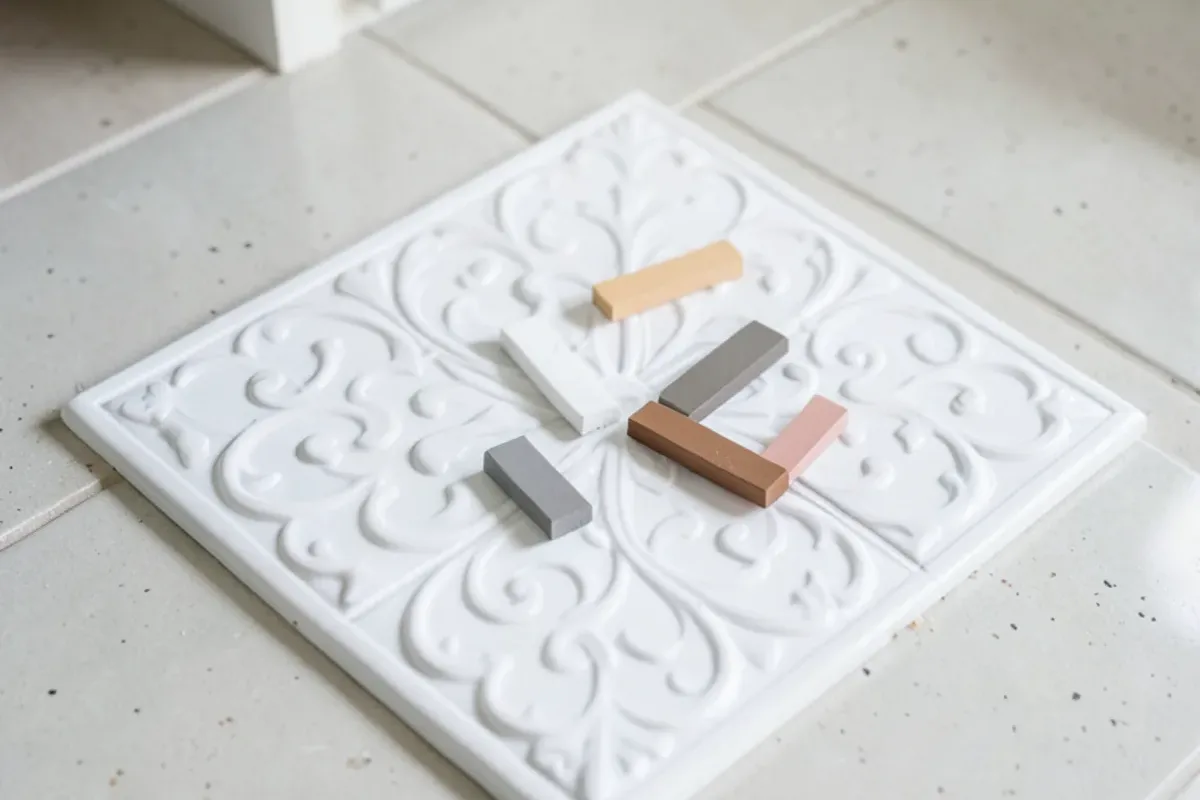
What the grout stick tells you before you buy
Choosing grout from a printed chart is a guess. At our showroom, it helps to lay actual cured grout color sticks on the tile you like, because a joint that looks subtle on paper can turn into a bold grid on a real sample. Try three colors: one matched, one a shade darker and one contrast. Contrast can be the right call; one Google reviewer described a 4-plex finished with white arabesque walls set off by brown grout, which turns each curved tile into a defined shape. On a floor, the darker option almost always stays cleaner looking.
Why the same grout can cure in two shades
Blotchy grout, where one joint is noticeably lighter than the next, is one of the most common complaints after a tile job, and the cause is almost always in the mixing and cleanup rather than the product. Knowing why it happens helps you ask the right questions before installation.
- Inconsistent water. Cement grout mixed wetter in one batch than another dries to a lighter shade. Careful installers measure the water and mix full bags.
- Too much sponge water. Washing the surface with a soaking-wet sponge pulls pigment out of fresh joints and can leave a white bloom of mineral salts called efflorescence.
- Hot, dry air. On a Santa Ana day or in an unconditioned Valley house in August, grout can stiffen before it is tooled evenly. Installers work smaller sections and may cover or mist a floor, following the grout maker’s directions.
- Different lots. Bags made at different times can vary slightly, so buy enough of one lot for the whole room.
Pre-mixed and epoxy grouts avoid most of the mixing variables, which is one honest reason to pay more for them on a large floor or a color that must stay uniform.
A simple routine for clean grout
- Squeegee or towel shower walls after use so water and soap don’t sit in the joints.
- Mop floors with a pH-neutral cleaner; strong acids eat away cement grout and etch stone.
- Scrub joints with a soft nylon brush, not a wire brush, which wears grout down.
- Keep a bathroom fan running during and after showers to dry the room faster.
- Avoid harsh bleach on colored grout, which can lighten it unevenly.
- Reseal cement grout when the water test shows it absorbing.
When cracked or stained grout signals a bigger problem
Hairline grout cracks in an inside shower corner or along the tub usually mean grout was used where a flexible sealant belongs. The TCNA Handbook calls for movement joints at changes of plane, such as inside corners and where tile meets a tub, filled with sealant rather than grout. Grout that stays dark long after a shower, loose tiles or a musty smell can point to failed waterproofing behind the tile, and regrouting alone won’t fix it.
Older homes in Glendale and across Los Angeles often still have original tile bathrooms. When those need repair, matching the old grout color can be tricky, because decades of cleaning shift it; regrouting a whole wall sometimes looks better than patching.
Clean, recolor, regrout or retile?
Tired grout does not always mean new tile. Match the fix to what you actually see, starting with the least invasive option.
| What you see | Usual fix | Keep in mind |
|---|---|---|
| Evenly darkened but solid joints | Deep clean, then seal | A pH-neutral cleaner and a nylon brush often restore more color than expected |
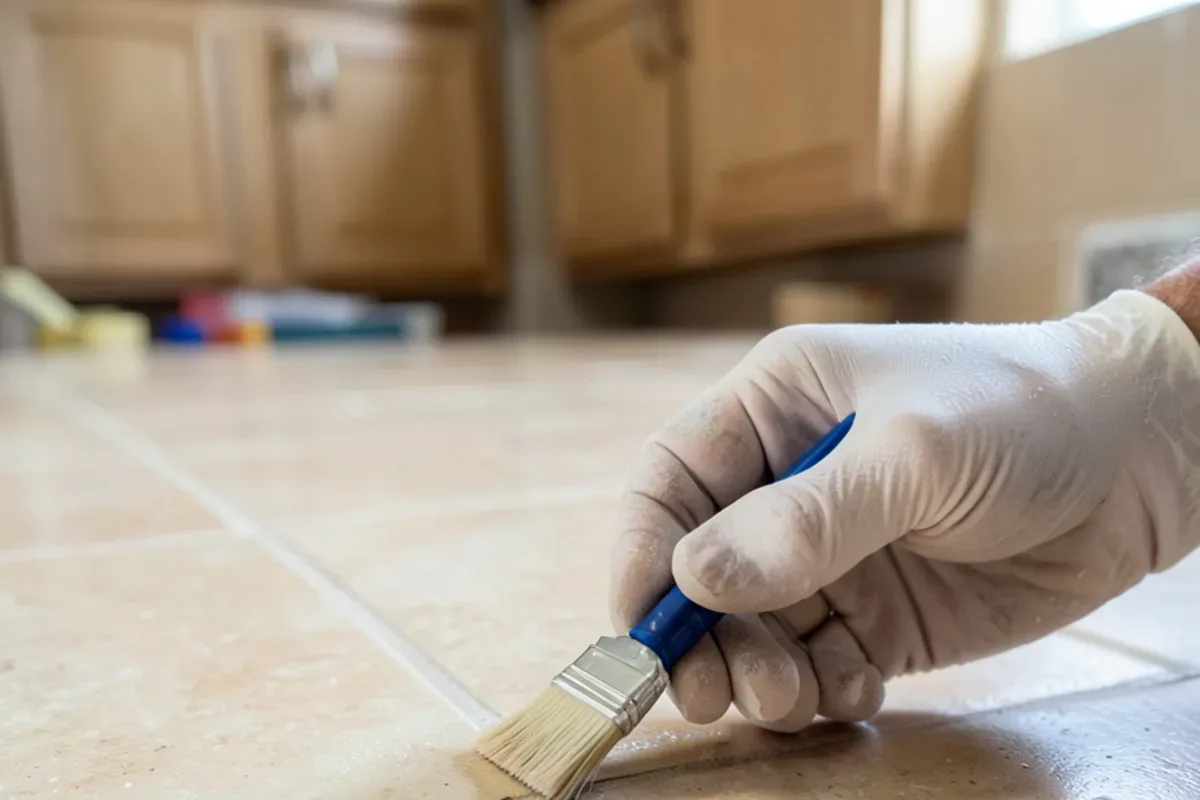
| Stains that won’t lift, joints still sound | Grout colorant applied to the joints | Changes the color and seals at once; it needs reapplying in heavy-wear areas over time |
| Hairline cracks in a few field joints | Cut out and regrout that section | New grout rarely matches old exactly, so choose a full wall if the patch would show |
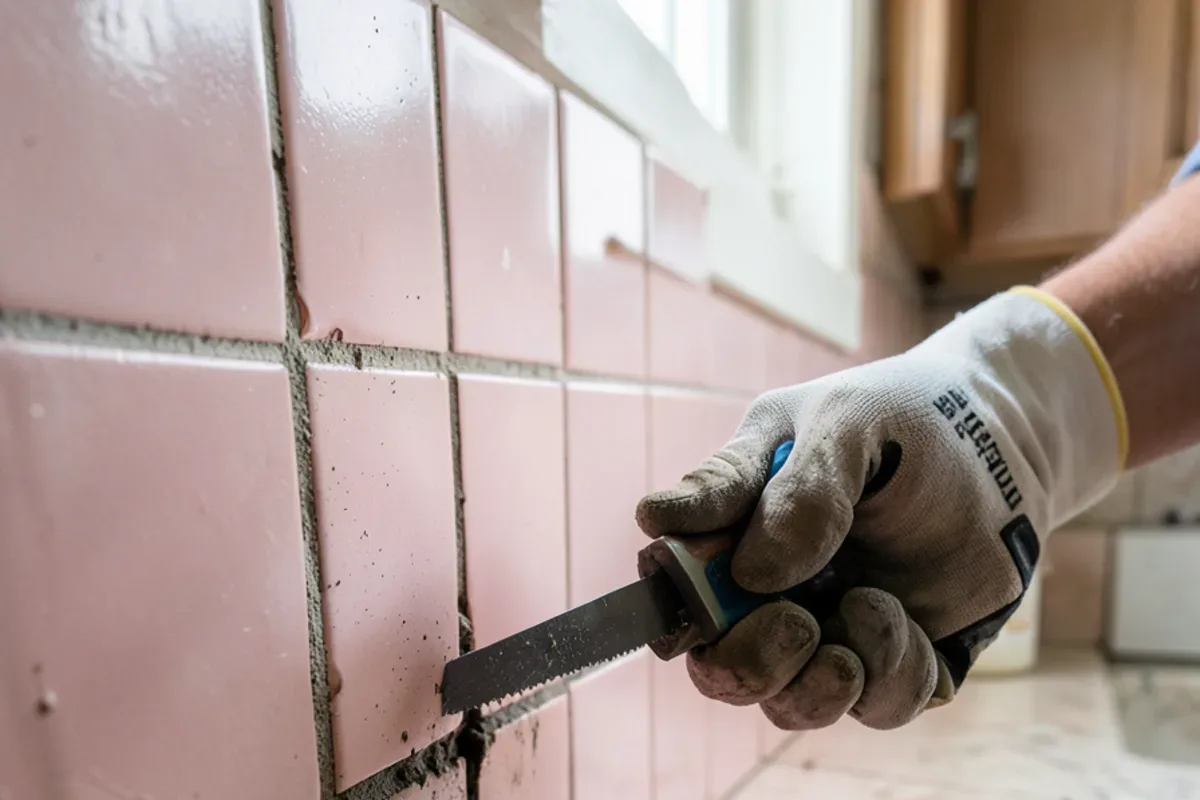
| Crumbling or missing joints across a room | Remove old grout with a grout saw and regrout | Slow, dusty work; protect the glaze while cutting |
| Loose tiles, soft spots, joints that stay wet | Open up and inspect the waterproofing | Regrouting a failed shower only hides the leak |
Planning grout color and sealing for your next tile job
Grout type, joint width and sealing are settled during tile installation, so raise them before work starts. For wet areas, our shower tile page covers waterproofing and floor tile choices. You can see grout colors next to the full tile selection in North Hollywood.
Quick answers
How long after grouting can I apply sealer?
Wait until the grout has fully cured, which for most cement grouts is about 48 to 72 hours, though some products list longer. Sealing too early traps moisture and can leave the joints blotchy. Clean off any haze first, keep the area dry, and follow the sealer label. Epoxy and many urethane grouts never need sealing at all.
Is epoxy grout worth it for a shower floor?
Often, yes. A shower floor stays wet more than any other tiled surface, and epoxy grout is non-porous, so it resists stains, soap scum and mildew discoloration without a sealer. It costs more and needs a skilled installer, since it sets quickly. For a small shower floor the extra material cost is modest compared with years of scrubbing.
Why does my grout look different from the sample?
Grout color shifts with how much water is used in the mix, how quickly it dries, and whether it was washed with too much water during cleanup. Efflorescence, a white mineral bloom, can also lighten it. Always judge from a cured sample stick, and buy all the grout for one job from the same batch when possible.
Should I use caulk or grout in shower corners?
Use a flexible sealant, usually a color-matched silicone or the caulk made by your grout maker, in inside corners and where tile meets the tub or shower pan. These are movement joints, and rigid grout there tends to crack. Grout goes in the flat joints between tiles; sealant goes wherever two planes meet.
Can old grout be recolored instead of replaced?
Yes, when the grout is still solid. A grout colorant is brushed onto clean, dry joints and dyes and seals them in one step, which can turn stained beige grout into an even gray. It will not fix cracked or crumbling joints, and shower floors may need touch-ups. In original tile bathrooms in older LA homes, test it in a hidden corner first.
Sources
- Tile Council of North America — TCNA Handbook and ANSI A118 grout standards, including movement joints
- Natural Stone Institute — Cleaning and sealing guidance for stone tile and grout
- EPA: Mold — Moisture control in bathrooms
About this guide
Written by the team at Adcom Kitchen & Flooring, a kitchen cabinet, countertop, tile and flooring showroom at 13259 Sherman Way in North Hollywood. Rules and figures from outside sources are attributed; confirm current requirements with your building department or the agency named.
Related services
Service areas
More on this topic: Tile & Backsplash
Talk to the showroom before you buy
Call with your measurements and photos, or stop by Sherman Way to compare cabinets, counters, tile and flooring side by side.
Adcom Kitchen & Flooring · 13259 Sherman Way, North Hollywood, CA 91605 · Get directions · Showroom hours
- Showroom at 13259 Sherman Way, North Hollywood
- 20 Google reviews
- BBB rating A+
- Cabinets, counters, tile & floors in one place