

Does insurance cover water damaged floors from every kind of leak?
No. The cause of the water is usually what decides coverage, which is why adjusters ask so many questions about where it came from and how long it ran. The patterns below are typical, not universal.
| Cause | How policies often treat it | Notes |
|---|---|---|
| Burst pipe or failed supply line | Often covered | Damage from the sudden discharge is the usual focus |
| Appliance failure (dishwasher, washer, ice maker) | Often covered | The appliance itself may be treated separately |
| Slow leak under a sink over weeks or months | Often excluded or limited | Policies commonly exclude repeated seepage and wear |
| Flood or surface water from outside | Excluded from standard policies | Needs separate flood insurance, such as through the National Flood Insurance Program |
| Sewer or drain backup | Often needs an added endorsement | Check whether your policy includes it |
| Mold | Often limited or excluded | Sometimes covered when it results from a covered water loss |
| Fire and smoke | Generally covered | Limits, deductibles and replacement cost terms still apply |
Want to see the options in person?
The Sherman Way showroom has cabinets, counters, tile and flooring on display side by side. Call before you come and say what you're working on.
- Showroom at 13259 Sherman Way, North Hollywood
- 20 Google reviews
- BBB rating A+
- Cabinets, counters, tile & floors in one place
What does like kind and quality mean for cabinets and floors?
Most homeowners policies pay to repair or replace damaged property with material of like kind and quality: comparable in type, grade and function to what you had. Solid hardwood is generally replaced with solid hardwood of similar grade, plywood cabinets with plywood cabinets, a granite counter with granite of comparable quality.
- Prove what you had. Receipts, original order paperwork, listing photos and a sample piece all help establish the grade.
- Upgrades are usually your cost. You can often choose something better and pay the difference, but confirm in writing first.
- Downgrades may be allowed too. Some owners take a less expensive material and keep the claim amount within policy rules; ask your insurer how that works.
What happens when new flooring will not match the old?
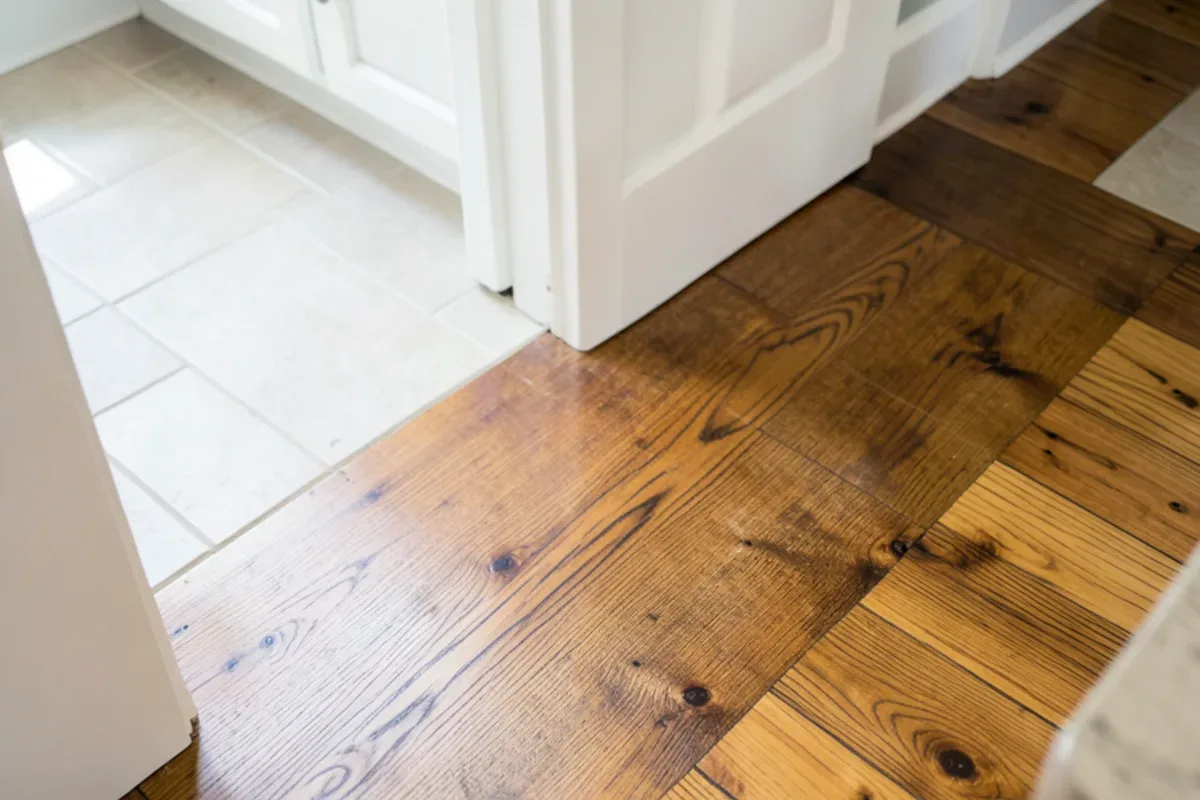
Matching is one of the most common points of disagreement. If one room’s worth of planks is replaced but the same floor runs into the hall and living room, the new boards may not match because the product was discontinued or the old floor has aged.
California’s Fair Claims Settlement Practices Regulations include a provision on this: when replaced items do not match in quality, color or size, the insurer is expected to replace items in the damaged area so they have a reasonably uniform appearance. How far the damaged area extends is often the question. Ask your adjuster how they apply the rule to your floor, and contact the California Department of Insurance if you need help understanding it.
How do you read an adjuster’s scope of loss?
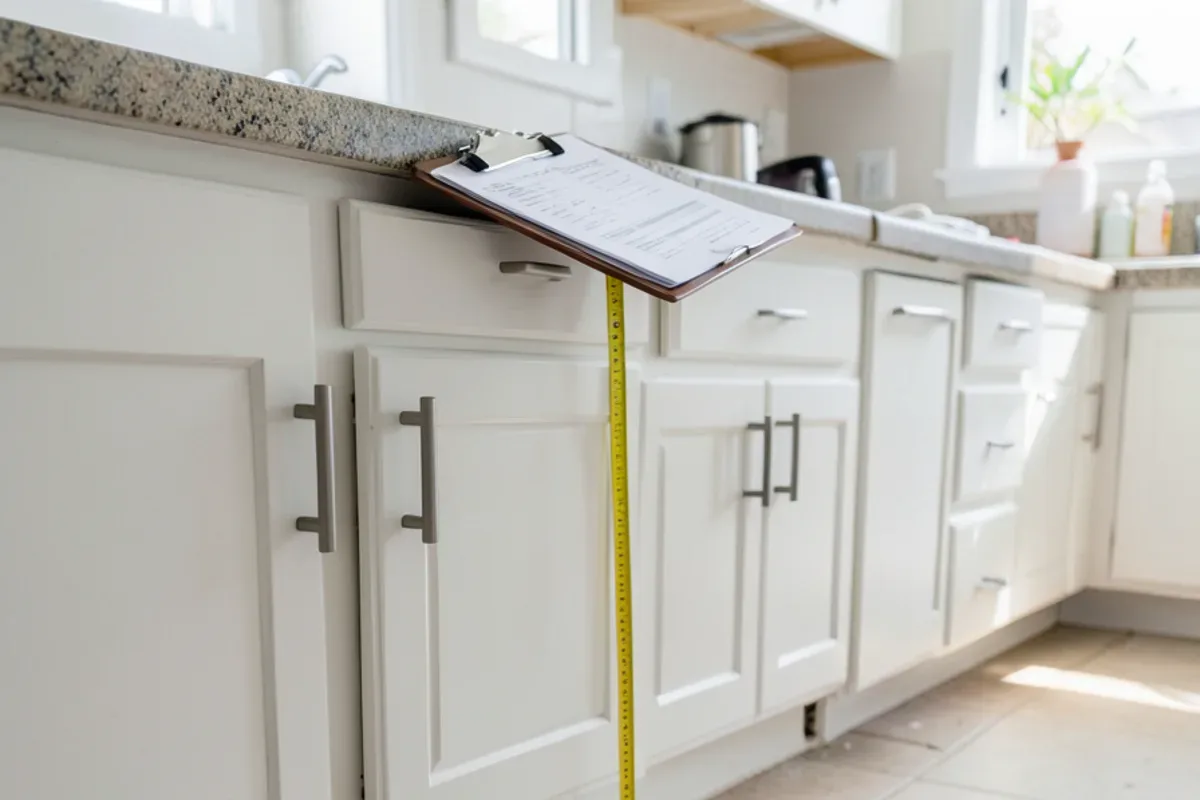
The scope is the line-item estimate the insurer uses to calculate payment. It can run many pages for a kitchen. Check it against your actual room:
- Quantities: square feet of flooring, linear feet of cabinets and baseboard, and square feet of counter match your measurements.
- Removal and disposal: tear-out of damaged flooring, cabinets and counters is listed, not just new material.
- Detach and reset: appliances, sink, faucet and any counter that must come off to replace a cabinet.
- Underlayment, trim and transitions: often missed, and they add up on a large floor.
- Contents handling: moving furniture out and back.
- Material grade: the described product reflects the grade you actually had.
- RCV, ACV and depreciation: replacement cost value, actual cash value and whether depreciation is recoverable once work is complete.
- Deductible and limits: how they are applied to the total.
What claim timelines do California regulations set?
Homeowners often do not know that state regulations set deadlines for the insurer’s side of a claim. California’s Fair Claims Settlement Practices Regulations (California Code of Regulations, Title 10, section 2695 and following) include these benchmarks, summarized here in plain terms:
| Step | General standard in the regulations |
|---|---|
| Acknowledge the claim, begin investigating and send needed forms | Within 15 calendar days of notice of the claim |
| Respond to a policyholder’s written questions | Within 15 calendar days |
| Accept or deny the claim, in whole or in part | Within 40 calendar days of receiving proof of claim, or explain in writing why more time is needed |
| Pay an accepted claim | Within 30 calendar days of acceptance |
Your policy also places duties on you, typically including prompt notice, reasonable steps to protect the property from further damage, and access for inspection. That is one reason the earlier steps, stopping the water and calling a mitigation company, matter for the claim as well as the house.
Keeping a claim file
- Claim number, adjuster’s name and contact details
- A dated log of every call, with who you spoke to and what was said
- All photos and video, from before cleanup through each stage of repair
- Mitigation invoices, drying logs and the plumber’s repair invoice
- Every version of the scope of loss, since revisions are common
- Receipts for temporary living costs if the kitchen or house is unusable, to ask about loss-of-use coverage
- Final invoices for completed work, needed to request any withheld depreciation
Bringing an insurance scope to the showroom
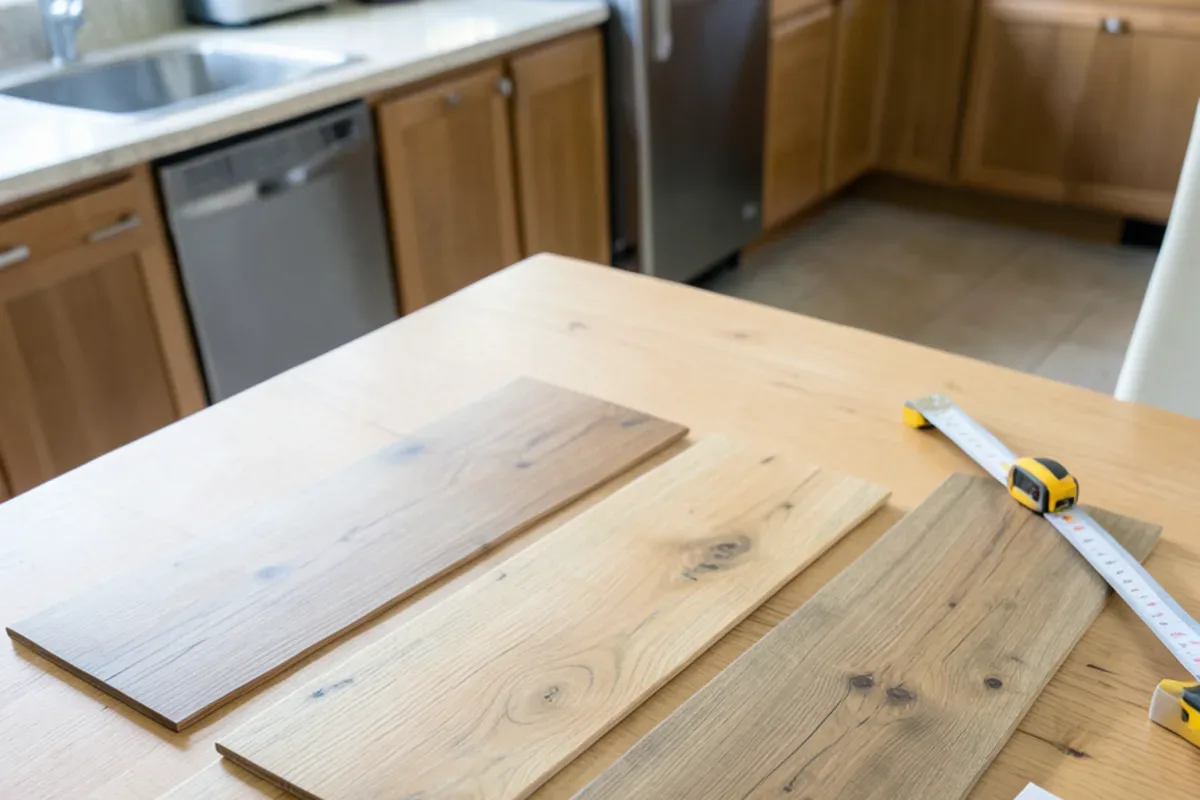
Matching materials to a scope is easier with the samples in front of you. Owners who arrive with paperwork in hand usually get the most out of a visit when they bring:
- The adjuster’s scope and any photos the mitigation company took
- A sample of the damaged floor, tile or a cabinet door, if one is available
- Measurements of every room the flooring runs through, not only the damaged one
- Notes on what you want to change, so upgrade costs can be separated from like-for-like replacement
With that, cabinets, counters, tile and flooring can be compared to the scope line by line, and an itemized quote makes any gap between the insurer’s figures and real-world pricing easy to discuss with your adjuster.
When the original product is discontinued
This comes up often with vinyl plank and laminate, which change color lines every few years. In practice there are three paths: find the closest current product of the same type and grade, run a deliberate change of floor at a doorway or threshold, or replace a larger connected area so everything matches. Each has different cost and appearance trade-offs, and which one the claim pays for is a question for your adjuster, not the showroom. What the showroom can do is put the real options side by side with the old sample, so the conversation with your adjuster is about specific products rather than guesses.
Where Pasadena and Los Angeles homeowners can get help
The California Department of Insurance runs a consumer hotline and helps with claim questions and complaints, including wildfire and water claims. Homeowners in Pasadena, roughly 27 minutes (20 miles) east of North Hollywood, and across Los Angeles can use those resources before escalating a disagreement. Nonprofit groups such as United Policyholders also publish plain-language claim guides.
Insurance-claim repair pages
The insurance-claim repairs page explains how replacement cabinets, counters, tile and flooring are matched to an approved scope and installed on request. The damage repair overview covers water-damaged floors and cabinets and fire rebuilds.
Quick answers
Will my policy pay to replace flooring in rooms that were not damaged?
Sometimes. If the same continuous floor runs into undamaged rooms and replacement pieces cannot reasonably match, California’s matching provision may come into play. Insurers often draw the line at a doorway or natural break. Ask your adjuster to explain the decision in writing, and contact the Department of Insurance if you disagree.
What is recoverable depreciation on a floor claim?
Many replacement cost policies first pay the actual cash value, which is the replacement cost minus depreciation for age and wear. The withheld depreciation is recoverable when you complete the repair and submit proof, such as final invoices. Policies set deadlines for this, so ask your insurer how long you have.
Can I choose my own installer for an insurance repair?
Generally, yes. Insurers may suggest preferred vendors, but homeowners usually can pick who does the work, as long as the price is reasonable compared with the scope. Get an itemized written quote, verify the contractor on the CSLB lookup, and confirm the arrangement with your insurer before work starts.
Is flood damage covered by a standard homeowners policy?
No. Standard homeowners policies exclude flooding and surface water entering from outside, such as storm runoff or mudflow. Coverage comes from a separate flood policy through FEMA’s National Flood Insurance Program or a private flood insurer. Water from a burst pipe inside the house is a different peril and is often covered.
Sources
- California Department of Insurance — Homeowners claim help, consumer hotline and complaints
- FEMA: National Flood Insurance Program (FloodSmart) — Flood coverage separate from homeowners policies
- United Policyholders — Nonprofit plain-language guides to homeowners claims
About this guide
Written by the team at Adcom Kitchen & Flooring, a kitchen cabinet, countertop, tile and flooring showroom at 13259 Sherman Way in North Hollywood. Rules and figures from outside sources are attributed; confirm current requirements with your building department or the agency named.
Related services
Service areas
More on this topic: Fire & Water Damage Repair
Talk to the showroom before you buy
Call with your measurements and photos, or stop by Sherman Way to compare cabinets, counters, tile and flooring side by side.
Adcom Kitchen & Flooring · 13259 Sherman Way, North Hollywood, CA 91605 · Get directions · Showroom hours
- Showroom at 13259 Sherman Way, North Hollywood
- 20 Google reviews
- BBB rating A+
- Cabinets, counters, tile & floors in one place