
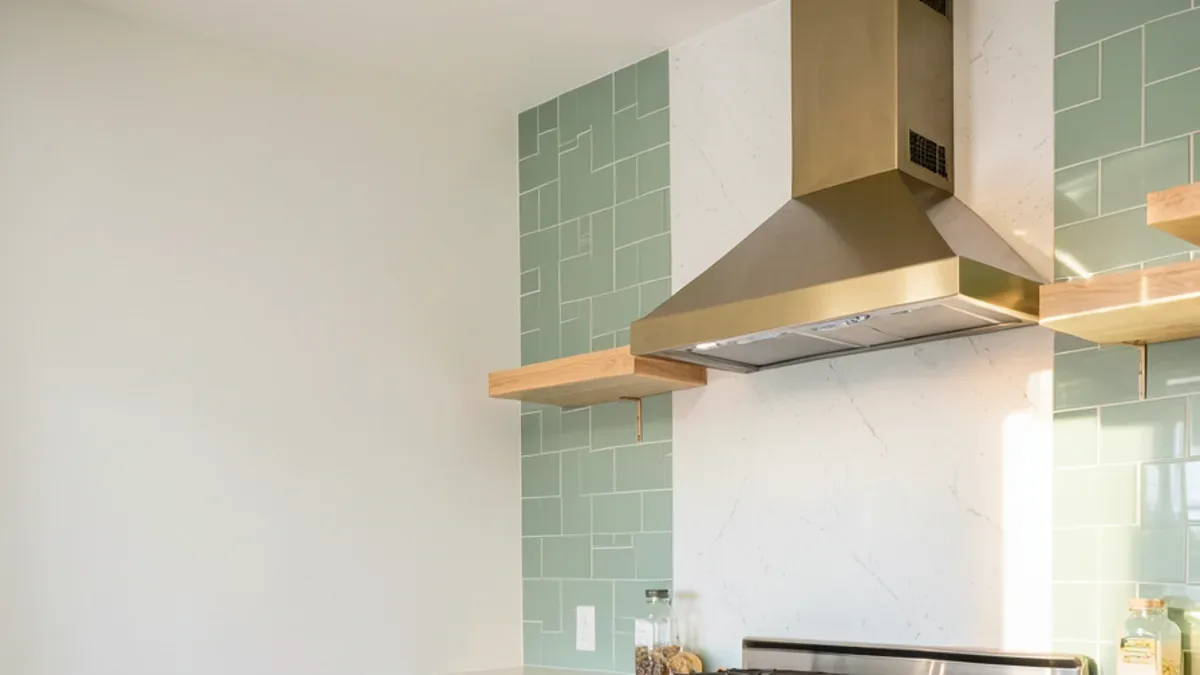
Which backsplash materials clean up easiest behind a range?
| Material | Wipes clean | Hides grease and splatter | Good to know |
|---|---|---|---|
| Glazed ceramic or porcelain subway | Very well | Moderate; depends on color and grout | Larger formats mean fewer grout lines |
| Handmade-look or zellige-style glaze | Well | Good; variation disguises spots | Uneven edges create wider, irregular grout joints |
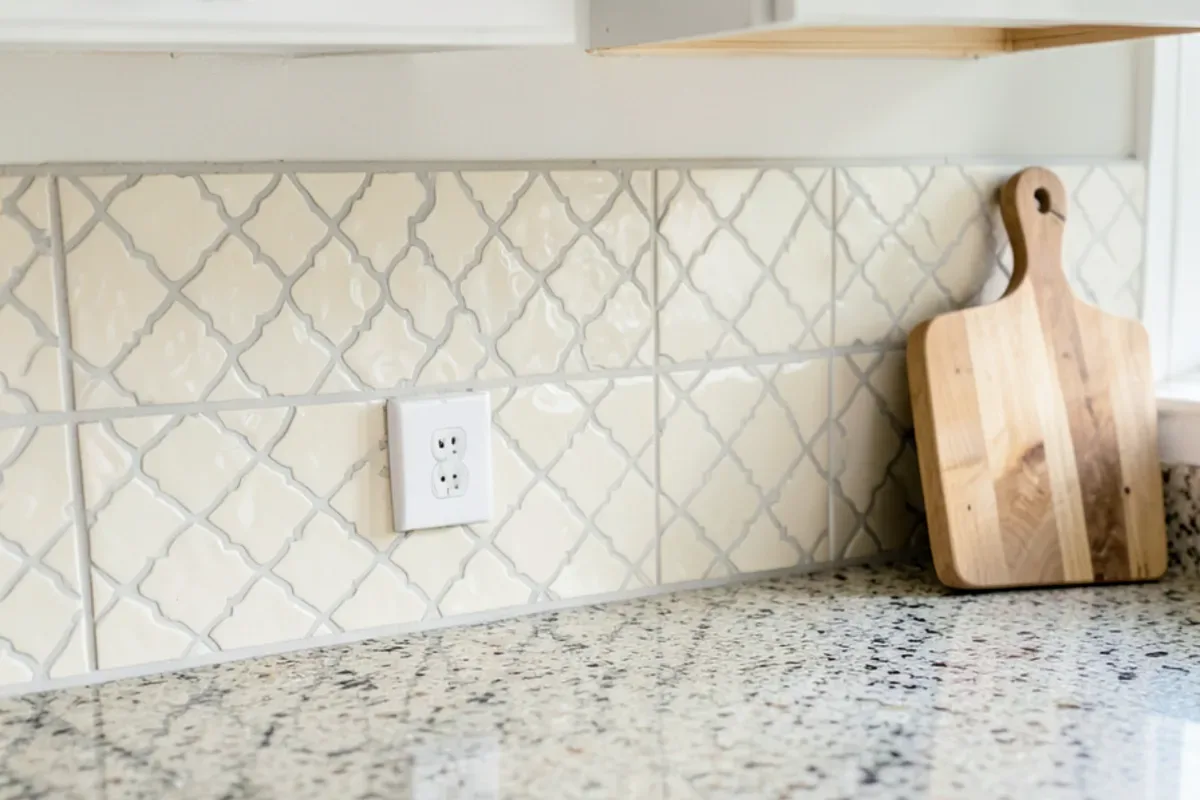
| Arabesque and other shaped tile | Well | Good; curves break up the eye | Many cuts at edges and outlets |
| Glass or stone mosaic | Glass well, stone fair | Fair; lots of grout | Best as an accent or above the sink |
| Natural stone tile | Fair | Good on honed, textured stones | Needs sealing; acids can etch marble |
| Quartz or stone slab | Excellent | Excellent; no grout at all | Usually the same material as the countertop |
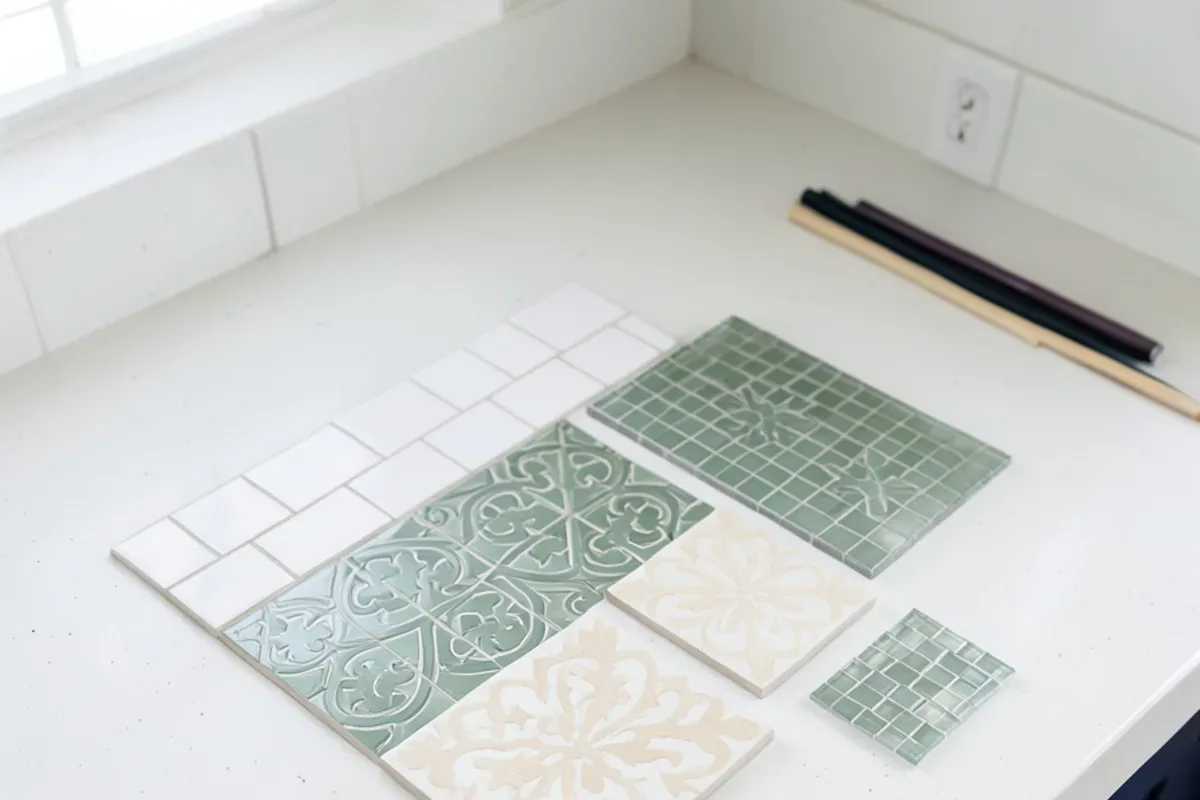
Want to see the options in person?
The Sherman Way showroom has cabinets, counters, tile and flooring on display side by side. Call before you come and say what you're working on.
- Showroom at 13259 Sherman Way, North Hollywood
- 20 Google reviews
- BBB rating A+
- Cabinets, counters, tile & floors in one place
Seven backsplash ideas that hide everyday wear
- Put a slab behind the range. Run quartz or stone up the wall behind the cooktop, then use tile on the rest of the backsplash. Grease has no grout to soak into.
- Go bigger on the cooking wall. A 3-by-12 or 4-by-16 tile has far fewer joints than a 2-by-4 or penny mosaic.
- Match the grout to the tile. A grout one shade off the tile color makes lines disappear, so splatter on the joint doesn’t read as a dirty grid.
- Pick a mid-tone or speckled glaze. Soft whites, warm grays, greens and blues hide drips better than stark white or high-gloss black.
- Use a pattern. Herringbone, arabesque and stacked vertical layouts keep the eye moving, so a stray spot doesn’t stand out.
- Choose a satin finish. Very high gloss shows water spots and streaks; a satin or soft-gloss glaze still wipes clean.
- Upgrade the grout near the stove. Epoxy and high-performance grouts resist staining far better than basic cement grout.
Where does mosaic tile make sense in a kitchen?
Mosaic tile brings texture and color that larger tiles can’t, but its many grout lines make it a poor choice for the area right behind a busy range. It shines in places that see less grease: a framed panel above the sink, a niche for oils and spices, a coffee or bar station, or a band between cabinets. Glass mosaics are the easiest to keep clean; tumbled stone mosaics look beautiful but need sealing and gentle cleaners. Pair a mosaic accent with a simpler field tile so the room doesn’t feel busy.
Layout details that make a backsplash look finished
- Decide where tile stops. Common choices are the underside of the upper cabinets, the ceiling, or the outer edge of the countertop. Ending tile mid-wall without a plan looks unfinished.
- Finish exposed edges. Use bullnose pieces, a slim metal trim or a stone pencil liner where tile ends on an open wall.
- Plan around outlets. Center the layout so cuts around outlets and switches aren’t slivers, and consider moving outlets under the upper cabinets with the help of a licensed electrician.
- Align with the hood and window. Center a pattern on the range hood or window so the grid looks intentional.
- Start with a full tile at the counter. Cut pieces belong at the top, where cabinets or trim cover them.
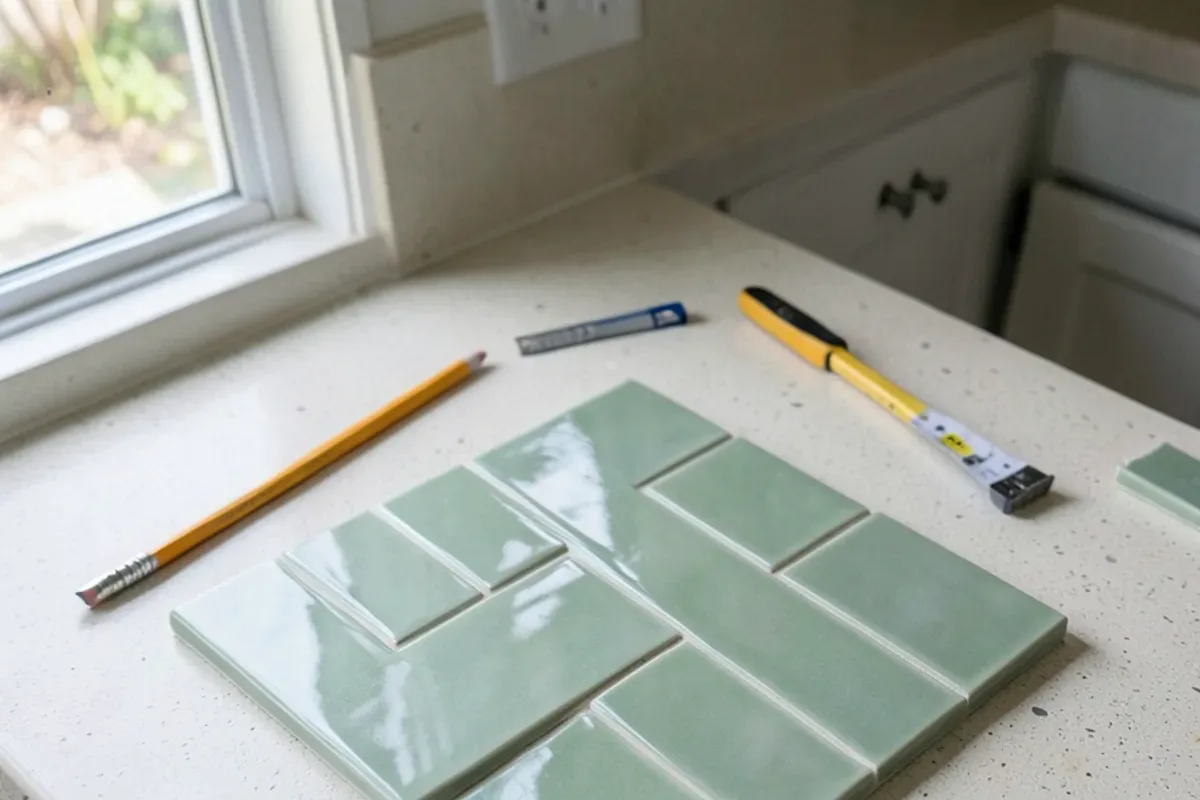
How to measure and order backsplash tile
Backsplashes are small, which is exactly why running short hurts: one missing box can stall the last wall, and a reorder may arrive in a slightly different shade. Measure carefully and order once.
Measure each wall section
Multiply the length of every run by the height from countertop to the underside of the uppers, or to the ceiling or hood where tile goes higher.
Subtract only the big openings
Take out windows and the area hidden behind a slide-in range’s back panel if the tile stops there. Ignore outlets; they do not save tile.
Add overage for the pattern
Straight subway layouts need the least extra. Herringbone, chevron, diagonal and shaped tiles such as arabesque produce more cut waste, so confirm the percentage with the installer.
Count the trim separately
Bullnose, pencil liners and metal edge trim are ordered by the linear foot, not by area.
Buy from one lot and keep a spare
Check that every box carries the same shade or lot code, and keep a few loose tiles or a partial box for future repairs.
Building a backsplash board in the showroom
Backsplash tile is easiest to choose when it is sitting on the countertop you picked, next to the cabinet door and the floor. In our North Hollywood showroom the backsplash, mosaic and natural stone tile is a few steps from the counters and cabinets, so you can assemble a small board in one visit. Lay out two or three tile options with a grout color stick for each, then look at them straight on and at a low angle, the way afternoon light will cross the wall. A low angle reveals glaze texture and shows how much a splash would stand out. If the tile you saw elsewhere isn’t on the floor, Google reviewers describe the team tracking down tile that wasn’t in stock.
Trade-offs worth hearing before you fall for a tile
Some of the most photographed backsplash looks come with maintenance or installation quirks that rarely make it into the pictures. None is a deal-breaker, but each is easier to accept before the tile is on the wall than after.
- Handmade and zellige-style glazes vary in thickness, so the wall has a deliberately uneven surface and wider joints. Genuine terracotta-bodied tiles can chip at the edges and may need sealing.
- Glass tile shows what is behind it. Installers use a white setting material and spread it evenly, because trowel ridges and gray mortar can show through clear or light glass.
- Polished marble mosaics look beautiful but etch where tomato sauce, citrus and wine splash. Keep them away from the range or choose a honed finish.
- Removing upper cabinets for open shelving turns a short backsplash into a full wall of tile, which raises tile, trim and labor quantities more than most people expect.
Caulk, not grout, where the tile meets the counter
The joint between countertop and backsplash is a change of plane, and the Tile Council of North America’s installation guidance calls for a flexible sealant there instead of grout. Two materials move differently, and in an earthquake region a rigid grout line at that corner is the first thing to crack. Ask for a color-matched caulk that blends with the grout.
Kitchen backsplash ideas for Valley and city kitchens
Many postwar kitchens in Burbank are compact, with a short backsplash between counter and upper cabinets. Running a light, mid-tone tile to the ceiling on the range wall makes the room feel taller, while a slab behind the cooktop keeps the busiest spot simple. Across Los Angeles, rental owners often choose a durable glazed subway in a warm white with matching gray grout, because it looks clean between tenants and repairs easily if a tile cracks.
Choosing your tile and getting it installed
Start with the kitchen backsplash page for materials and layouts, and browse mosaic tile for accent ideas. When the design is set, tile installation covers prep, layout and grout. If you’re choosing counters at the same time, pick the countertop first, since the backsplash should complement it.
Quick answers
What backsplash tile is easiest to keep clean?
Glazed porcelain or ceramic tile in a larger format is the easiest to keep clean, especially with grout close to the tile color. Fewer grout joints mean fewer places for grease to settle, and a glazed surface wipes off with warm soapy water. A satin glaze hides water spots better than high gloss, and a slab behind the range is easier still.
Should the backsplash go all the way to the ceiling?
It often should on walls without upper cabinets, such as the range wall under a chimney hood or a window wall. Full-height tile looks finished, protects the paint from grease, and makes a compact kitchen feel taller. On walls with upper cabinets, tile usually stops at the cabinet bottoms. Plan the stopping point before ordering so the quantity is right.
Is a quartz slab backsplash better than tile behind a range?
For cleaning, yes. A quartz or stone slab has no grout lines, so grease wipes off one smooth surface. It usually matches the countertop for a continuous look. Tile offers more color, texture and pattern and can cost less. A common compromise is slab behind the cooktop and tile on the rest of the wall.
How do I stop white grout from yellowing behind the stove?
The surest fix is to avoid plain white cement grout behind the range. Use a light gray or tile-matched grout, or choose an epoxy or high-performance grout that resists grease. If you already have white grout, wipe splatter promptly, clean with a mild degreaser and a soft brush, and seal cement grout so oil soaks in less.
How much extra backsplash tile should I order?
Order the measured area plus an overage set by the pattern: a straight subway layout needs the least, while herringbone, diagonal and shaped tiles like arabesque create more cut waste. Ask the installer to confirm the percentage for your walls. Buy every box from the same shade lot and keep a few spare tiles, since a later reorder may not match exactly.
Sources
- Tile Council of North America — Tile installation methods and product standards
- Natural Stone Institute — Care and sealing of stone tile
- Contractors State License Board — License lookup, including C-54 tile and C-10 electrical contractors
About this guide
Written by the team at Adcom Kitchen & Flooring, a kitchen cabinet, countertop, tile and flooring showroom at 13259 Sherman Way in North Hollywood. Rules and figures from outside sources are attributed; confirm current requirements with your building department or the agency named.
Related services
Service areas
More on this topic: Tile & Backsplash
Talk to the showroom before you buy
Call with your measurements and photos, or stop by Sherman Way to compare cabinets, counters, tile and flooring side by side.
Adcom Kitchen & Flooring · 13259 Sherman Way, North Hollywood, CA 91605 · Get directions · Showroom hours
- Showroom at 13259 Sherman Way, North Hollywood
- 20 Google reviews
- BBB rating A+
- Cabinets, counters, tile & floors in one place