
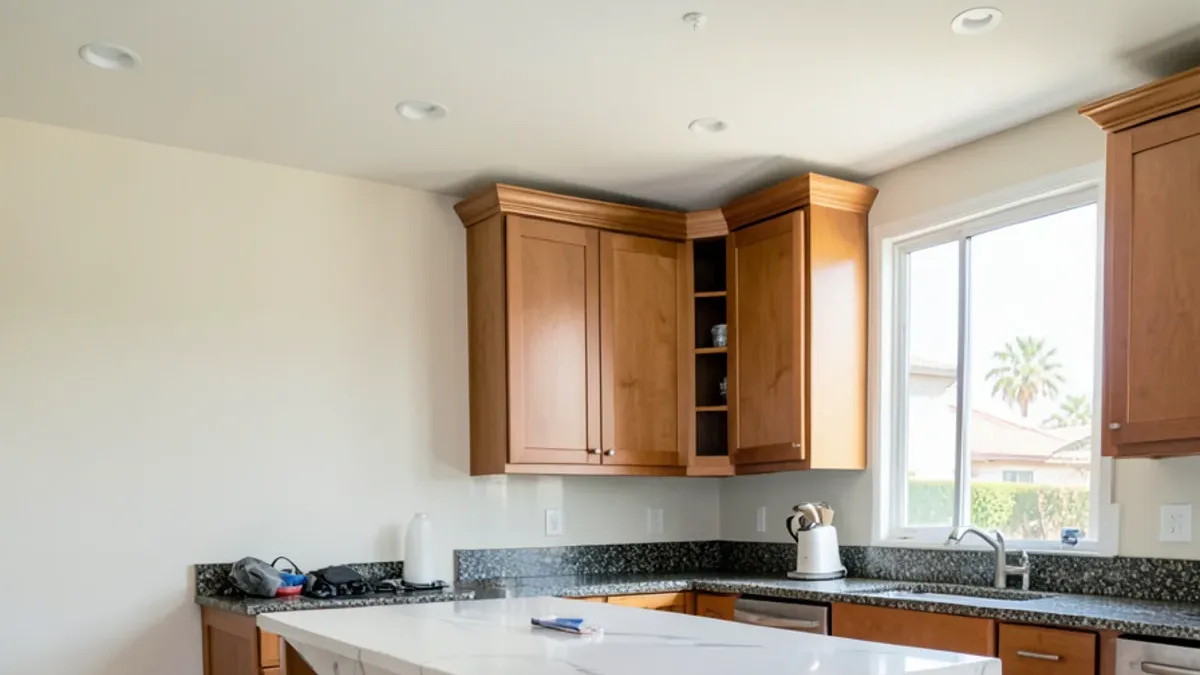
How are quartz and granite different materials?
Granite is quarried natural stone, cut into slabs and polished, honed or leathered. Its color and pattern come from the minerals in the rock, so no two slabs match exactly. Quartz countertops are engineered: crushed natural quartz is mixed with resin binders and pigments, then pressed into slabs. That manufacturing step is what makes quartz so uniform, and it is also why quartz behaves differently around heat and sunlight.
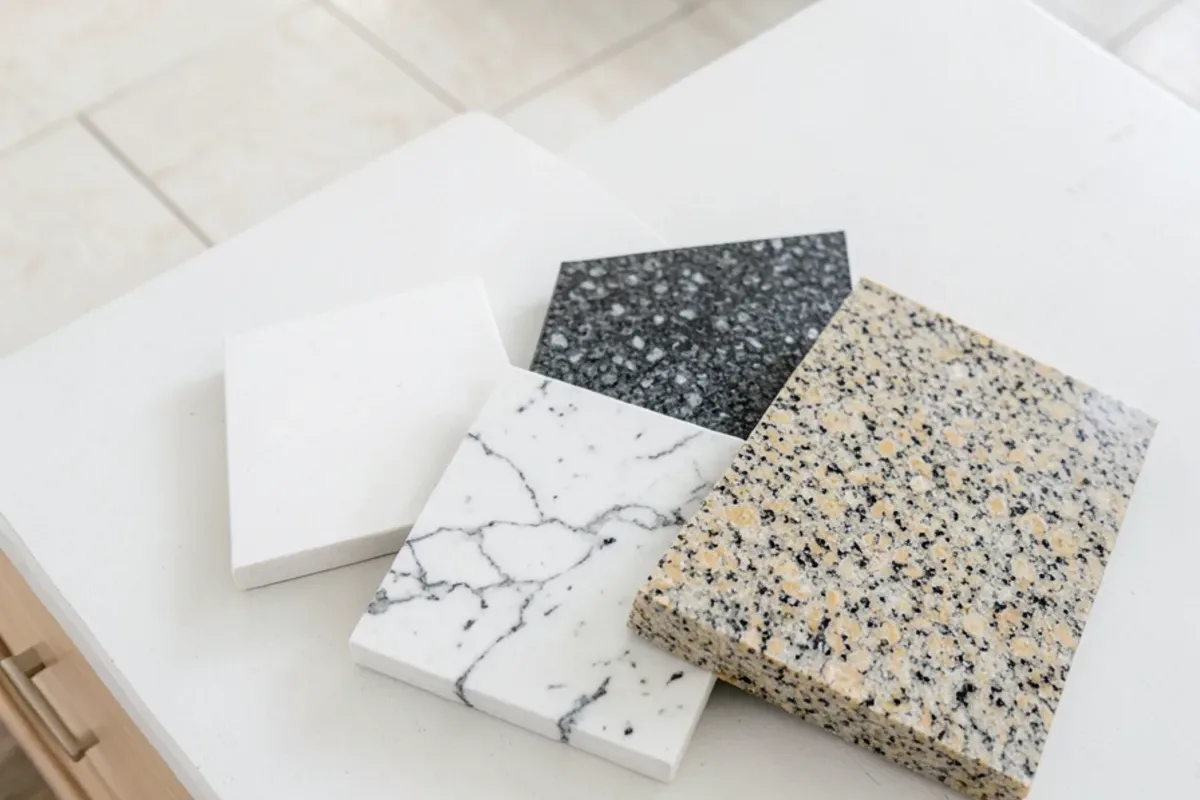
Want to see the options in person?
The Sherman Way showroom has cabinets, counters, tile and flooring on display side by side. Call before you come and say what you're working on.
- Showroom at 13259 Sherman Way, North Hollywood
- 20 Google reviews
- BBB rating A+
- Cabinets, counters, tile & floors in one place
Quartz vs granite countertops at a glance
| Factor | Quartz | Granite |
|---|---|---|
| Look | Uniform color; marble-look veining is printed through the slab | Natural crystals and movement; every slab differs |
| Heat | Resin can scorch or discolor under a hot pan; use trivets | Tolerates hot cookware well, though sudden extreme heat can stress any stone |
| Stains | Non-porous; wipes clean | Porosity varies by stone; sealing slows absorption |
| Sealing | Not needed | Depends on the stone; some need it yearly, dense ones rarely |
| Direct sun and outdoors | Many makers advise against outdoor use; UV can fade or yellow some colors | Holds up outdoors and in sunny windows |
| Seams | Easier to blend because the pattern is consistent | More visible where veining changes across the joint |
| Chips and repair | Small chips can be filled with color-matched resin | Chips can be filled with epoxy and polished |
Which one handles heat, stains and daily cooking better?
If you cook a lot and tend to slide pans straight off the burner, granite is more forgiving. Quartz manufacturers generally tell owners to use trivets, because the resin that binds the stone can scorch, especially next to a cooktop where pots land most often. A white quartz counter can show a faint ring from a hot crockpot base.
Stains run the other way. Quartz shrugs off red wine, turmeric and cooking oil because nothing soaks in. Granite ranges widely: dark, dense stones absorb very little, while lighter, more open granites can darken if oil sits on them. A good seal and quick wiping solve most of it, and our guide on sealing granite and marble walks through the test and the routine.
Does Los Angeles sunlight change the answer?
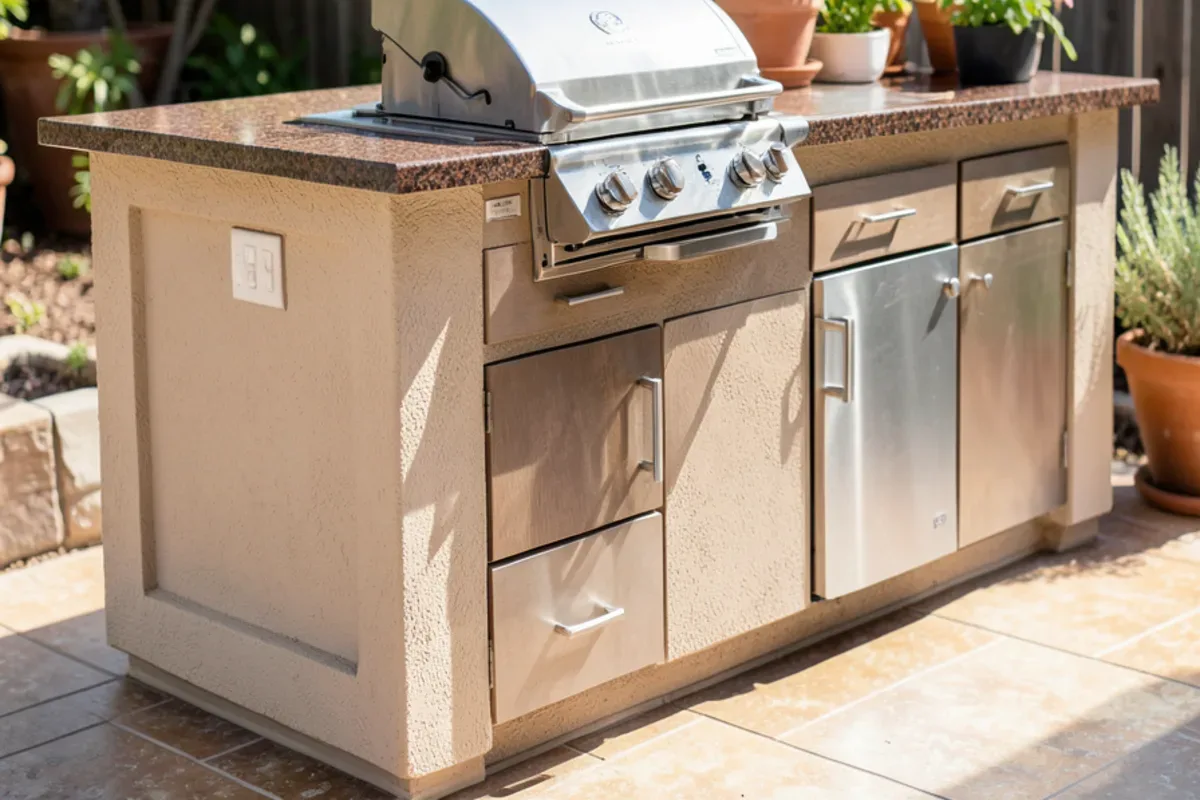
It can. Many LA kitchens have a big west window, a sliding door to the yard or a counter that runs out to an outdoor kitchen. Because quartz contains resin, long exposure to direct ultraviolet light can shift some colors over time, which is why many quartz makers exclude outdoor installations from their product guidelines. Granite is unaffected by sun, so it is the usual choice for barbecue islands and pass-through counters.
Indoors, most quartz counters under ordinary window light do fine. If one section sits in hard afternoon sun all day, ask about the specific product’s guidance, or consider a stone for that run.
What owners notice a year after install
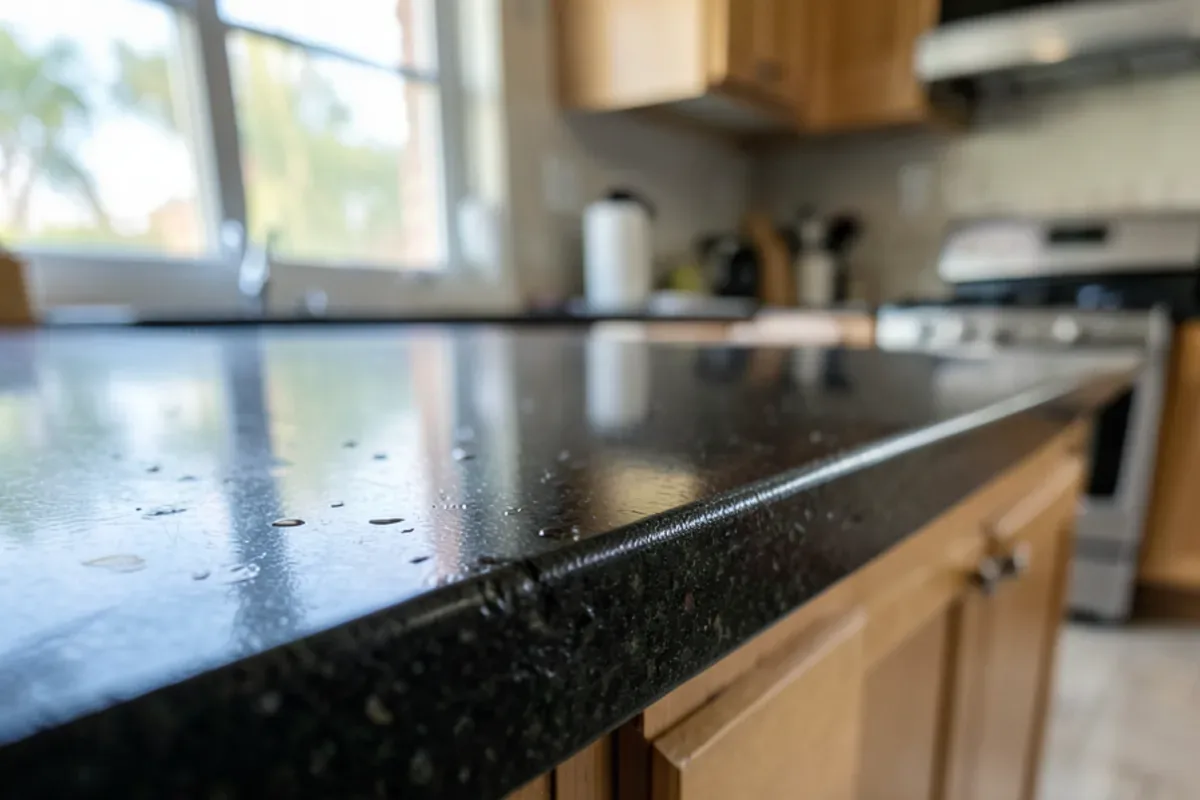
Most regrets about either surface come from finish and color choices, not from picking the wrong material. Polished black granite looks dramatic in a showroom, then shows every water spot, crumb and fingerprint under LA’s strong morning light. A leathered or honed finish on the same stone hides most of that. Bright white quartz with no pattern at all is the opposite problem: it reads clean, but a coffee ring or a faint scorch mark has nowhere to hide.
Fissures are not cracks
Natural granite often has fissures, thin lines that follow the mineral structure. The Natural Stone Institute treats them as a normal feature of the stone, not a defect, and you can usually feel that the surface stays flat across one. A true crack has an edge you can catch with a fingernail. Seeing the full slab before fabrication is the simplest way to know which you are buying.
Quartzite is a third option, not a nickname
Quartzite is a natural metamorphic stone, not engineered quartz. It is hard, handles heat and sun like granite and often has a soft, marble-like look. Some quartzites are dense; others absorb and need sealing, and some stones sold as quartzite behave more like marble. Treat it as natural stone: test it, and ask about its care before you choose it.
Comparing slabs at the showroom
Countertops look different on a screen than they do next to your cabinets. In North Hollywood, quartz and granite sit near the cabinet doors, backsplash tile and floor samples, and these steps make the visit count:
Bring a cabinet door or paint chip
Granite has undertones of green, gold, pink or blue that only show against the real cabinet color.
View the whole slab for granite
A small sample cannot show the large movement, color pockets or fissures in a natural slab. Ask to see the full slab or a photo of it before committing.
Check seam locations
Bring a rough layout so you can see where a seam will fall and how the pattern crosses it.
Do a water drop test on granite
A few drops on an unsealed sample show how quickly that stone absorbs. Darkening within a minute or two means it will need regular sealing.
Look in more than one light
Step toward a window, then back under the overhead light. Polished and honed finishes reflect very differently.
Questions to settle before you choose
- Where do hot pans land most often, and is that next to the range or across the room?
- Does any counter run sit in direct afternoon sun or continue outdoors?
- Do you prefer a pattern that is identical everywhere, or one-of-a-kind movement?
- Will a seam fall in the middle of a long run or at the sink, and does the pattern need to flow across it?
- Are you comfortable resealing a natural stone on a schedule, or do you want zero routine care?
- Have you seen the finish (polished, honed or leathered) under both daylight and evening light?
- Is the cabinet base level and sturdy enough for a heavy 3 cm top, especially on an older raised floor?
If most of your answers point to heat, sun and a love of natural variation, granite fits. If they point to stains, zero maintenance and a calm, uniform look, quartz usually wins.
What drives the cost of quartz or granite?
- Group or grade: entry-level granites and plain quartz colors cost less than exotic stones and heavily veined quartz.
- Slab vs prefab: prefabricated tops in standard sizes cost less than a top cut from a full slab.
- Thickness and edge profile: 3 cm tops and mitered or ogee edges add cost over 2 cm eased edges.
- Cutouts and seams: undermount sinks, cooktops and long L-shapes add fabrication time.
- Removal and backsplash: tearing out old tile tops and adding a full-height stone backsplash change the total.
Matching the stone to the house
Across Los Angeles, the house often tips the decision. Bright modern kitchens and condo units usually lean toward quartz for its clean, consistent look. In Glendale, Spanish Revival and older homes often pair well with a warm granite or a honed stone that feels period-appropriate. To compare both on the same visit, start with our quartz countertops and granite countertops pages, then see everything together under countertops.
Quick answers
Does quartz need to be sealed?
No, quartz does not need sealing. The resin binder makes the surface non-porous, so liquids stay on top and wipe off. Applying a stone sealer can actually leave a hazy film. Clean quartz with warm water and mild dish soap, avoid harsh solvents and oven cleaner, and use trivets for hot cookware to protect the resin.
Can I set a hot pan directly on granite?
Most granite handles a hot pan without damage, which is one of its main advantages over quartz. Still, a trivet is a good habit, because sudden extreme heat on a cold stone or near a seam or fissure can cause stress, and repeated heat can wear a sealer faster. Polished granite also scratches less when pans aren’t dragged across it.
Will quartz fade or yellow near a sunny window?
Under ordinary indoor window light, most quartz holds its color for years. The concern is long, direct ultraviolet exposure, such as a counter in full afternoon sun or an outdoor kitchen, where some colors can shift. Many manufacturers exclude outdoor use for that reason. Window film or shades on west-facing glass reduce the exposure.
Is granite or quartz better for an outdoor kitchen?
Granite is usually the better outdoor choice. It tolerates direct sun, heat from a grill and temperature swings without fading, while most quartz makers advise against outdoor installation. Choose a darker or denser granite for a barbecue island, seal it, and give it a flat, solid base so it stays supported through hot summers and cool winter nights.
Is quartzite the same as a quartz countertop?
No. Quartzite is a natural stone quarried in slabs, while a quartz countertop is engineered from crushed quartz and resin. Quartzite tolerates heat and direct sun much like granite and often needs sealing, depending on how dense the particular stone is. Test a sample with water and lemon juice before you commit, because some stones sold as quartzite etch like marble.
Sources
- Natural Stone Institute — Care, sealing and selection guidance for granite and other natural stone
- Cal/OSHA (Division of Occupational Safety and Health) — California workplace rules for respirable crystalline silica in stone fabrication
- OSHA: Crystalline Silica — Federal background on silica exposure in stone cutting
About this guide
Written by the team at Adcom Kitchen & Flooring, a kitchen cabinet, countertop, tile and flooring showroom at 13259 Sherman Way in North Hollywood. Rules and figures from outside sources are attributed; confirm current requirements with your building department or the agency named.
Related services
Service areas
More on this topic: Countertops
Talk to the showroom before you buy
Call with your measurements and photos, or stop by Sherman Way to compare cabinets, counters, tile and flooring side by side.
Adcom Kitchen & Flooring · 13259 Sherman Way, North Hollywood, CA 91605 · Get directions · Showroom hours
- Showroom at 13259 Sherman Way, North Hollywood
- 20 Google reviews
- BBB rating A+
- Cabinets, counters, tile & floors in one place