

What are the main kitchen remodel financing options?
| Option | How it works | Watch for |
|---|---|---|
| Savings | Pay as the project progresses | Keep a reserve for surprises behind the walls |
| HELOC | A revolving credit line secured by your home; draw what you need | Variable rates on many lines; your home is the collateral |
| Home equity loan | A lump sum at a fixed rate, repaid in set payments | Closing costs; borrowing the full amount up front |
| Cash-out refinance | A new, larger first mortgage, with the difference paid to you | Replacing a low existing rate with a higher one |
| Personal loan | Unsecured, fixed term | Higher rates than secured loans; shorter terms |
| Renovation mortgage | Purchase or refinance loan that includes remodel costs, such as FHA 203(k) | Detailed bids and lender oversight of the work |
| Credit cards | Short-term promotional rates | High rates when promotions end; deferred-interest traps |
Whatever you choose, borrow against a realistic number. A budget built from materials you have actually priced, plus a written allowance for hidden conditions, protects you from borrowing twice.
Want to see the options in person?
The Sherman Way showroom has cabinets, counters, tile and flooring on display side by side. Call before you come and say what you're working on.
- Showroom at 13259 Sherman Way, North Hollywood
- 20 Google reviews
- BBB rating A+
- Cabinets, counters, tile & floors in one place
How does a HELOC compare with a home equity loan or refinance?
All three use your home as collateral, which is why they usually carry lower rates than unsecured borrowing. The difference is in how the money arrives and how the rate behaves.
- A HELOC suits a project paid in stages. You draw as invoices come due and pay interest only on what you have drawn, but rates on many lines float with the market.
- A home equity loan suits a fixed, well-defined scope. You know the payment from day one, but you pay interest on the whole amount from the start.
- A cash-out refinance can make sense when current mortgage rates are close to or below your existing rate. When they are higher, it can raise the cost of your whole mortgage, not just the kitchen.
The Consumer Financial Protection Bureau publishes plain-language explainers on home equity products that are worth reading before you apply.

Are contractor or retailer payment plans worth it?
Some contractors and retailers refer customers to third-party lenders. These plans can be convenient, but the lender, not the business, sets the terms. Read the credit agreement as carefully as the construction contract, and pay attention to promotional periods, deferred-interest clauses and fees.
The loan does not change the rules on the construction side. Under state law a home improvement deposit generally cannot exceed $1,000 or 10 percent of the price, whichever is smaller, and later payments should track finished work. A lender who pays the contractor directly should release funds only as the work progresses.
Does PACE or energy-related financing apply to a kitchen?
Property Assessed Clean Energy (PACE) financing in California is repaid through your property tax bill and is meant for qualifying energy efficiency, water efficiency, renewable energy and seismic improvements. Cabinets, countertops, tile and flooring do not qualify. A heat pump water heater or certain electrical upgrades might, but PACE places a lien on the property, so review it carefully. The California Department of Financial Protection and Innovation (DFPI) oversees PACE program administrators and has consumer information on its website.
Utility rebates are a better fit for many kitchen projects. LADWP and SoCalGas each run rebates for efficient appliances and water heaters, and the amounts are revised regularly; confirm current terms before buying.
How do you size the amount to borrow?
Borrowing too little forces a second loan halfway through; borrowing too much costs interest on money that sits idle. Building the number in a fixed order keeps it grounded:
Price the materials you have actually chosen
Cabinets, countertops, backsplash, flooring, sink and faucet, from written quotes rather than online averages.
Add installation and the trades
Installation of each material, plus plumbing, electrical, gas, drywall and paint from the builder’s bid.
Add permits, demolition and disposal
These should be separate lines on any complete bid; if they are missing, ask for them.
Add appliances and the cost of living around the project
Appliances are often bought separately, and weeks of takeout and laundromat trips are real money.
Hold your own contingency
Keep an allowance for hidden conditions that is not counted as part of the finish budget.
For home equity borrowing, lenders usually cap the total of all loans on the house at a percentage of its appraised value, called the combined loan-to-value ratio. A rough ceiling is the home’s value multiplied by the lender’s limit, minus what you still owe on the mortgage. The lender’s appraisal, not a listing site estimate, sets the value used.
Leave time for the loan before the cabinet order
Home equity loans and HELOCs involve an application, an appraisal and closing paperwork, which can take weeks. Federal rules described by the CFPB also give borrowers a three-business-day right to cancel most home equity loans and lines secured by their primary home, and funds are generally not released until that window passes. Line up the financing before you commit to a cabinet order or a demolition date.

Questions to ask before you sign any loan
- What is the annual percentage rate, and is it fixed or variable?
- What are the closing costs, origination fees and any annual fees?
- Is there a prepayment penalty if I pay the balance off early?
- For a credit line, how long is the draw period and what happens to payments after it ends?
- For promotional offers, is interest deferred or waived, and what happens if the balance is not paid in time?
- Does the lender pay the contractor directly, and on what schedule?
- What happens to the loan if the project is delayed or the scope changes?
- How does this loan affect my existing mortgage and property taxes?
Making borrowed money go further on materials
From the showroom side, the most useful thing to have before talking to a lender is a priced material list. Homeowners who arrive at Sherman Way with a budget ceiling can compare cabinets, counters, tile and flooring at several price levels and settle on a combination before the loan amount is fixed.
- Spend on the pieces that are hardest to replace: cabinet boxes and the floor.
- Save where a later upgrade is easy: hardware, light fixtures and even the backsplash.
- Compare a prefabricated countertop with a full slab in the same color before deciding the slab is necessary.
- Ask for written quotes on materials and installation; renovation lenders usually want them.
- Keep the allowance for surprises separate from the finish budget.
Phasing a kitchen when the budget is tight
Splitting a kitchen into two phases can avoid borrowing altogether, but some splits work far better than others:
- Floor first or with the cabinets, not years later. A floor added after the cabinets has to be cut around them, can trap the dishwasher and may never look continuous. If a new floor is in the plan at all, it belongs in phase one.
- Backsplash later is fine. Tile can go up months after the counters with little disruption; just protect the wall in the meantime and leave outlets ready for tile thickness.
- Hardware and lighting fixtures later are easy. Swapping pulls or pendants is a weekend job if the cabinet holes and electrical boxes are planned in phase one.
- Cabinets without counters does not work. Countertops are templated off the installed boxes, so plan to finish both in the same phase.
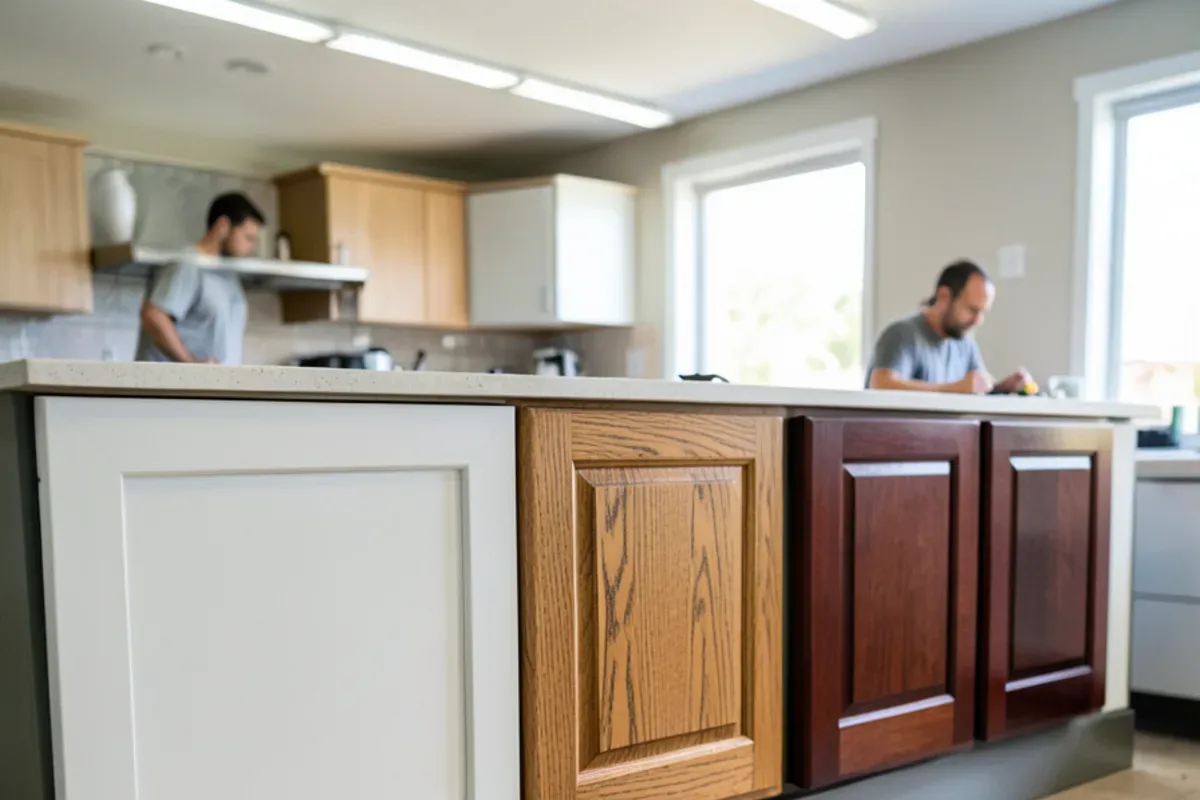
Pricing the kitchen before you borrow
The showroom’s part is helping you price materials so the amount you borrow is realistic; the borrowing itself happens with your bank, credit union or lender. Start with the kitchen remodeling in Los Angeles overview to see what cabinet, counter, tile and flooring options exist, and read the full kitchen remodel page if the scope includes new layout or systems. Our cost guide explains published price ranges for Los Angeles and Glendale area kitchens.
Quick answers
Is a HELOC or a personal loan better for a kitchen project?
It depends on equity, timing and risk tolerance. A HELOC usually offers a lower rate because your home secures it, and you draw only what you need, but many lines have variable rates. A personal loan avoids putting the house up as collateral and has fixed payments, but typically costs more. Compare total cost, not just the monthly payment.
Can remodel costs be included in a home purchase loan?
Yes, through renovation mortgages. The FHA 203(k) program, described on HUD’s website, combines purchase or refinance with renovation costs, and some conventional lenders offer similar products. Expect to provide detailed written bids for materials and labor, and expect the lender to release funds in stages as the work is inspected.
Can PACE financing pay for new cabinets and countertops?
No. PACE in California covers qualifying energy, water, renewable and seismic improvements, not finishes like cabinets, countertops, tile or flooring. It is repaid through property taxes and creates a lien on the home. If your kitchen project includes an efficient water heater, ask about utility rebates first, then compare PACE terms with other borrowing.
How much should be paid before kitchen work begins?
Very little. Under California rules for home improvement contracts, the down payment is generally capped at 10 percent of the contract price or $1,000, whichever is less. After that, payments should match completed work. If a loan is involved, ask the lender how and when it releases funds to the contractor.
Sources
- Consumer Financial Protection Bureau (CFPB) — Explainers on HELOCs and home equity loans
- US Department of Housing and Urban Development (HUD), FHA 203(k) — Renovation mortgage program
- California Department of Financial Protection and Innovation (DFPI) — Oversight and consumer information on PACE financing
- Contractors State License Board (CSLB) — Home improvement contract and down payment rules
About this guide
Written by the team at Adcom Kitchen & Flooring, a kitchen cabinet, countertop, tile and flooring showroom at 13259 Sherman Way in North Hollywood. Rules and figures from outside sources are attributed; confirm current requirements with your building department or the agency named.
Related services
Service areas
More on this topic: kitchen remodeling in Los Angeles
Talk to the showroom before you buy
Call with your measurements and photos, or stop by Sherman Way to compare cabinets, counters, tile and flooring side by side.
Adcom Kitchen & Flooring · 13259 Sherman Way, North Hollywood, CA 91605 · Get directions · Showroom hours
- Showroom at 13259 Sherman Way, North Hollywood
- 20 Google reviews
- BBB rating A+
- Cabinets, counters, tile & floors in one place