
What makes porcelain different from ceramic tile?
Both are made from clay and fired in a kiln. Porcelain uses finer, denser clay and higher firing temperatures, which leaves a body that absorbs very little water. Under the American National Standard for ceramic tile, which TCNA helps publish, a tile counts as porcelain when its water absorption is 0.5 percent or less, and the Porcelain Tile Certification Agency verifies that claim for certified products.
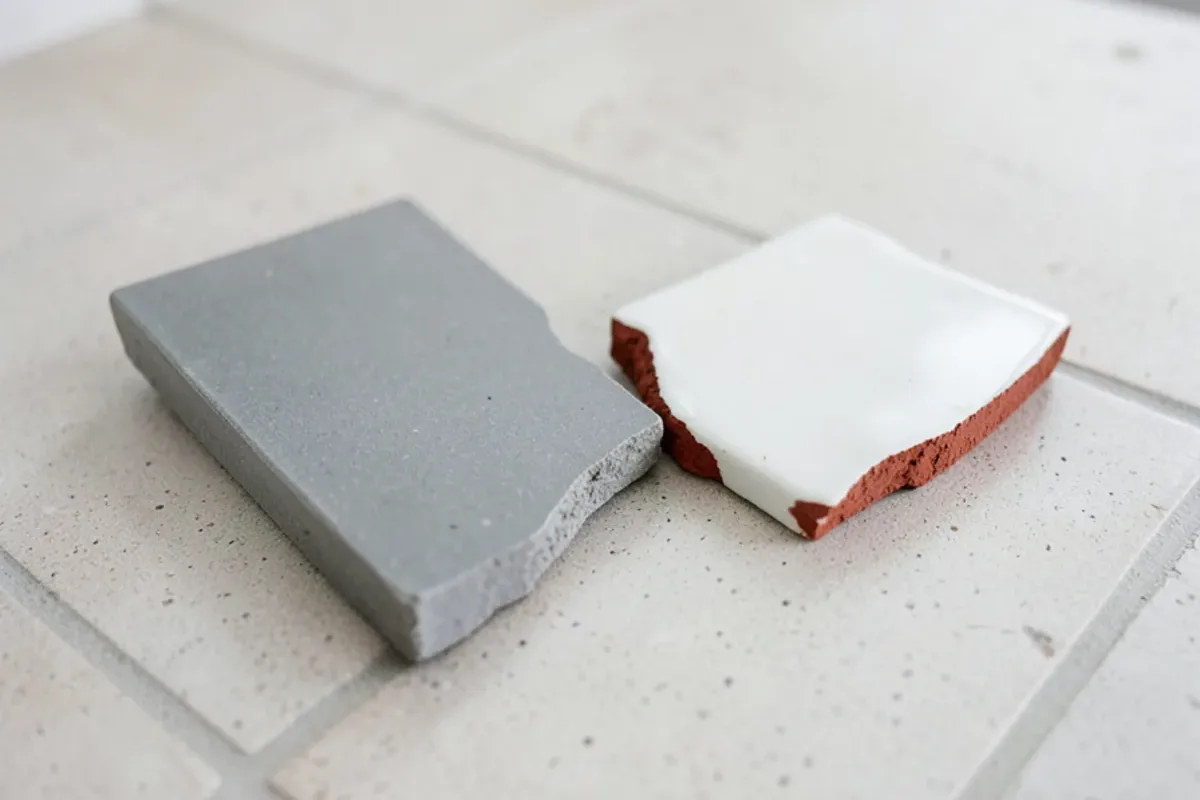
Ceramic, sometimes called non-porcelain tile, has a more porous body under its glaze. That makes it lighter and easier to cut and drill, and it is usually less expensive. The glaze keeps it waterproof on the surface, but a chip exposes a body that is often a different color, typically red or white.
Want to see the options in person?
The Sherman Way showroom has cabinets, counters, tile and flooring on display side by side. Call before you come and say what you're working on.
- Showroom at 13259 Sherman Way, North Hollywood
- 20 Google reviews
- BBB rating A+
- Cabinets, counters, tile & floors in one place
Porcelain vs ceramic tile vs natural stone side by side
| Property | Porcelain | Ceramic | Natural stone |
|---|---|---|---|
| Water absorption | Very low (0.5% or less) | Higher, behind the glaze | Varies widely by stone |
| Hardness and chips | Very hard; chips are less visible on through-body tile | Softer glaze; chips show the body color | Granite and slate are hard; marble and travertine scratch more easily |
| Floors | Excellent, including high traffic | Light-duty floors if rated for it | Good with the right finish and sealing |
| Walls and backsplashes | Excellent | Excellent, and easier to cut | Excellent; acids may etch marble |
| Showers | Excellent | Walls yes; floors only if rated | Possible with sealing and careful cleaning |
| Outdoors | Many porcelains are rated for exterior use | Generally not | Some stones, such as slate and certain granites |
| Upkeep | Wipe clean; no sealing on glazed tile | Wipe clean; seal grout only | Seal regularly; use pH-neutral cleaners |
Which tile is safest on a wet floor?
Slip resistance depends on the surface finish more than the material. Tile standards published through TCNA use a wet dynamic coefficient of friction, or DCOF, of 0.42 as the minimum for level interior floors expected to be walked on when wet. Look for that number on the spec sheet for a bathroom or kitchen floor. Matte, textured and honed finishes generally grip better than polished ones, and smaller tiles add grip because each grout joint gives the foot something to hold.
- Bathroom and shower floors: matte porcelain or small-format mosaic, with a DCOF rating suitable for wet use.
- Kitchen floors: porcelain with a matte or lightly textured finish handles dropped utensils and spills.
- Entries and patios: an exterior-rated textured porcelain or a natural cleft slate.
When is natural stone worth the extra care?
Stone earns its place where the look matters most and the wear is manageable: a marble bathroom floor, a travertine fireplace surround, a slate entry or a limestone feature wall. It brings depth no printed porcelain fully copies, and it can be honed or refinished after years of use. The trade-off is maintenance. Most stones need a penetrating sealer, acidic cleaners can etch marble, limestone and travertine, and polished stone can be slippery when wet. If you want the stone look with less upkeep, many porcelain tiles now replicate marble, travertine and slate convincingly.
Matching each tile to each room
Most houses end up with all three materials, each where it works hardest. This room-by-room view is how tile choices are usually sorted once the samples are on the table.
| Room or surface | Usual first pick | Why | Where the alternative fits |
|---|---|---|---|
| Kitchen floor | Matte porcelain | Dense body, hides grit, survives dropped pans | Honed stone if you accept sealing and some wear |
| Backsplash | Glazed ceramic | Easy cuts around outlets; huge color range | Porcelain panels or stone behind a heavy-use range |
| Shower walls | Porcelain or glazed ceramic | Both shed water once the wall behind is waterproofed | Marble for a feature wall with diligent care |
| Shower floor | Small porcelain mosaic | Many grout joints add grip on a sloped pan | Honed or tumbled stone mosaic |
| Entry and patio | Exterior-rated textured porcelain | Handles sun, sand and hose-downs | Cleft slate or a dense granite |
| Fireplace surround | Natural stone | Low wear, high visual impact | Large porcelain with a stone look |
| Laundry and mudroom | Porcelain | Water, detergent and dirt all wipe off | Rated ceramic floor tile on a budget |
Three quick checks at the tile wall
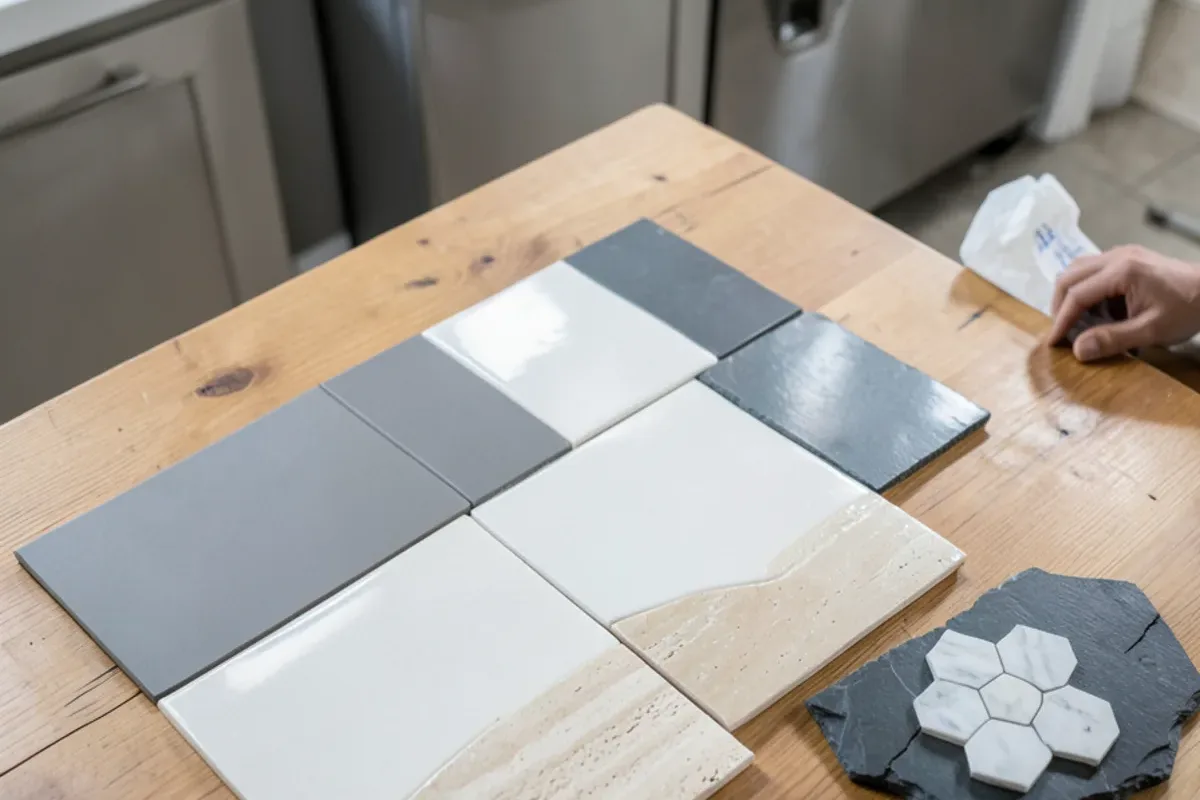
Labels can be vague, so a few simple checks help when you compare samples in person. Our showroom carries porcelain, mosaic and natural stone tile side by side, which makes these easy to try:
- Look at the back and edge. If the body under the glaze is a different color from the face, chips will show. Through-body or color-body porcelain hides them better.
- Weigh two samples in your hands. Porcelain feels noticeably heavier than ceramic of the same size because it is denser.
- Ask for the ratings. Request the DCOF for floors, the PEI wear rating for glazed tile, and whether the tile is rated for exterior or shower use.
How installation differs for each tile
Porcelain is hard enough that it needs diamond blades and more time for cuts, and large-format porcelain needs a very flat surface to avoid lippage between tiles. Ceramic wall tile cuts quickly and goes up fast. Natural stone often calls for a white setting mortar under light marbles so the color doesn’t shift, plus sealing before and after grouting. All three need the right underlayment and, in wet areas, a proper waterproofing layer. Tile specialty contractors in California are licensed by the CSLB under the C-54 classification, and a license can be verified online before work starts.
What the samples don’t tell you
A sample shows color and texture. It does not show what happens once a few hundred square feet go on a real floor in a real house, and that is where most tile disappointments start.
Bigger porcelain asks more of the floor
Oversized porcelain looks calm and has few grout lines, but a long, rigid tile bridges every dip in the floor beneath it. The ANSI installation standards set a tighter flatness requirement for tile with any edge 15 inches or longer, so large-format jobs often add a self-leveling layer, which adds a day and some cost. Older Los Angeles slabs that have settled unevenly are the usual candidates.
Stone varies crate to crate, and some of it moves
Natural stone tile is cut from different blocks, so one crate can run warmer or more veined than the next. Installers blend from several boxes as they lay it. Cleft slate can shed thin flakes for its first months of use, and polished marble on a floor dulls along walking paths long before the corners do.
Thin porcelain panels change the backsplash and shower math
Gauged porcelain panels, covered by their own ANSI standard (A137.3), come in sheets large enough to cover a backsplash or shower wall with very few joints. They are lighter than stone slab and need no sealing, but they require careful handling and installers who have worked with them, so ask about experience before choosing them.
Choosing tile for Los Angeles and coastal homes
Inland, in the Valley and much of Los Angeles, dry heat and tracked-in dust favor porcelain floors that hide grit and wipe clean. Near the coast in Long Beach, sand underfoot can scratch polished stone, and indoor-outdoor living makes exterior-rated porcelain a common pick for patios that continue the indoor floor. Long Beach has its own city building department for any permitted work.
Explore options on the natural stone tile page, see the full tile selection, and review prep and waterproofing on the tile installation page before you order.
Quick answers
Is porcelain tile worth the extra cost over ceramic?
On floors, showers and outdoor areas, porcelain is usually worth it, because its low water absorption and hardness stand up to traffic and moisture. On a backsplash or a dry bathroom wall, ceramic performs just as well, costs less and is quicker to cut and install. Many projects use porcelain on the floor and ceramic on the walls.
Can ceramic tile be used on a floor?
Yes, if it is rated for floors. Many glazed ceramic tiles carry a wear rating suitable for residential floors in low to moderate traffic areas, such as a powder room or bedroom. For kitchens, entries and busy hallways, porcelain is the safer choice. Check the manufacturer’s rating and slip resistance before using any ceramic tile underfoot.
Which tile works for an indoor-outdoor patio near the coast?
Exterior-rated porcelain is usually the best choice for a patio that continues the indoor floor near the coast. It resists moisture, salt air and sun, and textured outdoor versions grip when wet. Choose a matching indoor finish so the look carries through the door. Natural slate also works outdoors, but it needs sealing and can flake.
What does the PEI rating on tile mean?
The PEI rating measures how well a glazed tile surface resists abrasion from foot traffic, on a scale from 1 to 5. Lower ratings suit walls only, middle ratings suit most residential floors, and the highest ratings handle heavy or commercial traffic. It applies to the glaze, so it says nothing about slip resistance; check the DCOF number separately.
Do large porcelain tiles need a flatter floor than small tiles?
Yes. A long, rigid porcelain tile cannot follow dips and humps the way small tiles can, so uneven floors cause lippage and hollow spots. ANSI installation standards set a stricter flatness tolerance once any tile edge reaches 15 inches. On settled older slabs common across the Valley, plan on a self-leveling layer before large-format tile goes down.
Sources
- Tile Council of North America — ANSI tile standards, porcelain definition and DCOF guidance
- Porcelain Tile Certification Agency — Third-party certification of porcelain tile
- Natural Stone Institute — Properties and care of natural stone tile
- Contractors State License Board — C-54 tile contractor license lookup
About this guide
Written by the team at Adcom Kitchen & Flooring, a kitchen cabinet, countertop, tile and flooring showroom at 13259 Sherman Way in North Hollywood. Rules and figures from outside sources are attributed; confirm current requirements with your building department or the agency named.
Related services
Service areas
More on this topic: Tile & Backsplash
Talk to the showroom before you buy
Call with your measurements and photos, or stop by Sherman Way to compare cabinets, counters, tile and flooring side by side.
Adcom Kitchen & Flooring · 13259 Sherman Way, North Hollywood, CA 91605 · Get directions · Showroom hours
- Showroom at 13259 Sherman Way, North Hollywood
- 20 Google reviews
- BBB rating A+
- Cabinets, counters, tile & floors in one place