
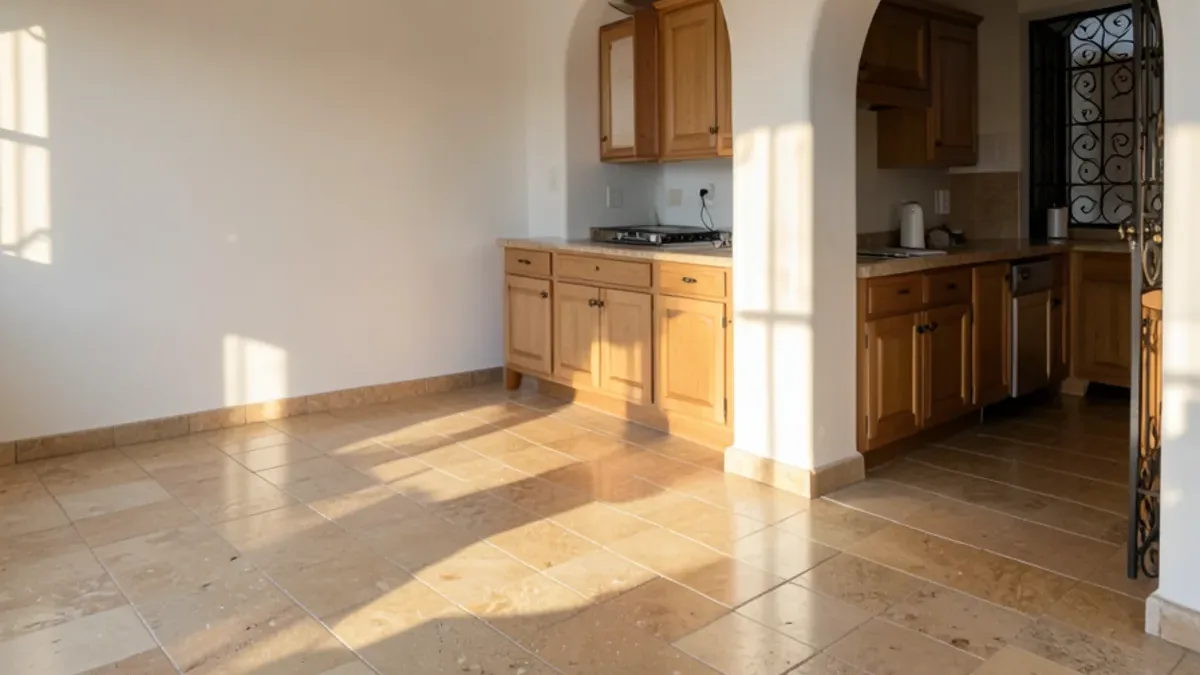
Marble, travertine, limestone and slate: how the stones behave
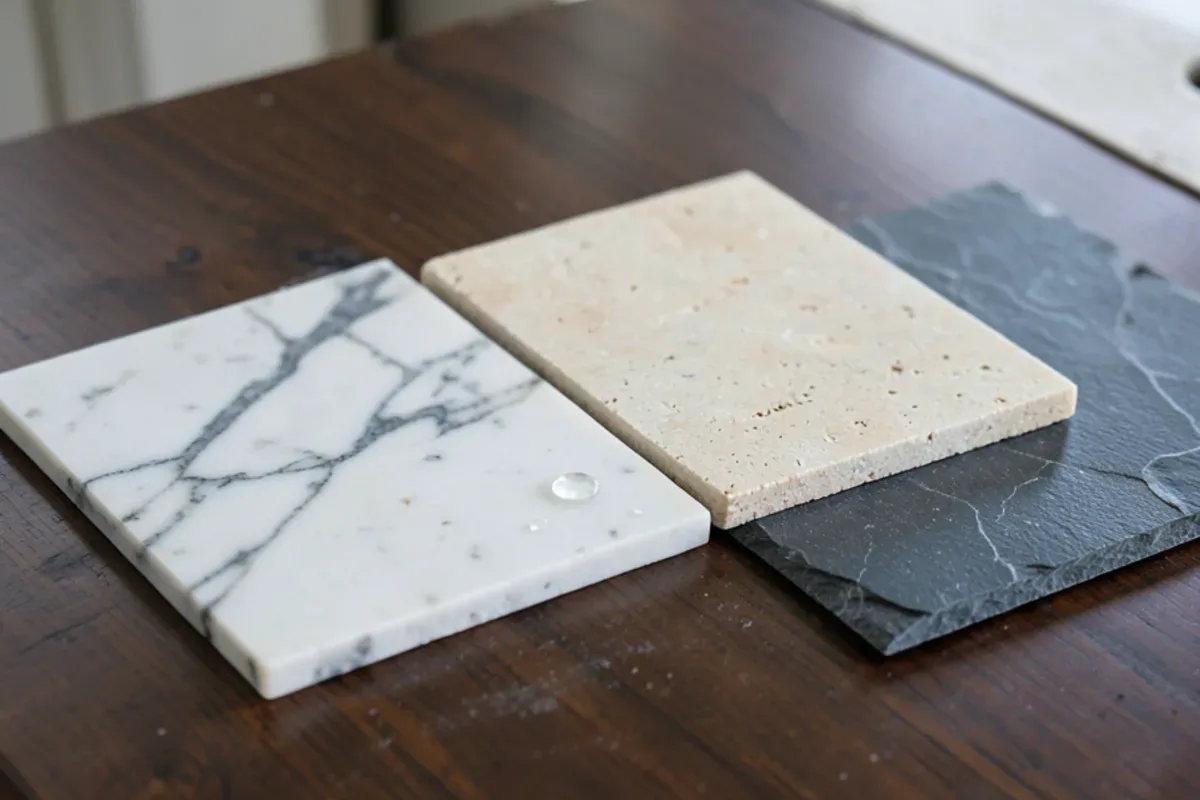
Every stone is different, and even two boxes of the same marble vary. The table gives the general character of the stones most often used as tile.
| Stone | Character | Porosity | Acid sensitivity | Common uses |
|---|---|---|---|---|
| Marble tile | Veined, bright, classic | Moderate | High: etches | Shower floors and walls, bath floors, backsplashes |
| Travertine tile | Warm, pitted, earthy | High until filled | High: etches | Floors, patios, Mediterranean-style baths |
| Limestone tile | Soft, quiet, uniform | High | High: etches | Low-traffic floors, walls, fireplace surrounds |
| Slate | Cleft texture, dark tones | Low to moderate | Low | Entries, mudrooms, outdoor areas |
| Granite tile | Speckled, very hard | Low | Low | Floors, counters, high-traffic areas |
If you like the look of stone but not the upkeep, porcelain made to resemble marble is worth a side-by-side comparison; porcelain vs. ceramic vs. natural stone tile lays out the differences.
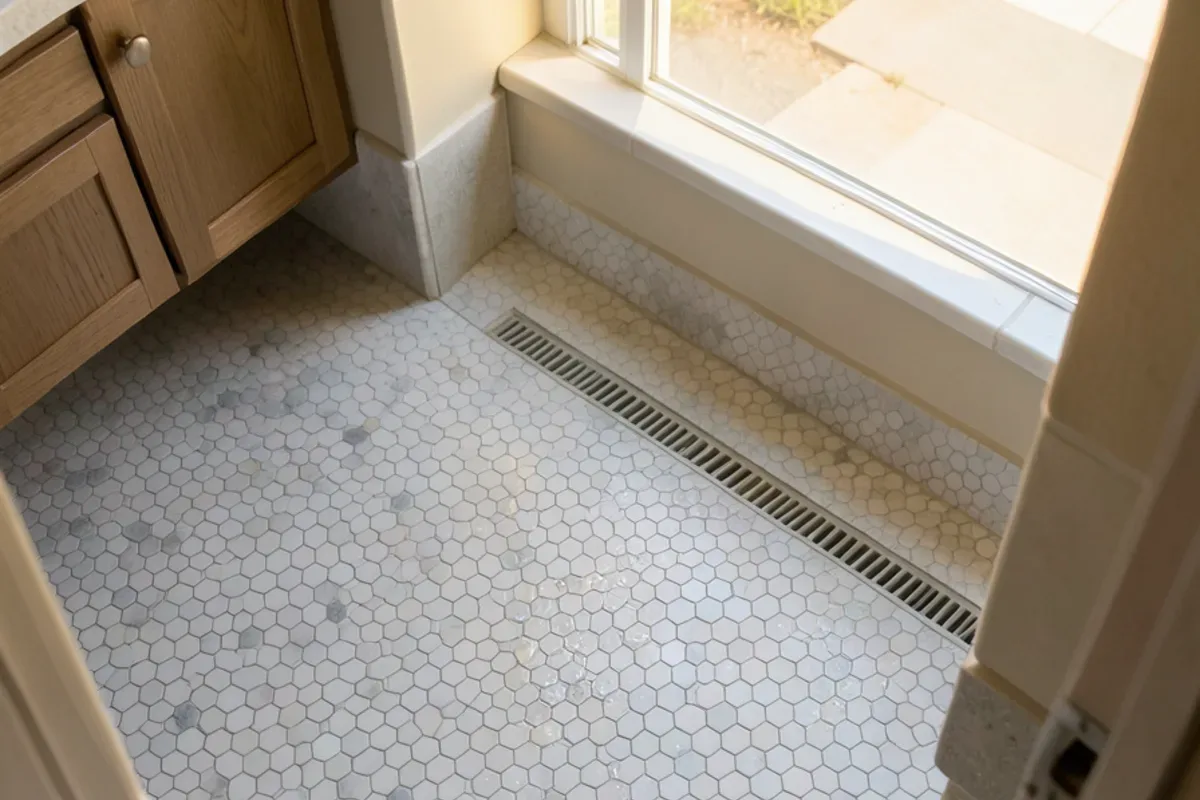
Stone tile sealing and everyday care
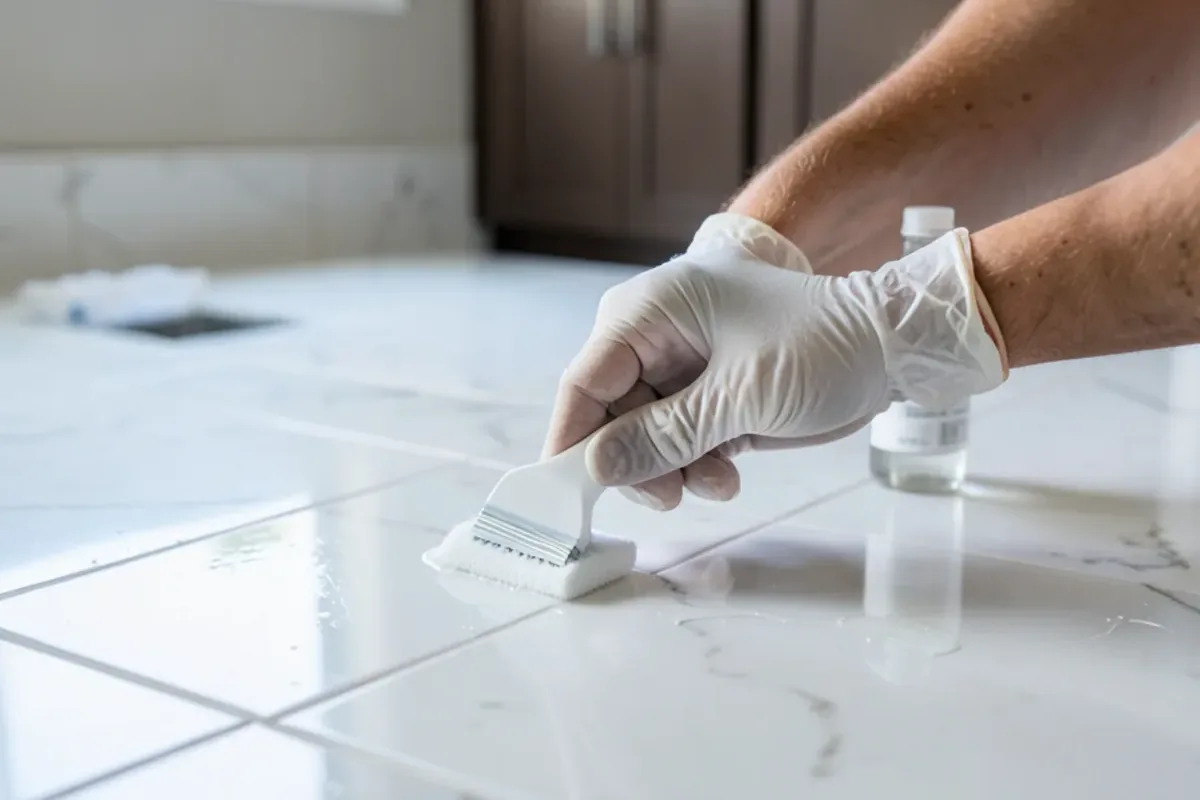
Sealing does not make stone stain-proof. A penetrating sealer slows liquids from soaking in, which buys time to wipe up coffee, wine or oil. It does nothing against etching, the dull mark acids such as lemon juice, vinegar and many bathroom cleaners leave on marble, travertine and limestone.
- Seal after installation and once the grout has cured, following the sealer’s label.
- Test with a few drops of water: if it darkens the stone within a few minutes instead of beading, it is time to reseal.
- Clean with a pH-neutral stone cleaner; skip vinegar, bleach sprays and abrasive powders.
- Use doormats and felt pads; grit from outside scratches polished stone faster than anything else.
- Squeegee stone showers after use to cut down on mineral spots from hard Los Angeles water.
Grout care follows the same routine; grout color and sealing has the details.
Signs an existing stone floor needs more than a reseal
- A crack running through several tiles in a line usually follows a slab crack, so new stone needs a crack-isolation membrane.
- Hollow-sounding tiles mean the bond has failed, and loose pieces keep cracking.
- Etching so widespread the whole floor looks dull calls for a stone refinisher, or a switch to honed tile.
Questions about natural stone tile?
Call with your measurements and photos, or stop by Sherman Way to compare cabinets, counters, tile and flooring side by side.
- Showroom at 13259 Sherman Way, North Hollywood
- 20 Google reviews
- BBB rating A+
- Cabinets, counters, tile & floors in one place
Is marble tile slippery when wet?
Polished marble is, and that is the main reason to think about finish before color. Honed (matte) and tumbled finishes have far more grip and hide scratches better. On a bathroom floor, honed marble is the usual choice; in the shower, small hexagons or mosaics add grout lines for traction. Many stone suppliers list a wet DCOF figure, which you can compare with the 0.42 minimum the ANSI A137.1 standard uses for level interior floors walked on wet. Save polished stone for walls, backsplashes and dry areas.
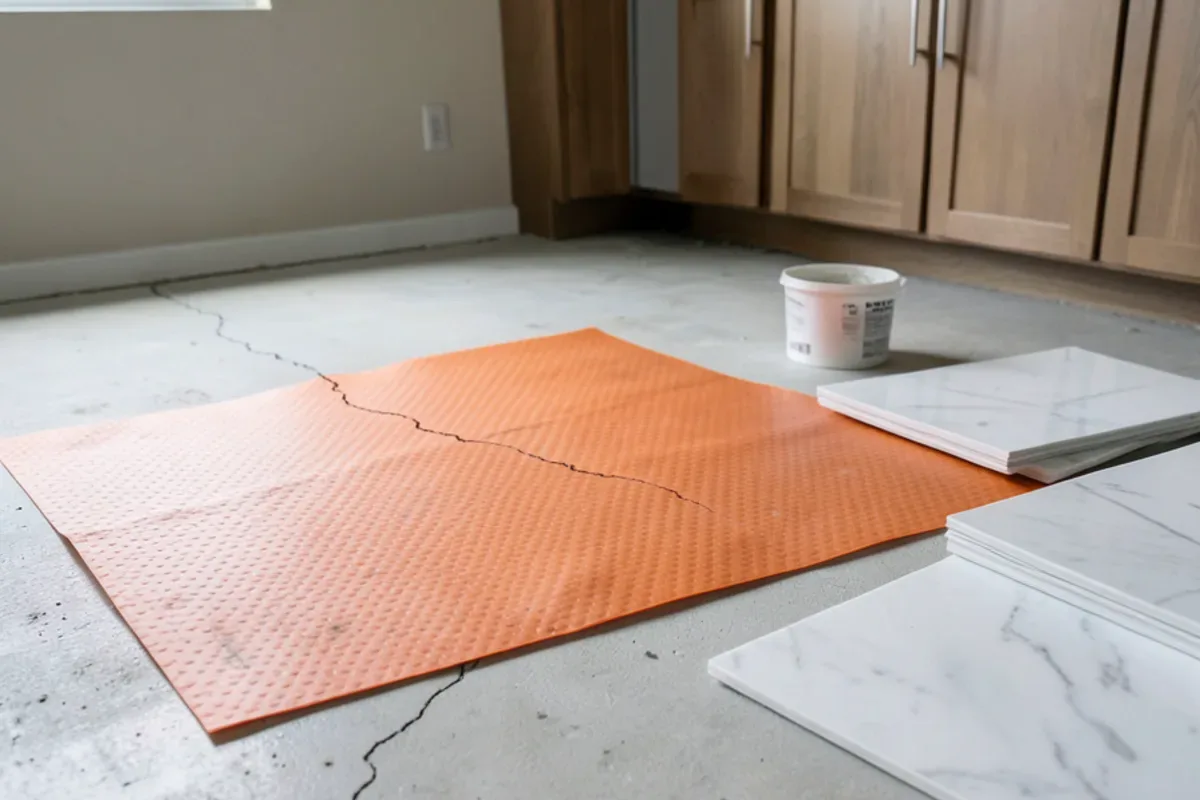
Natural stone flooring: what the subfloor has to handle
Stone is less forgiving of floor movement than porcelain. TCNA guidance calls for wood-framed floors under natural stone to meet a stiffer deflection limit (L/720) than the L/360 used for ceramic and porcelain, which often means extra sheathing or blocking on a raised floor. On concrete slabs, an uncoupling or crack-isolation membrane helps keep slab cracks from breaking the stone above.
- Thinset: many light-colored marbles need a white setting material so gray mortar doesn’t shadow through.
- Moisture-sensitive stone: some green marbles warp with water-based thinset and need a specialty setting material.
- Lippage: gauged (uniform-thickness) tile sets flatter; ungauged stone needs more mortar adjustment.
- Slab vs. raised floor: many Valley homes sit on slabs, while older hillside and Craftsman houses often have raised wood floors that need checking first.
Choosing stone floor tile and wall tile at the showroom
Start with finish and room
Decide honed, polished or tumbled based on where the tile goes and who uses the room.
Look at several pieces
Ask to see multiple tiles from the actual lot. Stone is natural, so the range of veining matters more than any one sample.
Compare with nearby surfaces
Set the stone beside your vanity, cabinet door or countertop sample, since veining can clash with a busy granite.
Pick grout and setting material
Choose a grout color that suits the stone and confirm the thinset type the stone requires.
Order with extra for culling
Add overage for cuts and for pieces set aside because their color doesn’t blend.
Install, seal and protect
Blend tiles from several boxes as they go down, then seal. Read the tile installation page for prep and timing.
What makes a stone tile job cost more?
- Stone type and grade: rare marbles and select grades cost more than common travertine or slate.
- Finish: honed, polished, brushed and tumbled finishes are priced differently.
- Subfloor reinforcement: stiffening a raised wood floor to suit stone adds carpentry before tiling.
- Specialty setting materials: white or rapid-setting thinsets cost more than standard gray mortar.
- Sealing: initial sealing, and later resealing, is part of the cost of ownership.
- Waste: culling for color and careful cutting create more waste than porcelain.
Do you need a permit for stone tile, and which license should the setter hold?
Swapping one floor or wall finish for another in the same room is usually treated as cosmetic. A permit comes in when work goes past the surface: a shower rebuilt with a moved drain or valve, new framing to stiffen a floor, or a changed layout. In the City of Los Angeles that permit comes from LADBS; Glendale, Pasadena and Beverly Hills issue their own, and LA County Building & Safety covers unincorporated communities.
For the tile itself, CSLB’s C-54 (ceramic and mosaic tile) classification is the one to check, and plumbing changes belong to a C-36 plumbing contractor; license numbers can be checked at cslb.ca.gov. In pre-1978 homes, disturbing painted walls during demolition falls under the EPA’s lead-safe RRP rule.
Why choose Adcom for natural stone tile in Los Angeles?
- Stone in context. Natural stone tile sits near granite, marble and quartz countertops and the cabinetry it will be paired with, so veining is chosen against the whole room.
- Marble used in real projects. Hexagon marble shower floors went into a 4-plex one Google reviewer wrote about.
- Sourcing. According to Google reviewers, staff will chase down a tile the showroom doesn’t have on hand.
- Installation on request. Have your stone set as part of the purchase, or give it to your own setter.
Want a matching stone surface for the vanity or kitchen? See marble countertops. A stone backsplash can also be built from tile or slab; compare both on the kitchen backsplash page.
Stone tile in homes around the region
Natural stone suits many local house styles. Travertine and marble fit the Mediterranean and Spanish-revival homes common in Beverly Hills and Glendale, honed marble bathrooms are a frequent choice in older Pasadena houses, and stone entries turn up across Los Angeles. In every case the same rules apply: check the subfloor, pick the finish for the room, and plan the sealing routine before the first piece is set.
What Google reviewers say
Quoted from public Google reviews. Adcom Kitchen & Flooring has 20 Google reviews; read them all on Google.
“Great selection great service. Tony Jr. Was great he beat everyones prices and he stands by his word. Very easy to work with. If he doesn't have the tiles not to worry he'll find it and beat any price within reason.”
“They have a huge selection of kitchen cabinets, tiles and flooring. But the best part is their service. Tony Jr. is beyond reasonable, honest and he went out of his way to make sure we get the products and meet our deadlines. Highly recommended!”
“Helped so much with tile for my kitchen remodel. Tony, Jr. Knew his stuff and didn’t try to sell me stuff I didn’t want. Thank you!”
Natural Stone Tile around Los Angeles and Ventura counties
- Natural Stone Tile in Beverly HillsEstate entries and primary baths here are often finished in polished marble, so finish choice and slip resistance get settled before ordering.
- Natural Stone Tile in San Marino1920s-30s estate homes near The Huntington often carry original stone, and replacement tile has to blend with what stays.
- Natural Stone Tile in PasadenaCraftsman houses on raised wood floors need the stiffer deflection check marble requires before any tile is set.
- Natural Stone Tile in Palos Verdes EstatesMediterranean homes from the 1920s keep original tile worth matching, so stone lots are compared against existing floors.
- Natural Stone Tile in Hidden HillsLarge ranch-estate rooms use many boxes of stone, which makes blending and culling for color a real part of the order.
- Natural Stone Tile in GlendaleSpanish-revival homes from the 1920s pair naturally with tumbled travertine and honed limestone in baths and entries.
- Natural Stone Tile in CalabasasBuilder tile from the 1970s-90s planned communities is a common candidate for replacement with travertine or marble.
- Natural Stone Tile in West HollywoodCondo buildings often set sound rules for hard floors, so stone may need an acoustic underlayment approved by the HOA.
- Natural Stone Tile in Los AngelesValley slab homes and hillside raised floors need different prep, and a stone shower here fights hard-water spotting.
- Natural Stone Tile in Rolling Hills EstatesPeninsula ranch homes see barn-to-kitchen traffic and marine air, so honed, sealed stone tile hides grit better than a polished finish.
Natural Stone Tile: common questions
Does natural stone tile need sealing?
Most does. Marble, travertine and limestone are porous and should be sealed with a penetrating sealer after installation and once the grout cures, then resealed when water stops beading on the surface. Dense granite and some slates need it less often. Sealing slows staining but won’t stop acid etching, so a pH-neutral cleaner matters just as much.
Is marble tile slippery when wet?
Polished marble can be, which is why honed or tumbled marble is the usual pick for bathroom floors and showers. Small formats such as hexagon mosaics add grout joints that improve grip. Compare the wet DCOF figure from the supplier with the 0.42 minimum in the ANSI A137.1 standard for level floors walked on wet.
Can stone tile go over a wood subfloor?
Yes, if the floor is stiff enough. TCNA guidance calls for an L/720 deflection limit under natural stone, twice as stiff as for ceramic tile, so raised floors in older Los Angeles homes often need added plywood, blocking or a suitable underlayment first. Have the floor structure checked before ordering stone.
How do I clean natural stone floors?
Dust-mop or vacuum grit daily in busy areas, then damp-mop weekly with a pH-neutral cleaner made for stone. Avoid vinegar, citrus, bleach and abrasive powders, which etch or scratch the surface. Wipe spills right away, especially coffee, wine and oil, and use mats at doors to the yard so sand doesn’t grind into the finish.
Why is travertine tile full of small holes?
Travertine forms around mineral springs, and gas bubbles leave natural pits in the stone. Filled travertine has those holes packed with resin or cement at the factory for a smoother surface; unfilled or tumbled travertine keeps them for a rustic look. Holes left open collect dirt, so many homeowners pick filled stone for kitchens and baths.
Will stone tile match from one order to the next?
Not exactly. Stone is quarried, so color and veining shift between lots and even between boxes. Order enough for the whole project plus spares at once, blend tiles from several boxes during installation, and keep leftovers for future repairs. If you need more later, bring a spare piece to the showroom to compare against the current lot.
Request a natural stone tile quote
Calling is fastest: (818) 765-9955. Prefer to write? Send the basics and the showroom will get back to you.
Related services
Helpful guides
Areas we serve
Ready to see it in person?
Bring your photos and measurements to the Sherman Way showroom, or call and talk it through first.
Adcom Kitchen & Flooring · 13259 Sherman Way, North Hollywood, CA 91605 · Get directions · Showroom hours
- Showroom at 13259 Sherman Way, North Hollywood
- 20 Google reviews
- BBB rating A+
- Cabinets, counters, tile & floors in one place