
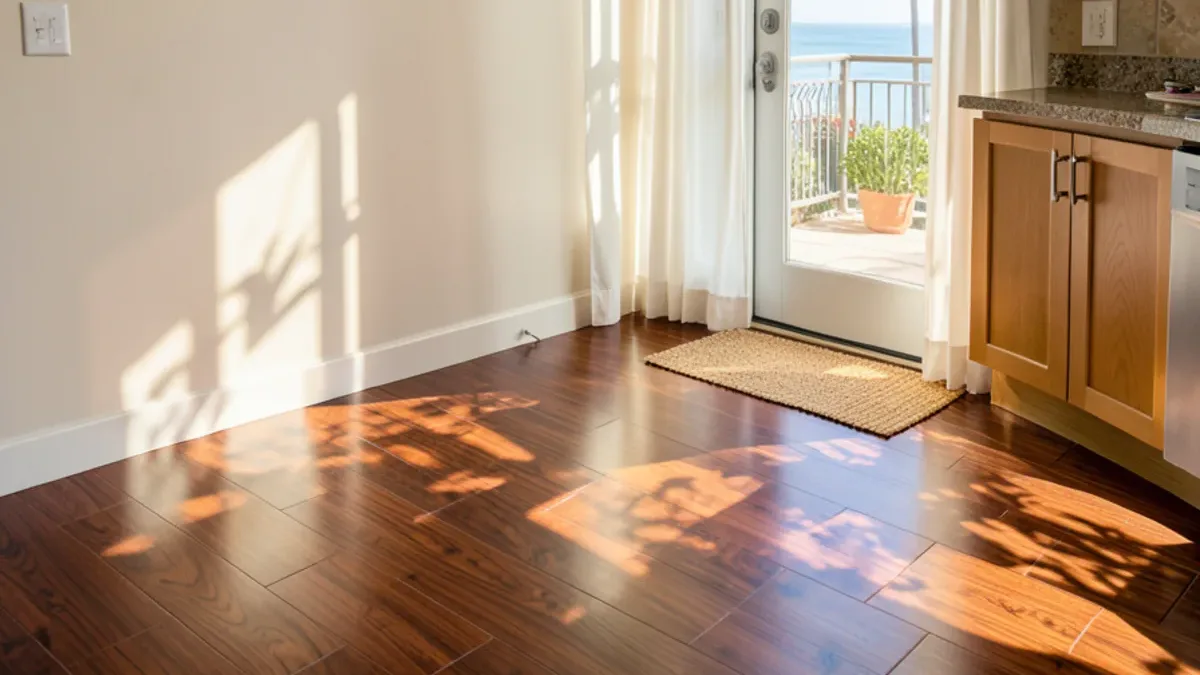
Why does Southern California sun change wood color?
Ultraviolet and visible light react with the wood and the finish over time. Some species lighten, others darken: cherry and many exotic species deepen noticeably, while some walnut and stained floors can bleach toward a paler tone. The result is a visible outline where a rug or sofa sat for a few years.
- Use blinds, shades or curtains on south- and west-facing windows during the strongest afternoon hours.
- Consider UV-filtering window film or low-e glass when windows are replaced; window products and film vary in how much UV they block, so compare the manufacturer’s ratings.
- Move rugs and furniture every few months during the first year, when color change is fastest, so the floor ages evenly.
- Wait before putting rugs down on a new floor with a species known to darken, so the color can settle first.
Want to see the options in person?
The Sherman Way showroom has cabinets, counters, tile and flooring on display side by side. Call before you come and say what you're working on.
- Showroom at 13259 Sherman Way, North Hollywood
- 20 Google reviews
- BBB rating A+
- Cabinets, counters, tile & floors in one place
How to protect hardwood floors from sand and grit
Grit acts like sandpaper underfoot. In beach towns such as Manhattan Beach, sand rides in on feet, towels and dogs every summer day; inland, it is dust blown in by dry winds and fine dirt from yards.
- Put a coarse mat outside each entry and a softer mat inside, and shake both out often.
- Set up a shoes-off spot near the door, with a bench and a bin.
- Rinse feet and paws at an outdoor spigot after the beach or the dog park.
- Vacuum with a hard-floor setting or the brush roll turned off, or dust-mop daily in busy rooms.
- Choose rugs with breathable, non-staining backings; some rubber backings can mark finishes.
Which everyday habits scratch or dent a wood floor?
| Threat | What it does | Simple protection |
|---|---|---|
| Chair and table legs | Fine scratches, gouges when dragged | Felt pads, replaced when they collect grit |
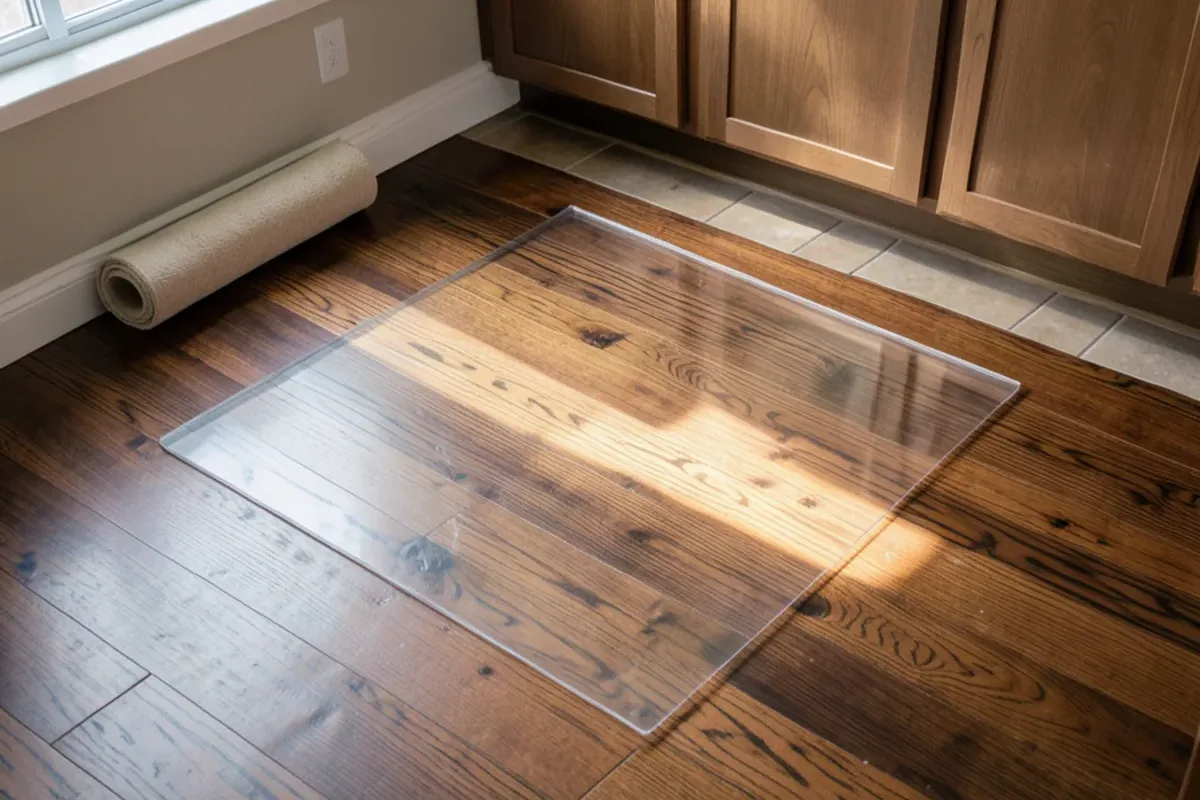
| Rolling office chairs | Wears a dull path into the finish | A clear chair mat |
| Pet claws | Surface scratches, especially on gloss finishes | Trimmed nails, runners in play areas |
| Stiletto and cleated heels | Dents even in hard species | Shoes off indoors |
| Heavy appliances moved across the floor | Deep scratches and crushed boards | Plywood runway or appliance sliders |
| Potted plants | Water rings and trapped moisture | Raised saucers with feet |
Matte and satin finishes and wire-brushed textures hide small scratches far better than a glossy, smooth floor. That is worth weighing before you buy, especially with kids or dogs.
What does dry Santa Ana air do to wood?
Wood shrinks as it loses moisture. During long dry spells, and especially during Santa Ana wind events in autumn and winter, indoor humidity in Valley and foothill homes can drop well below normal. Boards shrink and small gaps open between them; when humidity returns, the gaps close again. Severe swings can cause cupping or cracks in the finish.
Many wood flooring makers ask owners to keep indoor relative humidity within a moderate range, so check the care guide for your product. A simple hygrometer shows what is happening, and a humidifier during dry weeks keeps movement in check. Near the coast, the reverse can happen: damp marine-layer months can make boards swell slightly, which good ventilation and air conditioning help control.
Protecting wood floors during a remodel, a move or an ash event
More floors are damaged in a single week of other work than in years of normal living. Painters, cabinet installers and movers drag ladders, boxes and appliance dollies across finished wood, and the grit they track in does the rest. Protect the floor before anyone arrives.
Clean the floor first
Vacuum thoroughly so no grit is trapped under the covering, where foot traffic would grind it in.
Use breathable floor protection
Heavy paper-based protection board or breathable runners, not plastic sheeting, which can trap moisture and slide underfoot.
Tape to the covering, not the finish
Tape the seams of the protection to each other. Painter’s tape left on a finish for days, especially a fresh one, can pull it off when removed.
Cover the whole route
Run protection from the door to the work area, including hallways, because the damage happens on the way in.
Lift heavy items, never drag them
Ranges, refrigerators and cabinets go in on sliders or a plywood runway.
After smoke and ash
Wildfire seasons can leave fine ash indoors even miles from a fire. Ash is gritty, so dry sweeping scratches the finish. Los Angeles County public health guidance on ash cleanup recommends a HEPA-filter vacuum and damp wiping rather than sweeping or blowing it around. On wood, follow up with the floor maker’s cleaner on a barely damp microfiber mop.
Cleaning dos and don’ts
- Do use the cleaner recommended for your finish, sprayed on a microfiber mop rather than the floor.
- Do wipe spills right away, including pet water bowls and drips by the refrigerator.
- Don’t use steam mops or soak the floor; water and heat get into joints.
- Don’t use oil soaps, wax or furniture polish on a polyurethane-type finish; they leave residue that can interfere with a later recoat.
- Don’t use vinegar or ammonia mixtures unless the floor manufacturer approves them.
Common questions at the flooring counter
People often bring a photo or a loose board to the showroom asking whether a floor is ruined or just tired. A few patterns come up regularly, and they shape what to look for in your own home.
- A dull, gray traffic lane in front of the sink or sofa usually means the finish is worn, not the wood. A screen and recoat often fixes it.
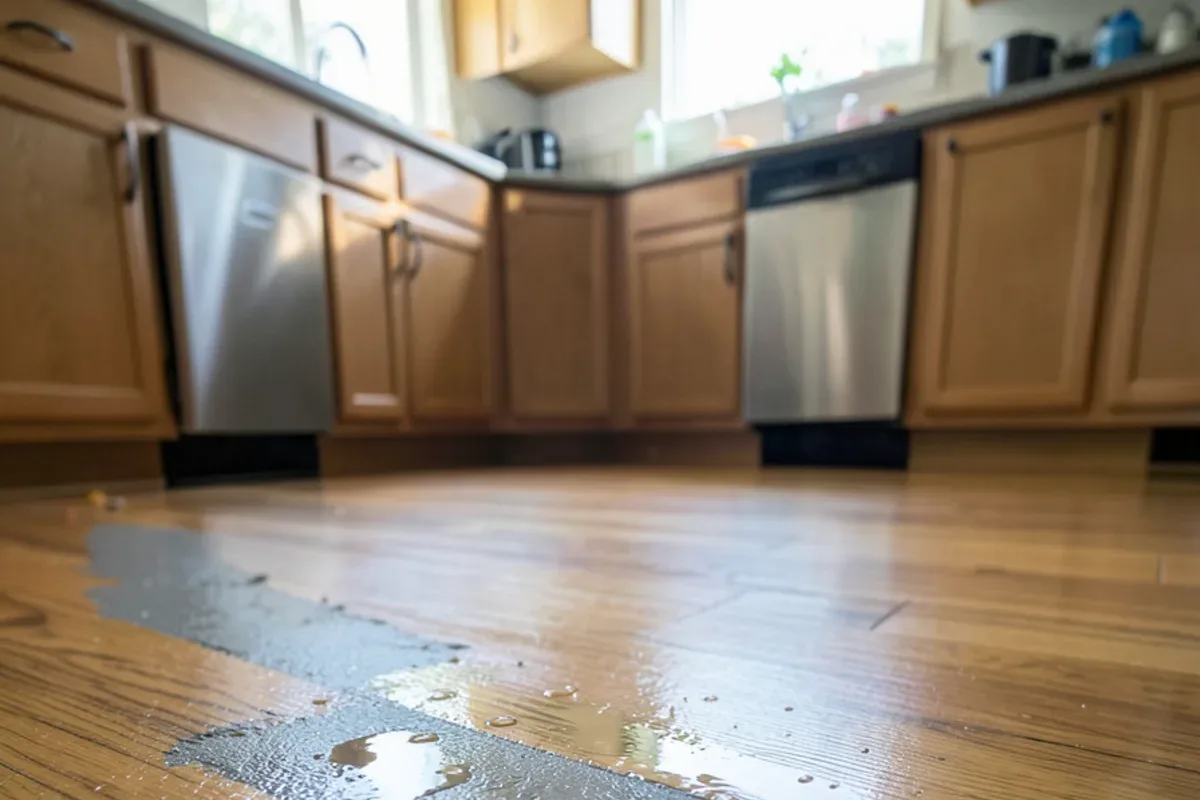
- Water drops that soak in and darken the wood instead of beading up are a sign the finish has worn through in that spot.
- Scratches that are white or light are usually in the finish; dark scratches that show bare wood go deeper.
- Boards that are cupped across their width point to a moisture problem below, which has to be found before any repair.
- Matching a single damaged area is easier when you kept a few spare boards from the original installation.
Choosing a wood floor that hides everyday wear
Protection starts before purchase. Hardness gets most of the attention, but on a finished floor the coating takes the scratches first, so the color, sheen and texture you pick decide how much wear you actually see. The honest showroom advice is that a mid-tone, low-sheen, textured floor forgives almost everything, and a dark, glossy, smooth one forgives almost nothing.
| Choice | Hides wear well | Shows wear quickly |
|---|---|---|
| Color | Mid-tone browns and natural oak | Very dark stains (dust, scratches) and very pale ones (dirt in traffic lanes) |
| Sheen | Matte and satin | Semi-gloss and gloss |
| Texture | Wire-brushed, hand-scraped | Smooth, flat-sanded |
| Grain | Busy grain such as oak and hickory | Quiet grain such as maple and birch |
| Species softness | Harder species dent less | Softer species such as American cherry and walnut dent more |
On the Janka hardness scale the NWFA publishes, red oak is the common reference point, and some popular exotics rate far harder. Softer species are still lovely in bedrooms and formal rooms where shoes stay off.
When should you recoat, refinish or replace?
A recoat adds a fresh coat of finish over lightly abraded existing finish and is the cheapest protection a floor can get. A full refinish sands to bare wood, which solid floors and thick-wear-layer engineered floors can take. Replacement makes sense when boards are water-damaged, worn through or too thin to sand.
If you are replacing, the hardwood flooring selection includes harder and exotic species and tougher factory finishes, and the full flooring range shows alternatives such as engineered wood, vinyl and wood-look tile for rooms where wood keeps getting beaten up. Homeowners across Los Angeles can bring a board or photos of the problem to compare options side by side.
Quick answers
Are area rugs good or bad for hardwood floors?
Mostly good. Rugs catch grit at entries and protect heavy-traffic lanes. The risks are uneven color, since wood under a rug ages differently from wood in the sun, and backings that trap moisture or stain the finish. Rotate rugs occasionally, use a breathable pad made for wood floors, and lift them after a spill so the floor can dry.
Do I need a humidifier for wood floors in the San Fernando Valley?
It helps in many homes. During hot, dry stretches and Santa Ana winds, indoor air in the Valley can become very dry, and boards shrink and gap. A hygrometer tells you whether humidity is falling below the range your flooring maker recommends. A whole-house or room humidifier during those weeks reduces gapping and finish cracking.
How often should a hardwood floor be recoated?
It depends on traffic and the finish, not the calendar. A busy family kitchen or hallway may need a recoat every few years, while a guest bedroom can go much longer. Watch for dull lanes and spots where water no longer beads. Recoating before the finish wears through to bare wood avoids the cost of a full sanding.
How soon can rugs go back on a newly refinished floor?
Wait for the finish to fully cure, which is longer than the time it takes to walk on it. Many finish makers advise keeping rugs off for about two weeks or more, depending on the product and the weather. During damp marine-layer stretches cure can take longer, so check the label and ask the installer which finish was used before you roll anything out.
How should ash or smoke dust be cleaned off wood floors?
Remove it with a HEPA-filter vacuum on the hard-floor setting, then damp-wipe with a microfiber mop and the cleaner your floor maker recommends. Don’t dry-sweep or use a blower, because ash is abrasive and spreads fine particles. Los Angeles County public health guidance on wildfire ash cleanup also recommends gloves and a well-fitted mask while you work.
Sources
- National Wood Flooring Association (NWFA) — Wood floor care, maintenance and moisture guidance
- Wood Floors (NWFA consumer site) — Homeowner care and refinishing information
- National Weather Service, Los Angeles/Oxnard office — Santa Ana wind and marine layer forecasts for the region
- Los Angeles County Department of Public Health — Wildfire smoke and ash cleanup guidance
About this guide
Written by the team at Adcom Kitchen & Flooring, a kitchen cabinet, countertop, tile and flooring showroom at 13259 Sherman Way in North Hollywood. Rules and figures from outside sources are attributed; confirm current requirements with your building department or the agency named.
Related services
Service areas
More on this topic: Flooring
Talk to the showroom before you buy
Call with your measurements and photos, or stop by Sherman Way to compare cabinets, counters, tile and flooring side by side.
Adcom Kitchen & Flooring · 13259 Sherman Way, North Hollywood, CA 91605 · Get directions · Showroom hours
- Showroom at 13259 Sherman Way, North Hollywood
- 20 Google reviews
- BBB rating A+
- Cabinets, counters, tile & floors in one place