
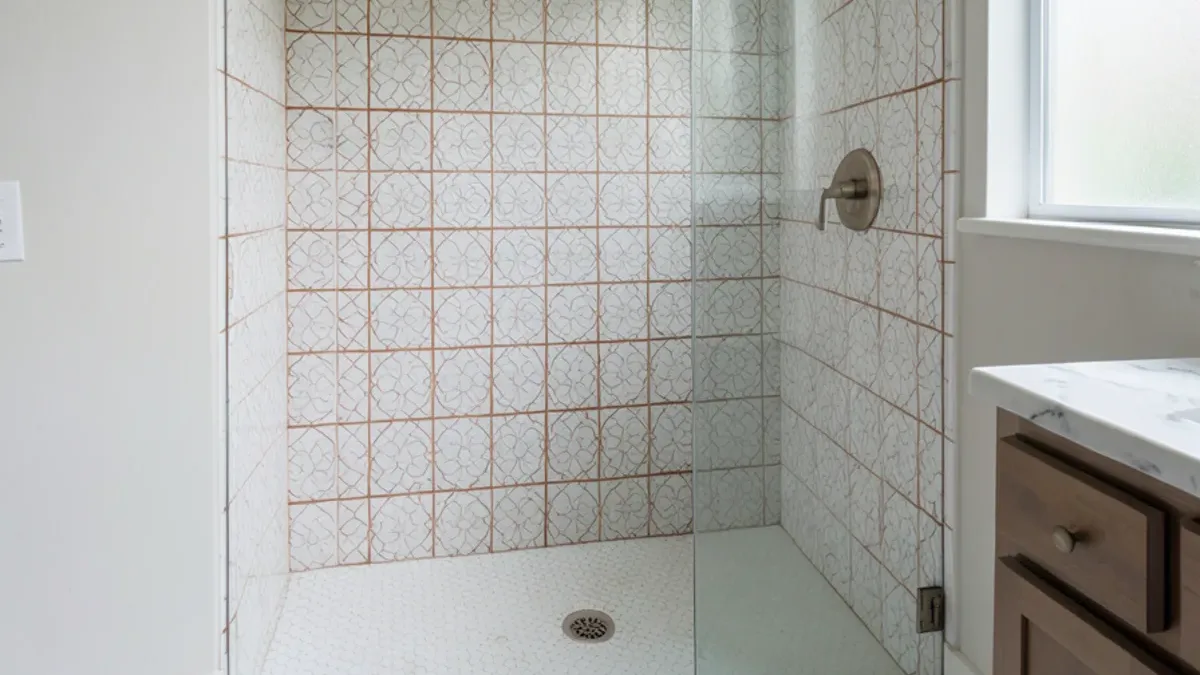
Why do small tiles work best on a shower floor?
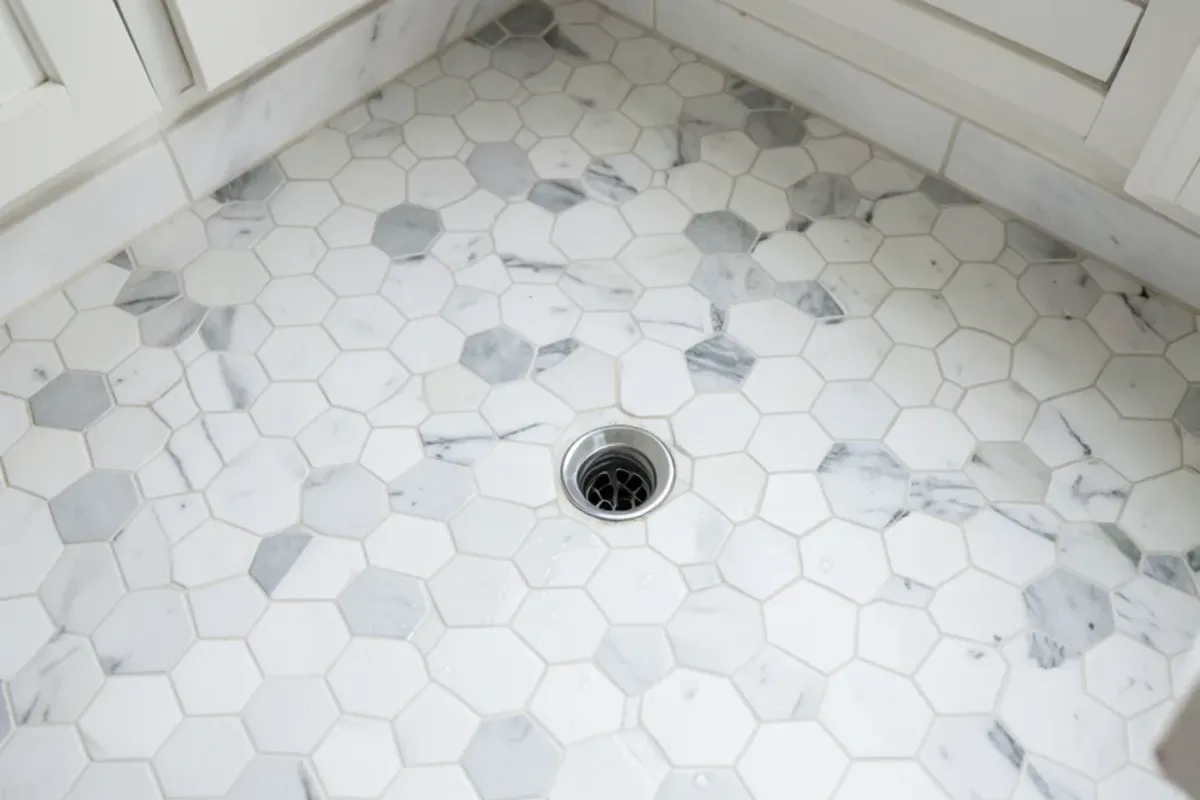
A traditional shower floor slopes toward a center drain from every direction, so the surface is slightly cone-shaped. Small tiles, 2 inches or less, follow that shape without rocking or leaving sharp edges. They also add grout joints, and each joint gives a wet foot a little more grip. Look for a wet dynamic coefficient of friction (DCOF) on the spec sheet; the tile standards published through TCNA use 0.42 as the minimum for level interior floors walked on when wet, and many shower floor products exceed it.
- Hexagon marble: classic and elegant; choose a honed finish for grip and seal it regularly.
- Porcelain hexagon or square mosaic: the low-maintenance choice, with no sealing and good slip ratings.
- Penny rounds: lots of grout, very grippy, a vintage look that suits older bathrooms.
- Pebble or flat-stone mosaic: natural texture underfoot, but more grout and more sealing.
A linear drain changes the rules. Because the floor slopes in one plane toward a single wall, larger tiles, even matching wall tiles, can run across the floor.
Want to see the options in person?
The Sherman Way showroom has cabinets, counters, tile and flooring on display side by side. Call before you come and say what you're working on.
- Showroom at 13259 Sherman Way, North Hollywood
- 20 Google reviews
- BBB rating A+
- Cabinets, counters, tile & floors in one place
Shower wall tile ideas, from classic to modern
- Arabesque: curved lantern-shaped tile that softens a small bathroom. It takes more cutting at edges and corners, so allow extra installation time.
- Vertical stacked subway: a fresh take on a classic tile that makes a low ceiling feel taller.
- Large-format porcelain: 24-by-48-inch or bigger panels with very few grout lines, for a sleek, easy-clean wall. The wall must be very flat.
- Handmade-look glazes: irregular edges and varied color catch light in a window-lit shower.
- Wainscot and accent bands: a tile change at mid-wall or a mosaic band at the niche ties the shower to the rest of the room.
- A tiled niche: recessed shelves lined with the floor mosaic, sloped slightly so water drains out.
Proven floor and wall pairings
| Look | Floor | Walls | Grout |
|---|---|---|---|
| Classic contrast | Hexagon marble | White arabesque | Brown or warm gray to outline each shape |
| Quiet and modern | Matte porcelain mosaic | Large-format porcelain | Matched to tile |
| Vintage bungalow | Penny rounds or small hex | White subway with a cap rail | Light gray |
| Warm spa | Pebble or wood-look mosaic | Stone-look porcelain | Slightly darker than tile |
The first row comes from a real example. One Google reviewer describes a 4-plex done with hexagon marble shower floors, white arabesque walls with brown grout, and long wood-look plank tile through the units. It is a durable, good-looking mix for rental units because the darker grout hides wear between tenants.
Which shower tile looks good after a year of hard water?
A shower is cleaned far more often than any other tiled surface, and in Los Angeles much of that cleaning is fighting mineral spots from hard water. Some popular looks make that job easy; others turn it into a weekly chore. These are the trade-offs worth weighing at the sample table, not after the glass goes in.
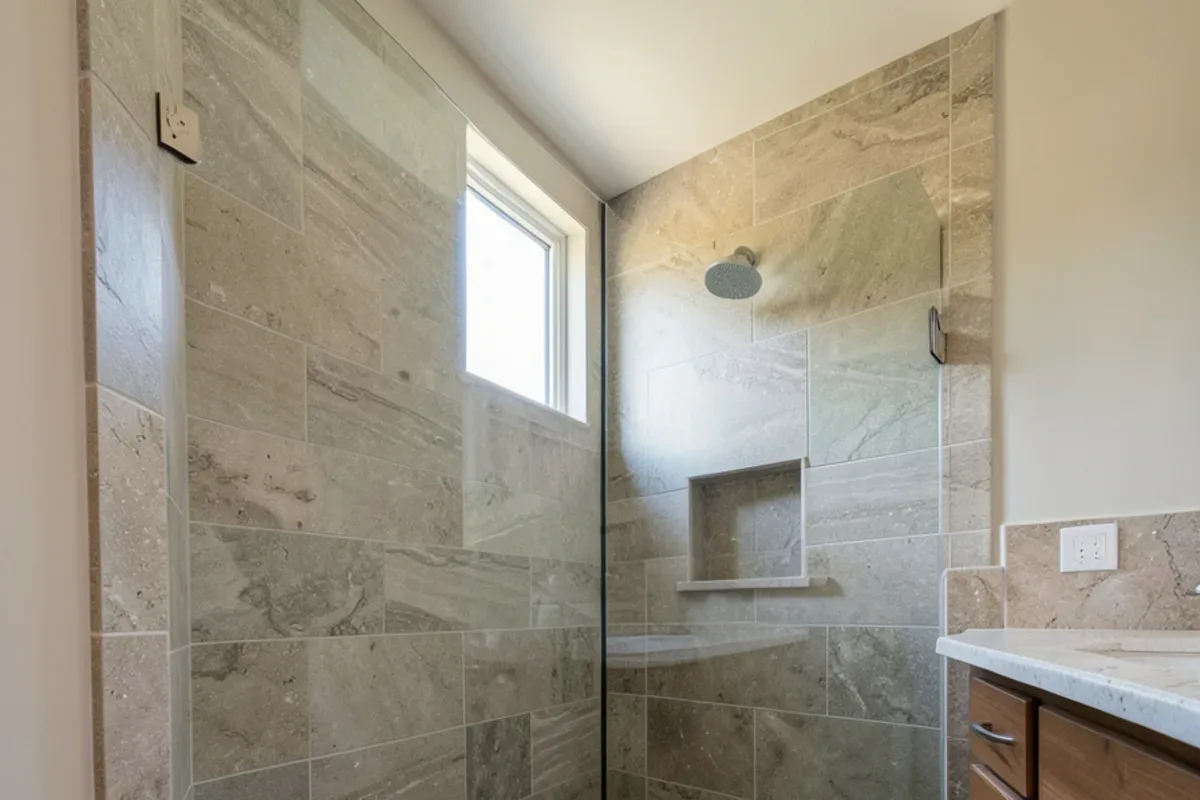
- Matte black and deep navy tile look dramatic in photos but show every white mineral spot once the water dries. Mid-tone grays, warm whites and stone-look porcelain hide spots far better.
- Heavily textured or 3D wall tile traps soap film in its ridges. Keep texture to a feature wall outside the direct spray.
- Handmade-look glazes hide spots well thanks to their variation, but their uneven surface is slower to squeegee than flat tile.
- Large panels have the fewest joints to scrub, which makes them the easiest walls to keep clean if the wall behind is flat enough for them.
- White grout on the floor darkens fastest of anything in the shower. A warm gray or a mid-tone epoxy grout stays even far longer.
A glass enclosure also changes cleaning. Clear glass shows hard-water haze on its own surface, so many owners pair it with a daily squeegee habit, while a frosted panel or a curtain hides it. If a curbless entry is on the wish list, plan it early: on a slab foundation it usually means lowering concrete, which is structural and plumbing work for licensed trades with a permit.
What has to be right behind the tile?
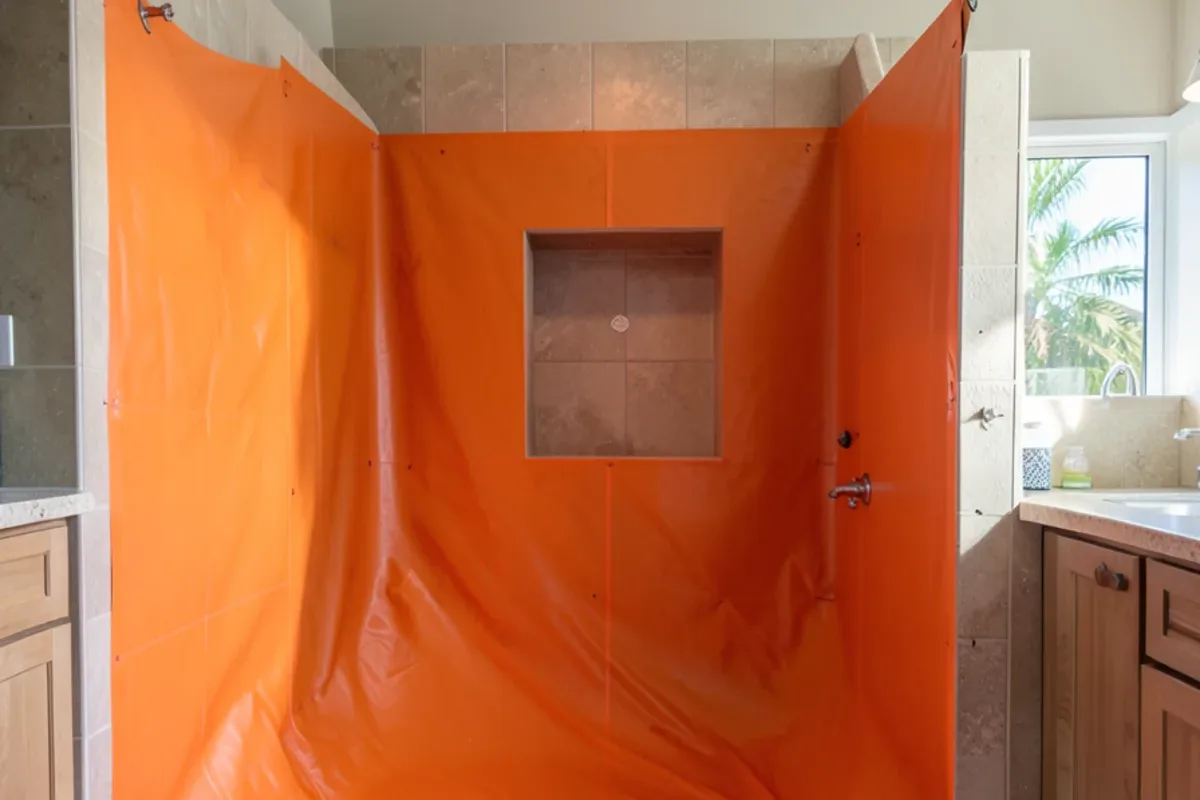
Tile and grout are not waterproof on their own. A long-lasting shower depends on what sits underneath:
- A properly sloped shower floor, so water reaches the drain instead of pooling at the edges.
- A waterproofing layer, either a liner under the mortar bed or a bonded sheet or liquid membrane, following a method from the TCNA Handbook and the product maker.
- A flood test of the pan before tile goes on.
- Cement backer board or a waterproof board on the walls, never ordinary drywall.
- Sealant, not grout, at inside corners and where walls meet the floor.
Replacing a shower pan or moving a drain or valve is plumbing work. In Pasadena and Santa Monica, each city’s own building division handles permits; in the City of Los Angeles it is LADBS. Check that tile and plumbing contractors hold the right C-54 or C-36 license on the CSLB website.
Planning a shower tile layout in the right order
Shower tile decisions depend on each other, and making them out of order is what causes awkward slivers at the ceiling, niches that cut through a pattern, and glass clamps that land on grout lines. This sequence keeps each choice from undoing the last one.
Choose the drain type
A center drain points to small floor tiles; a linear drain at the back wall allows larger ones.
Set the wall tile height
Decide whether tile stops at the showerhead, runs to the ceiling or wraps the whole room, then plan rows so no thin strip lands at the top.
Place the niche and bench on the tile grid
Size a niche to whole tiles where possible and keep it on an interior wall, out of the direct spray.
Pick edge and trim pieces
Confirm bullnose, pencil liners or metal edges exist for every exposed end, curb and niche lip.
Mark glass and grab bar locations
Hinges, clamps and bars need solid blocking behind the board, which has to be in the wall before tile goes on.
Pairing floor and wall tile at the sample table
Shower tile choices interact, so look at them together. In our North Hollywood showroom, lay a sheet of hexagon or mosaic next to the wall tile you like, add the vanity countertop sample and a grout stick, and stand back a few steps. Ask whether matching trim pieces exist for the wall tile, such as bullnose, pencil liners or a metal edge, since a beautiful tile with no clean way to finish the edge creates problems at the shower opening. Then count the niche, curb and bench surfaces, because each one needs tile and edge pieces too.
Shower tile ideas for period and coastal homes
Older bathrooms in Pasadena often look most at home with small hex or penny floors and white subway or arabesque walls that echo the original tile of the era, sometimes with a colored band at chair-rail height. Near the ocean in Santa Monica, marine-layer mornings keep bathrooms damp longer, so a strong exhaust fan, porcelain over porous stone, and epoxy or high-performance grout help fight mildew.
Planning your shower tile
Browse options on the shower tile page, then see how demolition, waterproofing and fixtures fit together in a full shower remodel. Our guide to grout color and sealing covers how to keep the finished shower looking new.
Quick answers
Is hexagon marble slippery on a shower floor?
Hexagon marble is not usually slippery on a shower floor when it is small and honed. The many grout joints add grip, and a honed finish gives more traction than polished marble. Polished hexagon marble can be slick when soapy. Seal marble mosaics regularly and clean with pH-neutral products, since acidic cleaners etch the surface and wear the honed texture.
Can large-format tile be used on a shower floor?
Yes, but usually only with a linear drain. A linear drain lets the floor slope in one direction, so large tiles lie flat instead of fighting the cone-shaped slope around a center drain. Choose a matte or textured porcelain with a suitable wet slip rating, and expect careful prep, because large tiles need a very flat, correctly sloped bed.
Do arabesque tiles take longer to install?
Yes, arabesque tile generally takes longer than straight subway or square tile. The curved shapes interlock, so every edge, corner, niche and valve opening needs shaped cuts, and layout must be planned carefully so the pattern lands evenly. Expect more labor time and slightly more tile waste, and order extra pieces for the cutting.
How long does a newly tiled shower need before first use?
Most new tile showers need at least a few days before first use, but the exact time depends on the setting mortar, grout and sealant used. Cement grouts typically need 48 to 72 hours to cure, and sealing adds more time, while some fast-setting systems allow earlier use. Ask your installer for the timeline based on the products used.
What shower tile color hides hard water spots best?
Mid-tone colors hide hard water spots best: warm grays, soft whites with some variation, and stone-look porcelain. Very dark matte tile and solid black show every dried white mineral ring. With much of Los Angeles supplied by hard water, pair the tile with a mid-tone grout and squeegee walls after each shower to keep the finish looking even.
Sources
- Tile Council of North America — Shower installation methods, waterproofing and DCOF guidance
- Natural Stone Institute — Care of marble mosaics in wet areas
- Contractors State License Board — C-54 tile and C-36 plumbing license lookup
About this guide
Written by the team at Adcom Kitchen & Flooring, a kitchen cabinet, countertop, tile and flooring showroom at 13259 Sherman Way in North Hollywood. Rules and figures from outside sources are attributed; confirm current requirements with your building department or the agency named.
Related services
Service areas
More on this topic: Tile & Backsplash
Talk to the showroom before you buy
Call with your measurements and photos, or stop by Sherman Way to compare cabinets, counters, tile and flooring side by side.
Adcom Kitchen & Flooring · 13259 Sherman Way, North Hollywood, CA 91605 · Get directions · Showroom hours
- Showroom at 13259 Sherman Way, North Hollywood
- 20 Google reviews
- BBB rating A+
- Cabinets, counters, tile & floors in one place